

As the technology sector turns its collective gaze toward Cupertino, the anticipation surrounding Apple’s Worldwide Developers Conference (WWDC) 2026 has reached a fever pitch. Following the discovery of a new subdomain, genai.apple.com, by MacRumors contributor Aaron Perris, industry analysts are convinced that Apple is finalizing the infrastructure for a massive pivot in its generative AI strategy. This move signals the beginning of what many are calling Apple’s "AI Renaissance"—a definitive step to fulfill the ambitious promises made during the 2024 developer conference and to redefine the boundaries of mobile intelligence.
Main Facts: The Digital Breadcrumbs of a Strategic Shift
The registration of the genai.apple.com subdomain, while currently inactive, serves as a clear indicator of Apple’s internal priorities. In the world of high-stakes corporate tech, such digital footprints are rarely coincidental. They are the heralds of product launches, developer portals, or centralized hubs for new service ecosystems.
While the link currently leads to a dead end, it is widely expected to serve as the gateway for developers and users alike to interface with Apple’s next-generation generative AI tools. This infrastructure is reportedly designed to support the heavy lifting required for the sophisticated, cloud-based models Apple is poised to unveil. By centralizing these resources under a dedicated "GenAI" banner, Apple is signaling that it is no longer merely experimenting with AI features—it is integrating generative capabilities into the very fabric of its operating systems.
A Chronology of the Apple AI Journey
To understand the significance of this moment, one must trace the timeline of Apple’s cautious, yet deliberate, entry into the AI arena.

- WWDC 2024: Apple introduced the world to "Apple Intelligence." While the reception was positive, the implementation was widely viewed as a "phase one" rollout, limited by early-stage privacy concerns and hardware constraints.
- Late 2024 – 2025: Throughout this period, Apple focused on foundational stability. Behind the scenes, the company was heavily investing in Private Cloud Compute, an architecture designed to allow for large-scale AI processing without compromising user privacy.
- Early 2026: Reports began circulating regarding a major overhaul of the Siri interface, specifically the development of a standalone app designed to manage complex, multi-turn conversations.
- May 2026: The discovery of the
genai.apple.comsubdomain serves as the final piece of the puzzle, suggesting that the software architecture is now ready for public deployment. - June 2026 (Upcoming): The WWDC 2026 keynote is expected to be the formal "unveiling," where the company will demonstrate the fruit of two years of aggressive research and development.
Supporting Data: The Gemini Partnership and Private Cloud Compute
The cornerstone of this new AI initiative is a strategic alliance with Google. For years, Apple has maintained a "walled garden" approach to its software, but the complexity of generative AI has necessitated a shift. By leveraging Gemini-diffused models, Apple is opting for a hybrid approach: using Google’s industry-leading models while wrapping them in Apple’s proprietary "Private Cloud Compute" layer.
This architecture is essential for the "new" Siri. Unlike the Siri of the past, which struggled with simple commands, the upcoming iteration is designed to possess:
- Personal Context Awareness: The ability to pull data from across the user’s ecosystem—emails, messages, calendar events, and photos—to provide hyper-relevant assistance.
- On-Screen Awareness: A system-wide visual intelligence layer that can "see" what the user is looking at and provide actionable insights based on that visual data.
- Cross-App Intent Execution: The ability for Siri to perform tasks across disparate applications, such as extracting an address from a PDF, finding the location in Maps, and triggering a ride-share app to take you there.
The New Siri App: A Human-Centric Interface
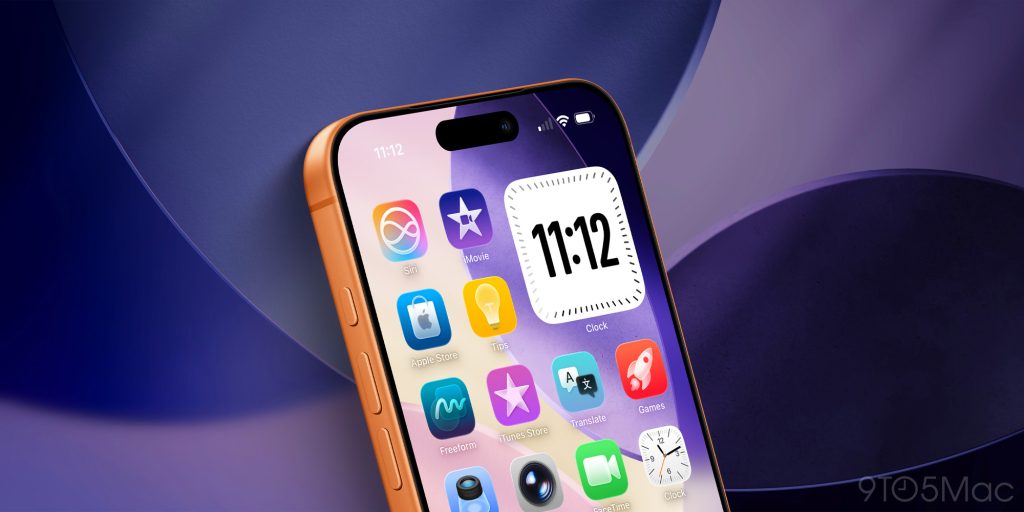
Perhaps the most tangible change for the end-user will be the introduction of the new, standalone Siri app. Current reports indicate this application will serve as a hub for both voice and text-based interactions.
By enabling text-based conversations, Apple is acknowledging a shift in user behavior; many consumers prefer to communicate with AI via text when in public or when the task requires high precision. The app will feature persistent chat history, allowing users to scroll back through previous tasks and requests. Furthermore, security-conscious users will be pleased by the implementation of auto-deleting chat history features, ensuring that the convenience of an AI assistant does not come at the expense of long-term data privacy.
Implications for the Ecosystem: Beyond the Hype
The implications of these developments extend far beyond just a smarter voice assistant. Apple is positioning its devices to become proactive agents rather than reactive tools.
Wallet and Visual Intelligence
Among the features expected at WWDC 2026 is the ability for Apple Wallet to ingest physical tickets and transform them into dynamic, digital-first assets. If you are handed a physical pass, the iPhone’s camera—powered by advanced Visual Intelligence—will be able to recognize the ticket format, scan the necessary data, and instantly generate a valid Wallet pass.
Photos and Media Editing
The Photos app is set to receive a significant boost in generative capabilities. Users can expect advanced editing tools that allow for the "in-painting" of images, the removal of complex background elements with a single tap, and the ability to search for photos using natural language queries that describe the content rather than just the date or location.
The Focus on Stability
Crucially, rumors suggest that despite the flashy AI announcements, Apple is emphasizing "stability and performance" as the primary pillars of this update. After years of criticism regarding software bloat, the company is reportedly dedicating significant engineering resources to ensuring that these new AI features do not degrade battery life or device responsiveness.
Official Stance and Market Reaction
While Apple has not yet issued a formal statement regarding the genai.apple.com subdomain, the company’s leadership has consistently hinted at a "new era" of computing during recent quarterly earnings calls. CEO Tim Cook has alluded to "extraordinary" progress in generative AI, emphasizing that Apple’s approach will always prioritize user privacy—a clear jab at competitors who have been criticized for training their models on user-generated content without clear consent.
The market reaction has been cautiously optimistic. Analysts suggest that if Apple successfully bridges the gap between high-end generative capabilities and its legendary privacy standards, it could trigger a massive hardware upgrade cycle. Consumers who have been hesitant to embrace AI due to privacy fears may find themselves more comfortable within the Apple ecosystem.
Conclusion: A New Standard for Personal Computing
As we look toward WWDC 2026, it is clear that Apple is not attempting to be the "first" to market with generative AI. Instead, the company is aiming to be the most "integrated." By focusing on the user experience—making AI useful, private, and seamlessly woven into the hardware—Apple is betting that it can win the AI race by simply making the technology disappear into the background, where it belongs.
Whether this proves to be a revolution in personal computing or a mere evolution of existing features remains to be seen. However, one thing is certain: with the infrastructure now being finalized and the pieces falling into place, the upcoming June event will be one of the most consequential moments in Apple’s modern history. The era of generative AI is coming to the iPhone, and it promises to be nothing short of transformative.












No comments yet. Be the first to join the conversation!