

In the high-stakes theater of modern game development, the industry is currently navigating a precarious balancing act. Executives are under immense pressure from shareholders to integrate Generative AI (GenAI) into their production pipelines to drive down costs and accelerate release cycles, yet they must simultaneously reassure a skeptical—and often vocal—gaming community that these tools will not diminish the artistic integrity or employment prospects of human creators.
Sony Interactive Entertainment (SIE) recently became the latest titan to address this tension directly. During a comprehensive results presentation, top leadership outlined a vision for the future of PlayStation development that leans heavily into artificial intelligence. While the company insists that its approach is designed to "unleash the creativity" of its studios rather than replace the workforce, the presentation has left industry analysts and gamers alike with more questions than answers.
The Strategy: Automating the Mundane
At its core, Sony’s current AI initiative appears to be an exercise in workflow optimization. During the investor briefing, leadership emphasized that the company is utilizing machine learning and AI to automate repetitive, time-consuming tasks. The stated objectives include streamlining payment processing, enhancing software engineering productivity, and accelerating the arduous quality assurance (QA) cycles that have become a bottleneck in the era of increasingly massive, open-world titles.
While the company has been careful to avoid labeling its work as purely "generative" in a creative sense, the scope of its implementation is undeniably broad. CEO Hiroki Totoki and SIE CEO Hideaki Nishino highlighted specific applications, including AI-driven performance capture, facial animation, and even hair simulation.
Chronology of the Disclosure
The public unveiling of this strategy, which took place in early May, served as a pivot point for Sony’s narrative regarding technological investment.
- Initial Signals: Following several quarters of mixed financial performance, Sony signaled to investors that it would prioritize efficiency in software production.
- The May Briefing: During the investor presentation, Hideaki Nishino took center stage to categorize Sony’s AI usage. He unveiled proprietary tools, such as "Mockingbird," which transforms raw performance capture data into high-fidelity facial animations in a fraction of the time previously required.
- Studio Integration: Sony confirmed that this technology is already active in the wild, being utilized by studios like Diego Studio (the team behind MLB The Show 26) and the prestigious Naughty Dog (renowned for The Last of Us).
- Ongoing Research: The company also disclosed collaborative projects, including a mysterious venture into generative video with Bandai Namco, while acknowledging that these projects are still struggling with "consistency and controllability."
Technical Implementation and Proprietary Tools
The most concrete evidence of Sony’s progress lies in its proprietary tools. "Mockingbird" is perhaps the most significant. By automating the transition from motion-capture suit data to in-game facial expression, Sony claims to have reduced a process that once took hours of manual cleanup to mere seconds.
Additionally, Sony showcased a tool for hair animation, which utilizes video footage to generate strand-level 3D models. This move represents a shift from labor-intensive manual sculpting toward algorithmic generation, potentially allowing character artists to focus on higher-level design rather than the physics of individual strands.
However, these gains have come with a caveat. During the presentation, leadership admitted that while speed and productivity per person have increased, the "consistency and controllability" of the output remain significant hurdles. For a company known for the cinematic polish of its titles, these issues are not trivial.
Official Responses and the Human Factor
Throughout the presentation, the mantra from Sony leadership was consistent: AI is a tool, not a replacement. Hiroki Totoki was explicit in his insistence that human talent remains the bedrock of PlayStation’s output.
"Importantly, we’re not replacing human performers, but rather optimizing how we process the data from these live captures," the presentation materials stated. The company maintains that the "vision, design, and emotional impact" of a game remain the sole domain of human developers. This rhetoric is clearly aimed at preempting the backlash that has haunted other tech firms, which have faced accusations of "art theft" or mass layoffs due to the adoption of generative tools.
Yet, this stance has been met with significant cynicism. Critics point out that "optimizing" processes often acts as a precursor to reducing headcounts. If one animator can do the work of five, the natural temptation for a corporation—especially one answerable to shareholders—is to reduce the headcount rather than to increase the production volume by fivefold.
Implications for the Gaming Ecosystem
The industry-wide implications of Sony’s shift are profound, touching on several critical areas of the development pipeline:
1. The Quality Assurance Paradox
Perhaps the most contentious aspect of the strategy is the application of AI to Quality Assurance. As games reach scales involving hundreds of thousands of unique assets, manual testing has become an impossible task. Automating this via AI is seen by some as a necessary evolution, but by others as a recipe for disaster. Skeptics fear that AI-driven testing will miss nuanced bugs, resulting in a generation of titles that are technically "stable" but fundamentally broken in terms of player experience.
2. The "Catchphrase" Critique
A growing segment of the gaming community argues that Sony is using "AI" as a buzzword to inflate its stock valuation. By grouping traditional, long-standing machine learning algorithms—such as those used for enemy pathfinding or texture upscaling—with controversial Generative AI, Sony is accused of muddying the waters. The fear is that the company is attempting to normalize the latter by hiding it behind the reputation of the former.
3. The Future of NPCs
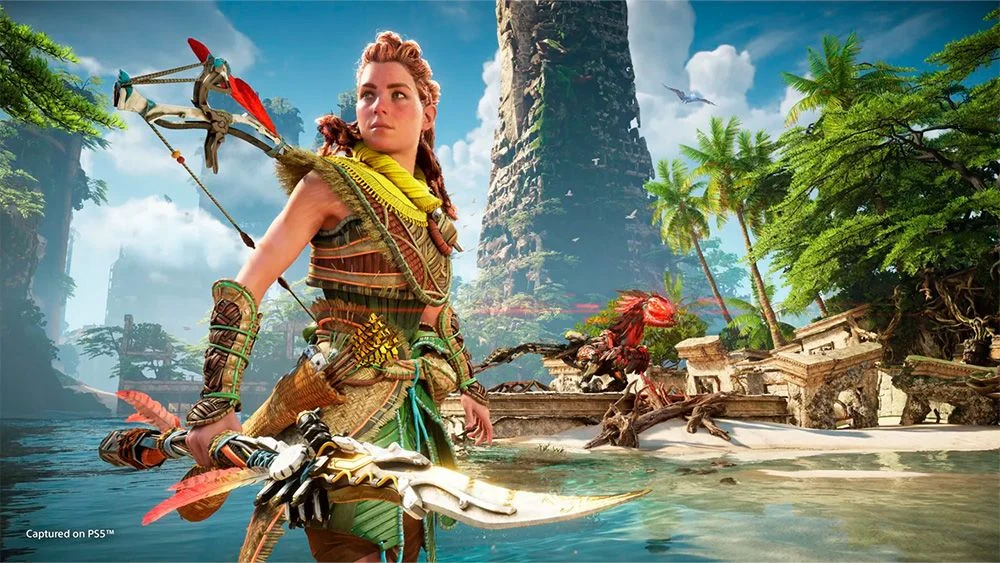
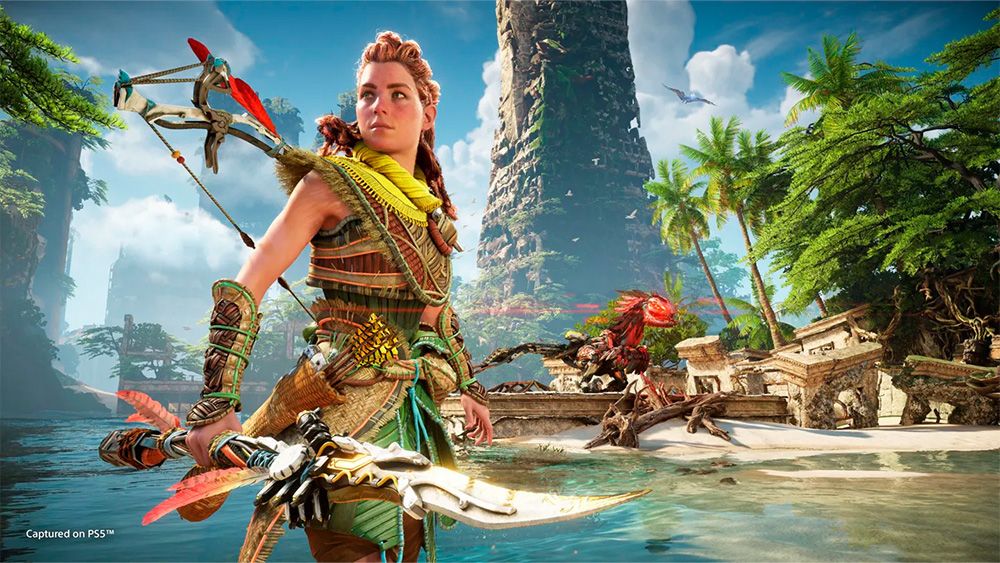
Sony’s ongoing research into AI-driven NPCs with distinct personalities is perhaps the most ambitious, yet most fraught, element of their plan. Previous experiments, such as the "AI Aloy" demonstration, were met with intense criticism for their perceived lack of artistic depth and the irony of using a machine to mimic the protagonist of a game defined by human struggle. The company’s continued pursuit of this technology suggests that they see the "infinite conversation" model as the next frontier of immersive gaming, regardless of current public sentiment.
The Verdict of the Public
The discourse on social media platforms like X (formerly Twitter) reflects a deep divide. On one hand, players acknowledge that the current state of game development is unsustainable, with budgets ballooning and timelines stretching to half a decade. If AI can alleviate the burden of hair physics or facial rigging, many are willing to accept it.
On the other hand, there is a pervasive fear that this is the beginning of a "slop" era. If AI allows for a "meaningful increase in volume," as Nishino suggested, players worry that the industry will prioritize quantity over the artisanal, handcrafted quality that has historically defined PlayStation’s prestige titles.
As one observer succinctly noted, "There is no part of the production pipeline they didn’t list." By attempting to insert AI into every facet of development—from the back-end financial transactions to the front-end character interaction—Sony has positioned itself as an industry leader in the adoption of this technology. Whether that leadership leads to a new golden age of productivity or a devaluation of the human artistry at the heart of gaming remains to be seen.
For now, Sony is walking a tightrope. They have promised that the human touch will remain the soul of their games, but as the technology continues to evolve, the distinction between "optimizing" and "replacing" may become increasingly difficult for the public to discern.











No comments yet. Be the first to join the conversation!