

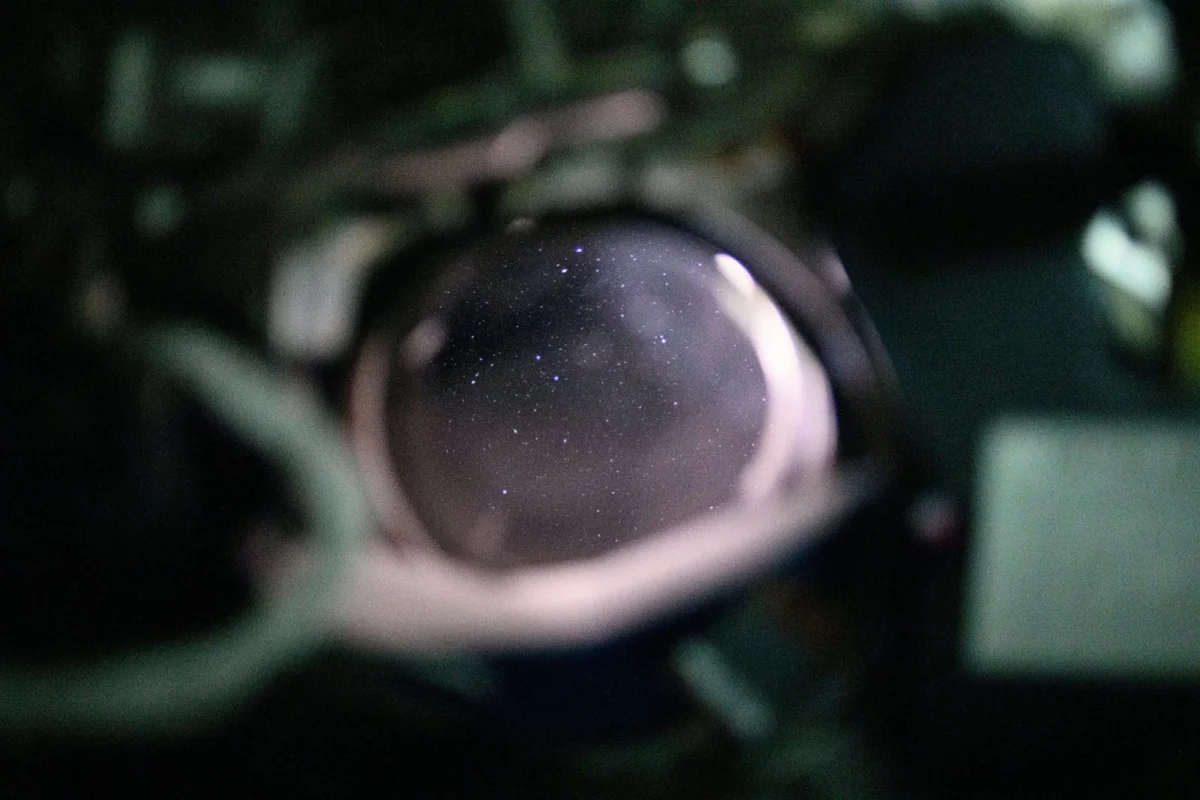
When it comes to the modern era of space exploration, the currency of success is no longer just data telemetry and successful orbital insertion; it is the visual record that connects humanity to the profound isolation and beauty of the cosmos. NASA has recently elevated the standard for space documentation, releasing a staggering 12,217 images captured during the landmark Artemis II mission. This unprecedented "photo dump" has been integrated into the Gateway to Astronaut Photography of Earth archive, providing a raw, unfiltered, and deeply human look at the first crewed lunar flyby in over half a century.
The Mission: A New Era of Lunar Exploration
The Artemis II mission, which saw astronauts Reid Wiseman, Victor Glover, Christina Koch, and Jeremy Hansen traverse more than 250,000 miles during a 10-day journey, was designed to test the capabilities of the Orion spacecraft and the Space Launch System (SLS) in preparation for sustained lunar presence. While the technical metrics of the mission—navigation, life support, and radiation shielding—were the primary objectives for NASA engineers, the "human" objective was just as critical: to document the experience of deep-space travel for the public.

The collection is a masterclass in candid photography. Captured using a mix of professional-grade Nikon equipment and, surprisingly, an iPhone 17, the images range from sharp, high-resolution lunar craters to blurry, accidental shots of cabin interiors. Yet, it is this lack of polish that makes the archive so compelling. By including thousands of images—some redundant, some technically imperfect—NASA has allowed the public to experience the rhythm of the mission: the tedious stretches of waiting, the frantic excitement of a lunar approach, and the quiet, introspective moments of staring out the module window.
Chronology of a Cosmic Journey
The timeline of the Artemis II mission was a carefully choreographed sequence of events that pushed the boundaries of human endurance.

Launch and Earth Departure
The mission began with the thunderous launch of the SLS, signaling the return of humans to the vicinity of the Moon. Once the Orion module achieved trans-lunar injection, the crew spent the initial days acclimating to microgravity. During this phase, the photographs depict the crew engaging with the complex interface of the Orion cockpit, juxtaposed against the rapidly receding blue marble of Earth.
The Lunar Flyby
The highlight of the mission occurred when the Orion module performed its gravity-assist flyby of the Moon. During this period, the crew captured thousands of frames of the lunar surface. The archives show a transition from the stark, grey, cratered landscape to the sight of Earth "rising" or "setting" behind the lunar limb. These images, often framed by the circular or rectangular windows of the Orion module, provide a sense of scale that is impossible to replicate in a laboratory.

Return and Splashdown
The final leg of the journey involved a high-speed atmospheric reentry, a critical test for the spacecraft’s thermal protection system. The photographic record captures the transition from the silence of deep space back into the atmospheric glow of Earth’s return, concluding with the successful splashdown of the capsule.
Supporting Data and Technical Context
The sheer volume of 12,217 images presents a challenge to researchers and enthusiasts alike. To understand the significance of this collection, one must consider the technical constraints the astronauts faced.

- Camera Hardware: The crew utilized a variety of Nikon DSLR bodies paired with high-performance telephoto and wide-angle lenses. The inclusion of an iPhone 17 in the kit marks a significant shift in space-flight photography, highlighting the integration of consumer technology into high-stakes aerospace environments.
- The "Gateway" Archive: The images have been uploaded to the Gateway to Astronaut Photography of Earth, a portal that serves as a living library of human orbital experience. By making these images open-source and accessible, NASA is democratizing the view from space, moving away from the highly curated, polished PR images of the Apollo era toward a more transparent, documentary-style record.
- Data Density: The average image resolution in the archive is high, often exceeding 20 megapixels, allowing for significant post-mission analysis of lunar geological features.
Official Responses and Public Impact
NASA officials have lauded the project as a success for public engagement. "The Artemis II mission was never just about getting to the Moon; it was about sharing that experience with the world," said a spokesperson from the Johnson Space Center.
The public response has been largely defined by the concept of the "Overview Effect"—the cognitive shift reported by astronauts when viewing Earth from space. Critics and space enthusiasts alike have noted that the photos featuring reflections of the astronauts’ faces or hands against the window of the Orion module are particularly resonant. These shots bridge the gap between the observer and the machine, making the engineering marvel of the Orion module feel like a fragile sanctuary floating in the void.

Furthermore, the "blurry" or "imperfect" images have been praised by art critics and photographers. They lend an air of authenticity that is often missing from official government publications. They capture the reality of life in a confined space, where the camera is often treated as an extension of the astronaut’s own eyes, recording whatever catches their attention in a moment of wonder.
Implications for Future Missions
The release of the Artemis II archive has set a new precedent for mission documentation. As NASA looks toward Artemis III and the eventual goal of establishing a base on the lunar surface, the demand for visual content will only grow.

Scientific Implications
Geologists and planetary scientists are already utilizing the high-resolution images to map areas of the Moon that were previously poorly documented. The different lighting conditions captured during the 10-day flyby provide a unique perspective on lunar topography, assisting in the selection of landing sites for future missions.
Sociological Implications
The "photo dump" culture, which has become standard on social media, has been expertly adapted by NASA for space exploration. By presenting the mission in this way, the agency is fostering a sense of relatability. For a generation raised on digital snapshots, the ability to "scroll through" a lunar mission makes the vast, intimidating expanse of space feel significantly more accessible.

Operational Implications
The success of the photography program during Artemis II suggests that future crews will be provided with even more robust imaging tools. As the Orion module evolves, we can expect to see integrated camera systems that provide 360-degree views, potentially even live-streaming capabilities for future moon-bound travelers.
Conclusion: A New Perspective on Our Place in the Universe
The 12,217 images released by NASA are more than just a data set; they are a testament to the human desire to document our existence. Whether it is a perfectly framed shot of a lunar eclipse or a slightly out-of-focus capture of a fellow astronaut floating in the cabin, these photographs serve as a reminder of our vulnerability and our potential.

In viewing these images, one cannot help but feel a sense of profound interconnectedness. The Earth, viewed through the lens of an astronaut 250,000 miles away, appears as a delicate, shimmering orb—a blue jewel in an endless sea of darkness. By sharing these images, NASA has not only documented a mission; they have shared a perspective that has the power to shift our collective consciousness, encouraging us to protect the one world we have while we continue to look toward the stars.
As we move forward with the Artemis program, we can look back at this massive archive as the definitive record of our return to the lunar neighborhood. It is a gift of curiosity, a triumph of technology, and a beautiful, chaotic, and deeply human chronicle of the journey beyond our home. For those who wish to explore the collection, the Gateway to Astronaut Photography of Earth remains open, waiting for the next generation of explorers to add their own chapters to the story of human spaceflight.











No comments yet. Be the first to join the conversation!