

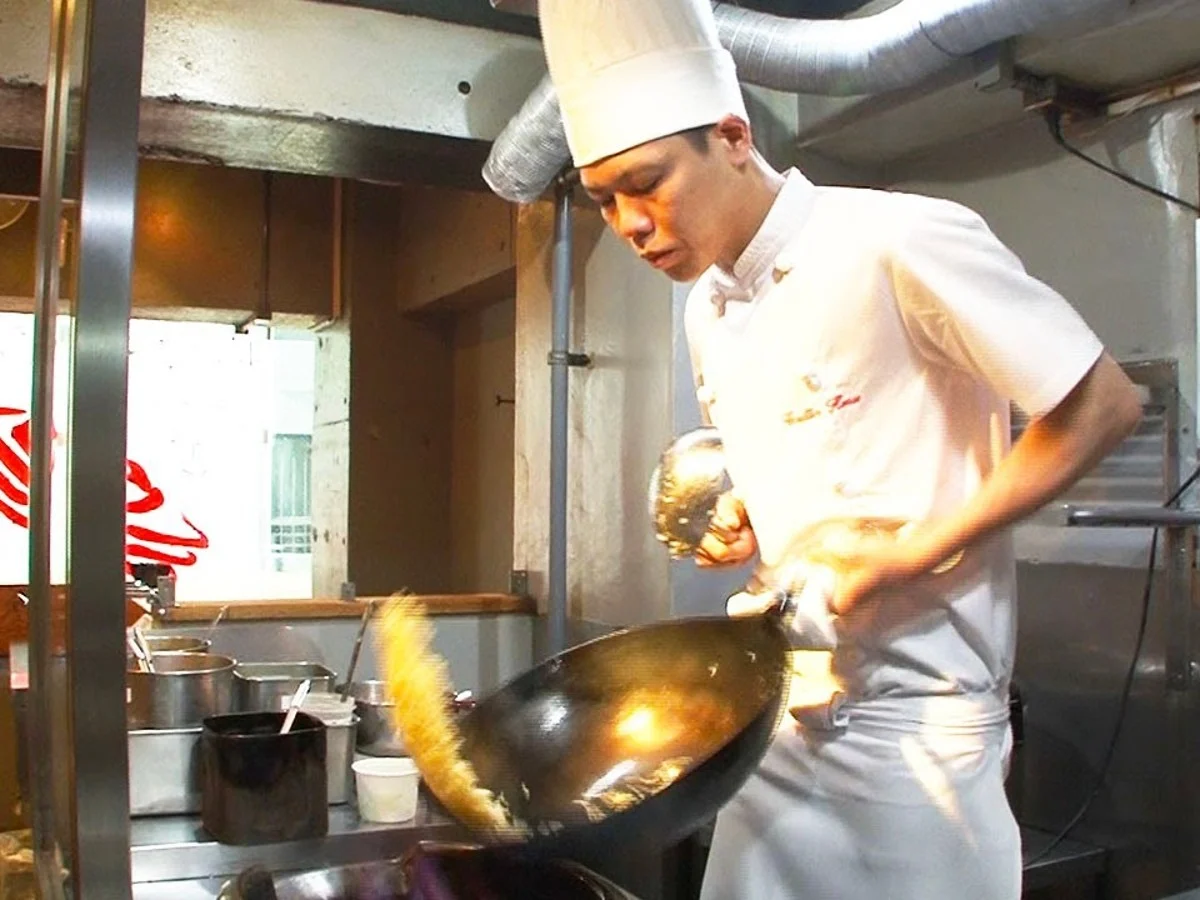
In the culinary world, there is a profound distinction between the simple act of preparing sustenance and the art of professional cookery. While many of us consider ourselves competent in our own kitchens, the gap between a home-cooked meal and the high-octane performance of a master chef is often measured in precision, speed, and the rhythmic mastery of tools. Nowhere is this more evident than in the bustling food scene of Tokyo, where specific masters have elevated humble, everyday dishes into high-speed spectacles of gastronomic excellence.
While the chefs at Yokohama’s Red Brick Warehouse restaurant, Tachibana, have long held a legendary reputation for transforming the humble omurice (omelet over rice) into a gourmet experience, a new sensation has captured the collective imagination of food enthusiasts across the globe. Takumi Murakami, a master chef at the Shibuya location of Kani Chahan no Mise (The Crab Fried Rice Restaurant), has recently been hailed by the internet as the “God of Fried Rice.” His ability to orchestrate a flurry of flame, steel, and grain in less than a minute has set a new, perhaps unreachable, standard for professional cooking.
Main Facts: The Performance at Kani Chahan no Mise
The core of the recent viral phenomenon centers on a video segment from the TV Tokyo program “Uchimura no Tsuboru Douga.” In this broadcast, Chef Takumi Murakami is captured in his natural element: the cramped, sweltering, and high-pressure environment of a professional kitchen.
The task is deceptively simple: prepare the restaurant’s signature dish, crab fried rice, from scratch to plate. However, the execution is anything but simple. Murakami navigates the wok with a level of fluidity that borders on the hypnotic. Within a window of just 50 seconds, he manages to incorporate fresh ingredients, heat the rice to the perfect temperature, season the dish, and plate it with artistic precision.
What has captivated viewers is not merely the speed—though the speed is undeniably impressive—but the grace. There is no frantic movement, no sign of the stress that typically accompanies a high-volume kitchen. Instead, there is a calm, focused economy of motion. Each flip of the wok, each shake of the seasoning container, and every movement of the spatula serves a specific, calculated purpose. It is a masterclass in efficiency that has earned him comments from across the digital landscape, ranging from “This is the work of a god” to “His technique is beyond compare.”
Chronology of a Viral Sensation
The ascent of Takumi Murakami to international culinary fame was not a slow burn, but rather an explosive moment of digital recognition.
Pre-Viral Era: The Shibuya Staple
For years, Kani Chahan no Mise in Shibuya has been a well-regarded local haunt. The restaurant, which specializes almost exclusively in crab-based fried rice, had already established a reputation among Tokyo locals for high-quality, consistent meals at a reasonable price. Chef Murakami had been performing his duties with the same level of speed and precision for years, largely unnoticed by the wider public outside of the regular lunch crowd.
The Media Catalyst
The tipping point occurred when the production team for the TV Tokyo program “Uchimura no Tsuboru Douga” visited the Shibuya location. Recognizing the cinematic quality of Murakami’s movements, they filmed a high-definition, close-up segment documenting his process. The footage was uploaded to the program’s official YouTube channel, where it quickly transcended the local demographic.
The Digital Explosion
Within days of the upload, the video began to circulate on social media platforms including X (formerly Twitter), Reddit, and TikTok. International food bloggers and culinary enthusiasts began analyzing the footage frame-by-frame. The discourse shifted from a simple appreciation of a chef to a deeper discussion regarding the physics of stir-frying and the cultural significance of the "shokunin" (artisan) spirit in Japanese cuisine.
Supporting Data: The Physics of the Wok
To understand why Murakami’s performance is so highly regarded, one must look at the technical requirements of high-heat stir-frying, often referred to as wok hei—or the "breath of the wok."
Temperature Control and Wok Hei
Wok hei is the elusive, smoky aroma and complex flavor profile achieved only when food is cooked in a seasoned carbon steel wok over an incredibly high flame. Achieving this requires the chef to keep the rice in constant motion, preventing it from burning while ensuring every grain is individually coated in oil and seasoned.
Murakami’s technique demonstrates a sophisticated grasp of this:
- Heat Management: He utilizes a high-output commercial gas burner that reaches temperatures far exceeding domestic stoves.
- Surface Area Distribution: By keeping the rice moving in a parabolic arc, he ensures that the heat is distributed evenly across the grains, preventing clumping.
- Timed Seasoning: He adds liquids and seasonings at the exact moment the wok reaches its peak temperature, allowing the moisture to evaporate almost instantly, which preserves the texture of the crab and the fluffiness of the rice.
Comparative Efficiency
Compared to the industry standard for short-order cooking, Murakami’s 50-second completion time is remarkably fast. A typical stir-fry dish in a professional setting might take between two to four minutes. By reducing this to less than one minute without sacrificing the quality of the "sear" on the rice, Murakami effectively quadruples his output potential, showcasing a level of physical stamina and mental focus that is essential in the high-pressure environment of Tokyo’s Shibuya district.
Official Responses and Culinary Philosophy
While Chef Murakami has remained humble regarding his sudden internet fame, the management of Kani Chahan no Mise has acknowledged the uptick in interest. In interviews following the viral broadcast, representatives for the restaurant chain noted that while the video shows an exceptionally fast performance, it is reflective of the training standards required of all their staff.
“At our restaurant, we believe that the soul of the dish is in the speed of its preparation,” a spokesperson stated. “When the rice spends too long in the wok, it loses its texture. When it is plated too slowly, it loses its heat. Chef Murakami is simply demonstrating the standard we strive for every day.”
The culinary community has also weighed in. Many prominent chefs have noted that Murakami’s technique represents the pinnacle of "functional minimalism." By stripping away unnecessary movements, he avoids the fatigue that typically plagues line cooks over a long shift. His work is viewed not as a "stunt," but as a highly refined process that has been honed over thousands of repetitions.
Implications for the Food Industry
The rise of the "God of Fried Rice" serves as a case study for several broader trends in the modern food industry.
The Rise of "Performance Cooking"
We live in an era where the process of cooking is as valued as the final product. Social media platforms have turned kitchens into stages. The popularity of Murakami’s video suggests that consumers are increasingly interested in the labor behind their food. This transparency fosters a deeper connection between the diner and the chef, elevating the act of eating from a transaction to an experience.
The Preservation of Traditional Skills
In an age of automation, where robotic arms and pre-packaged meals are becoming more common in the service industry, the preservation of manual, high-skill techniques is critical. Murakami’s ability to outperform a machine in both speed and finesse highlights the irreplaceable nature of human intuition. The slight adjustments he makes to the flame or the angle of his spatula based on the humidity or the specific batch of rice are variables that current automation struggles to replicate.
Economic and Tourism Impact
The viral status of the Shibuya location has had a tangible impact on the business. Since the video’s circulation, the restaurant has reported an increase in international tourists visiting specifically to witness the "god" in action. This phenomenon, often referred to as "food tourism," has become a vital component of Japan’s post-pandemic recovery strategy, where unique local experiences are marketed as essential travel destinations.
Conclusion: The Art of the Everyday
Takumi Murakami’s mastery of the wok at Kani Chahan no Mise serves as a poignant reminder that greatness is not always found in rare, expensive ingredients or complex, avant-garde techniques. Often, true mastery is found in the relentless perfection of the everyday. By taking a simple dish of crab fried rice and executing it with the precision of a watchmaker, Murakami has turned a lunch service into a performance art.
For those traveling through Tokyo, a trip to the Shibuya branch of Kani Chahan no Mise offers more than just a meal; it offers a glimpse into the discipline and passion that define Japan’s culinary landscape. Whether or not you are lucky enough to see the "God of Fried Rice" himself at the helm, the experience serves as a testament to the fact that when technique meets dedication, even the most humble bowl of rice can become something extraordinary.
As the internet continues to churn through fleeting viral trends, the legacy of Murakami’s 50-second masterpiece will likely endure—not just as a video to be watched, but as a standard to be respected by chefs and food lovers alike. The next time you find yourself standing before a stove, take a moment to consider the rhythm of your own hands. Perhaps, with enough practice and focus, you too can find the "god" within your own kitchen.











