

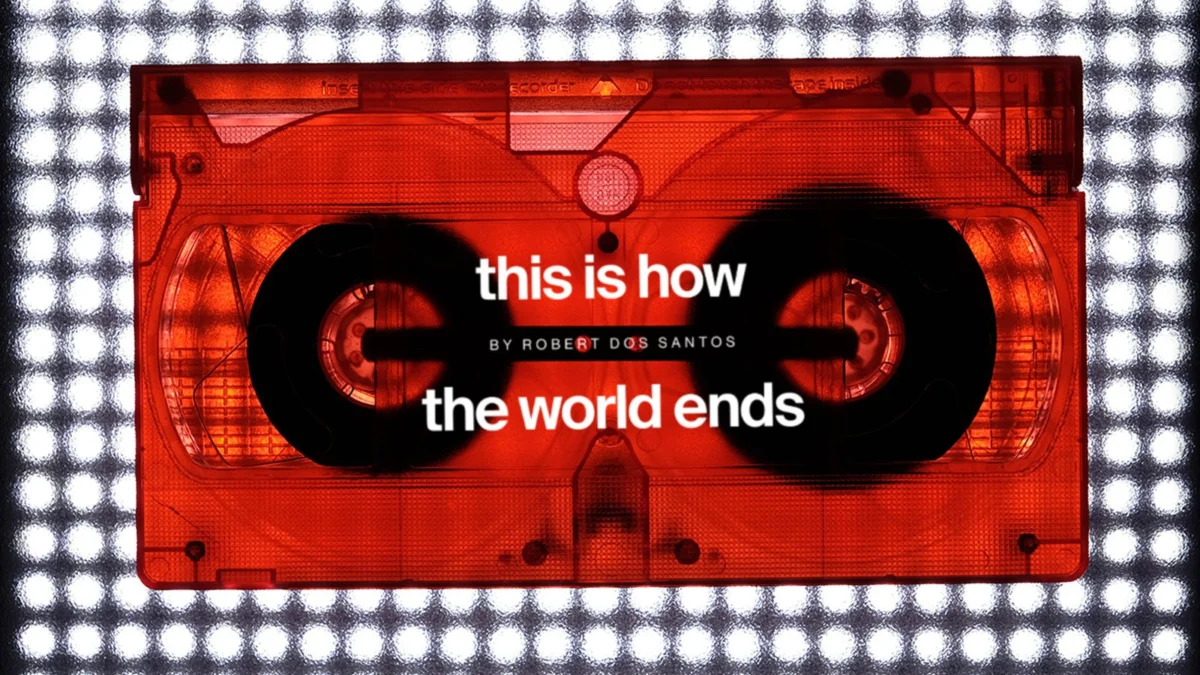
In an era defined by the friction-less convenience of high-definition streaming and the creeping automation of generative artificial intelligence, filmmaker Roberto dos Santos has made a provocative, perhaps even Luddite, choice. He has released his latest feature film, This Is How the World Ends, exclusively on VHS—a format that was functionally buried by the consumer electronics industry nearly a decade ago.
The film, a drama centered on a dinner party unfolding during the final hours of humanity—an apocalypse triggered by runaway AI—serves as both a thematic warning and a physical protest. By choosing a medium that requires manual labor to operate, dos Santos is challenging audiences to reconsider the value of media in a world where content is increasingly ephemeral, algorithmic, and intangible.
The Facts: A Return to the Magnetic Age
This Is How the World Ends marks a peculiar milestone in cinematic history. It is the first feature film in two decades to be released as a "straight-to-VHS" project. The logistics of this endeavor are deliberately obstructive: there is no link to click, no subscription to sign up for, and no "continue watching" button.
To view the film, the audience must acquire a physical cassette and, in many cases, hunt down a functional VCR—a piece of hardware that has not been manufactured since 2016, when Funai Electric, the last major producer, shuttered its production lines. The film is set for release on June 7, a date strategically chosen to coincide with "World VCR Day," celebrating the legacy of the magnetic tape.
The release strategy is a reversal of the traditional Hollywood pipeline. Historically, a film would debut in theaters, move to home video (VHS/DVD), and eventually be relegated to television or bargain bins. Dos Santos is flipping this hierarchy on its head. This Is How the World Ends will debut as a physical, analog exclusive before eventually trickling down to Blu-ray, DVD, cinema, and finally, the digital streaming platforms that dominate the current landscape.
A Chronology of Obsolescence
To understand the weight of this decision, one must look at the timeline of home media. The VHS format enjoyed a cultural monopoly from the late 1970s through the early 2000s. It was the medium of the "Video Store Era," an age defined by the tactile experience of browsing aisles and the communal anticipation of a Saturday night rental.
- 1976–1980s: The "Format Wars" conclude with VHS establishing dominance over Betamax, becoming the standard for home entertainment.
- Late 1990s: The introduction of the DVD provides superior resolution, skip-functionality, and the end of the dreaded "rewind" process.
- 2006: A History of Violence is widely cited as the last major Hollywood motion picture to receive a dedicated VHS release.
- 2016: Funai Electric, the final manufacturer of VCR players, halts production, effectively ending the official lifecycle of the format.
- 2026: Roberto dos Santos releases This Is How the World Ends, reviving the format for a niche, intentional audience.
For two decades, the industry has pushed toward "convenience at all costs." The trajectory from tape to disc to digital file to cloud-based streaming has been one of increasing abstraction. Dos Santos is attempting to break this cycle by re-inserting physical effort into the consumption of art.
Supporting Data: The Value of the Imperfect
The resurgence of analog media—vinyl records, Polaroid film, and now, perhaps, VHS—speaks to a growing consumer anxiety regarding the "digitization of everything." According to recent market trends, physical media collectors are increasingly driven by a desire for ownership in an era where digital content can be revoked or censored by platform owners at any time.
VHS offers a unique aesthetic profile that digital files lack. The magnetic degradation, the "tracking" issues, and the warmth of the analog signal provide a "lived-in" feeling that modern 4K digital masters often lack.
"I want people to feel something that’s imperfect," dos Santos explained in an interview with The Guardian. "Because VHS is not a perfect medium, but there’s also a physical process to it. You have to order a tape and, for some people, actually go out and buy a VCR."
The director argues that the ease of digital consumption has stripped art of its perceived value. By creating a barrier to entry, he is effectively curating his audience. He is not looking for a global mass-market reach; he is looking for a "band of human beings" who are willing to participate in the ritual of the medium.
Official Responses: The Human Element vs. The Algorithmic Tide
The thematic core of This Is How the World Ends is the existential threat of artificial intelligence. It is a biting irony that a film about the destruction of humanity by AI is being delivered via a format that represents the peak of human-managed mechanical engineering.
"It’s a film made by humans for humans," dos Santos noted. "Someone once said that if your mum can do it, it doesn’t have value. If everybody can do something, then nobody can do it… what we’re drawn to is the idea that there are human beings interacting, engaging with one another, being part of the process."
This philosophy acts as a direct critique of the modern film industry, which is currently grappling with the integration of AI in screenwriting, visual effects, and even marketing. By rejecting the "instant gratification" model, dos Santos is making a statement: Art that is too easily accessible, and too easily generated, is at risk of losing its soul.
Critics of the project might point to the absurdity of the format. Why force a consumer to hunt down a VCR in a world that has largely moved on? Is this mere performative nostalgia? Dos Santos counters this by framing the act as a "club." To watch the film is to be initiated into a specific way of seeing—one that demands patience, attention, and a respect for the physical artifact.
Implications: Can Analog Media Survive the Digital Age?
The implications of the This Is How the World Ends release are twofold. On one hand, it highlights the fragility of our digital cultural archive. As streaming services rotate their catalogs based on licensing deals, access to film history is becoming increasingly unstable. A VHS tape, while technically susceptible to magnetic decay over long periods, is immune to the whims of corporate licensing. It is a piece of property that the owner actually controls.
On the other hand, the project signals a potential future for "boutique" physical releases. As digital fatigue sets in, there may be a growing market for films that are treated as objects—limited editions that offer an experience that a digital file cannot replicate.
Whether this is a one-off experiment or the start of a broader "Analog Movement" remains to be seen. However, the success of the release will be measured not by box-office numbers, but by the dedication of its audience. By forcing the viewer to slow down, to search for hardware, and to physically interact with the medium, dos Santos has ensured that This Is How the World Ends will not be "scrolled past" like content on a social media feed.
In the final analysis, the director has achieved something rare in the modern cinematic landscape: he has made the act of watching a movie feel like a significant event. In a world where we have access to everything, all the time, the decision to limit access may be the most radical creative choice a filmmaker can make.
As the tape begins to spin and the tracking lines shimmer across the screen, the audience is reminded that before the cloud, before the algorithm, and before the AI, there was a machine, a tape, and a human hand to push the play button. For the fans of This Is How the World Ends, that connection is worth the price of a VCR.










No comments yet. Be the first to join the conversation!