

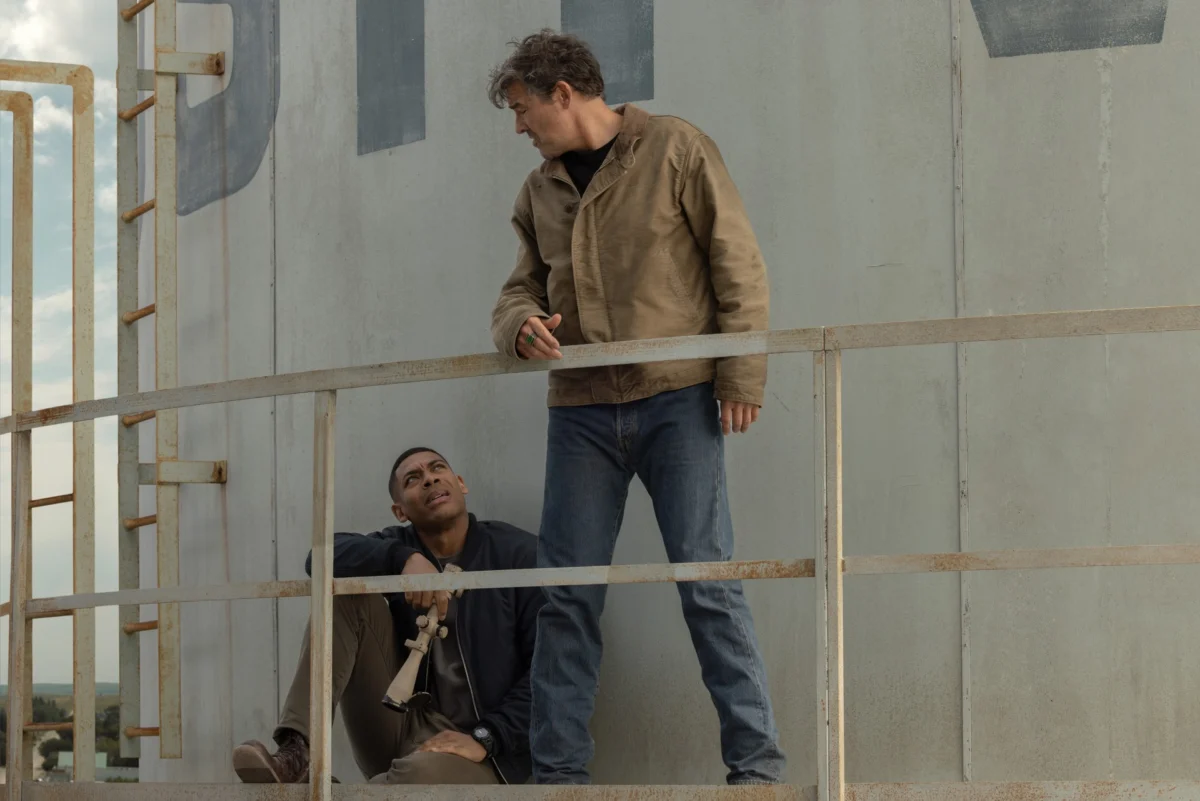
The fourth episode of HBO Max’s Lanterns, titled “The Weenie,” marks a structural and emotional turning point for the series. As the investigation into the mysterious occurrences in Rushville intensifies, the narrative layers of the show—ranging from galactic politics to grounded, small-town corruption—begin to collide with explosive results. By balancing the high-stakes pressure exerted by the Guardians of the Universe with the increasingly volatile interpersonal dynamic between Hal Jordan and John Stewart, the series is successfully transforming from a procedural mystery into a complex character study on power, legacy, and isolation.
Main Facts: A Convergence of Secrets
The episode centers on the dual investigation being conducted by Hal Jordan and John Stewart. While the two protagonists are nominally working together to uncover the truth behind the local figurehead Will Macon and his elusive “benefactor,” they are simultaneously being pulled in opposite directions by unseen, manipulative forces.
Hal remains entangled in a dangerous dialogue with Sinestro, who is actively poisoning the veteran Lantern against his new partner. Simultaneously, John is being coerced by the manifestation of the Guardians, Lianna, who demands that he seize the power of the ring and usurp Hal’s position. The central mystery—the identity of the Manhunter—is brought into sharp relief when the duo discovers that the threat is far closer to home than they initially anticipated, with the revelation that Zoe, John’s romantic interest in Rushville, is the very entity they have been hunting.

Chronological Breakdown of Events
The narrative of “The Weenie” follows a tight, claustrophobic timeline that mirrors the mounting pressure on the protagonists:
- The Sinestro Gambit: Hal and Sinestro continue their clandestine conversation. Sinestro dangles a carrot before Hal, suggesting that the Guardians would allow him to retain his ring if he manages to neutralize the Manhunter threat independently.
- The Architectural Clue: In Rushville, John Stewart utilizes a stolen scope to monitor the Macon compound. He identifies a central building as a “weenie”—an architectural focal point designed to draw the eye—suggesting it serves as the operational heart of the enemy’s activities.
- The Guardian’s Ultimatum: Lianna confronts John, questioning his competence and his loyalty. She pressures him to betray Hal and claim his role as the sector’s definitive Green Lantern, casting doubt on his worthiness while manipulating his insecurities.
- The Infiltration: Using a burrowing construct designed by John, the duo breaches the compound. Their arrival is met with high-tech traps and gas that effectively nullifies their ring-based defenses.
- The Confrontation with Macon: Captured and brought before Will Macon, the Lanterns are subjected to a bizarre power play. Macon reveals that his benefactor provides health and salvation to the town in exchange for protection, confirming that the town’s “health” is a direct product of an extraterrestrial or high-tech intervention.
- The Satellite Trap: Following a narrow escape facilitated by Sheriff Kane, the tension shifts to a deadly game of cat-and-mouse. After an attempt on Zoe’s life via a satellite strike, the investigation leads the pair to Hector Gutierrez (posing as Hector Hammond), who attempts to blackmail them with threats against John’s family.
- The Final Reveal: After exposing Gutierrez as a fraud and learning the Manhunter’s identity, the episode culminates in a shocking realization for Hal: Zoe is the true target. The episode ends in a vehicular crash, underscoring the fraying trust between the two leads.
Supporting Data: The Symbolism of the “Weenie”
The titular concept of the “weenie,” borrowed from Walt Disney’s urban planning for Disneyland, serves as a brilliant metaphor for the episode’s pacing. Just as Sleeping Beauty’s Castle serves as a visual anchor that guides visitors through the park, the Macon compound’s central structure serves as the narrative anchor for the episode.
However, the episode also utilizes the "weenie" as a thematic device. The Guardians, Sinestro, and even the fake Hector Hammond are all "weenies"—focal points of influence that draw Hal and John in, distracting them from the true threat hiding in plain sight. This architectural metaphor effectively illustrates how both Lanterns are being led by the nose, their focus manipulated by parties who have no interest in their success or safety.

Official Responses and Internal Conflicts
The interpersonal conflict between Hal and John has reached a fever pitch. The script masterfully highlights the contrast in their approaches: Hal, the weary veteran who has learned the hard way that attachment is a liability, and John, the newcomer who is being forced to treat the ring as an object of conquest rather than a tool for protection.
The dialogue between Lianna and John is particularly revealing. By presenting a Guardian as a manipulative entity who adopts the form of a white woman to better exert pressure on John, the show underscores the systemic nature of the manipulation. Conversely, the fact that the Manhunter (Zoe) adopts a form that allows her to manipulate John’s emotions highlights that both characters are currently being played by forces that view humanity as a chessboard.
Implications for the Future of the Sector
The implications of the final scene—the crash, the reveal of Zoe’s identity, and Hal’s impulsive behavior—are profound.

The Trust Deficit
The core conflict of the series is no longer just about defeating the Manhunter; it is about whether Hal and John can survive their own partnership. Hal’s decision to throw himself from the moving car serves as a physical manifestation of his instability. He is a man who has been pushed to the edge by the isolation of his office, and his lack of trust in John is becoming a self-fulfilling prophecy.
The Nature of the Benefactor
Macon’s admission that his benefactor saved him from terminal illness elevates the stakes from a standard hero-villain dynamic to something more morally grey. If the “enemy” is providing tangible health and stability to a town that was otherwise forgotten, the moral imperative for the Green Lanterns to “stop” the benefactor becomes complicated. Are they liberating the town, or are they destroying the only thing keeping its citizens alive?
The Guardian’s Agenda
The revelation that the Guardians are actively working to pit their own recruits against one another suggests a much deeper rot within the Oan hierarchy. If the Guardians are willing to sacrifice Hal to facilitate John’s ascension—or vice versa—the entire concept of the Green Lantern Corps as a noble institution is being dismantled in real-time.

Conclusion: A Masterclass in Paranoia
“The Weenie” is not just an episode of television; it is a tactical exercise in building dread. By focusing on the small, human moments—John’s art school background, Hal’s confession about his mother, the frustration of a failed stakeout—the series anchors its high-concept sci-fi premise in a gritty, relatable reality.
As the series progresses, the audience is left to wonder if the ultimate goal of the Manhunter is destruction, or if it is merely to expose the inherent flaws of the Green Lantern Corps. With both Hal and John being steered by outside voices, the upcoming episodes will likely focus on whether they can break their respective chains before the entire sector pays the price. One thing is certain: in the world of Lanterns, the most dangerous threats are rarely the ones that require a power ring to defeat—they are the ones that demand a betrayal of the self.










