

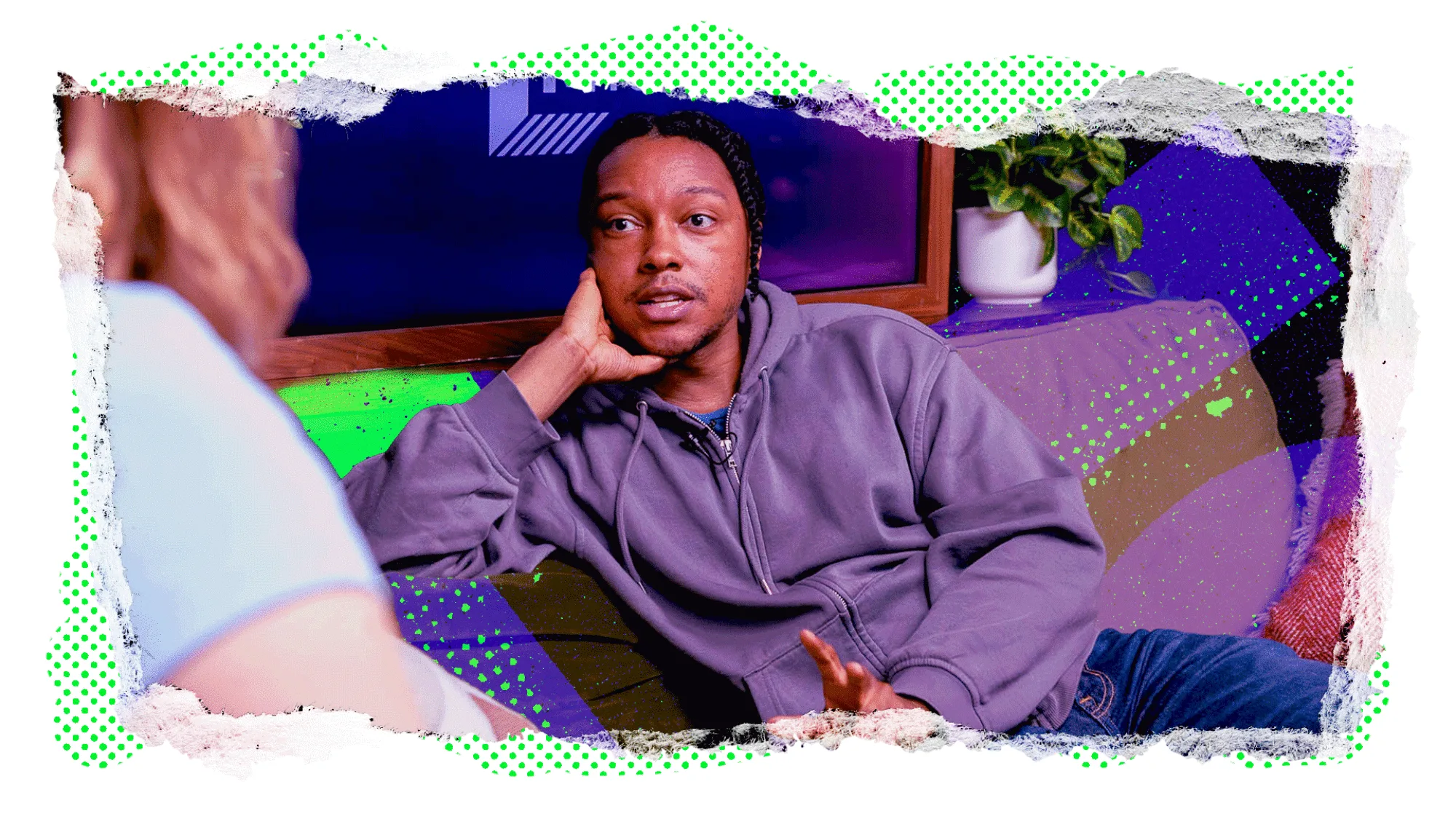
The gray hoodie has become an inadvertent uniform for Josh Johnson. It is unpretentious, comfortable, and—much like his comedic style—deceptively simple. To the uninitiated, the 36-year-old comedian might appear to be just another voice in the crowded landscape of digital content creators. However, sit with him for an hour, and you realize that Johnson is something of a unicorn in the modern media ecosystem: he is a man who has achieved massive, viral success by fundamentally rejecting the mechanics that the internet claims are necessary to win.
While digital culture is currently obsessed with "fast-twitch" content—the frantic, high-intensity clips designed to trigger outrage or immediate dopamine spikes—Johnson thrives on patience. He weaves narratives that meander, observation-heavy bits that prioritize nuance over punchlines, and a conversational rhythm that feels less like a polished stand-up set and more like a late-night conversation with a friend. In an age of optimization, Johnson is the antithesis of the algorithm.
The Man Behind the Hoodie: A Chronology of Success
Josh Johnson’s path to becoming one of the most recognizable storytellers in comedy wasn’t linear, nor was it paved by a singular viral moment. His professional trajectory is a study in traditional craft meeting digital evolution.
From Louisiana to the Late-Night Stage
Growing up with a keen eye for the absurd, Johnson cut his teeth in the comedy scenes of Louisiana before heading to Chicago, a city renowned for fostering raw, character-driven talent. His ability to find humor in the mundane and the deeply personal caught the attention of the industry, eventually landing him a writing position at The Tonight Show Starring Jimmy Fallon.

However, it was his 2017 arrival at The Daily Show that solidified his profile. As a writer and correspondent, Johnson learned the art of translating complex, often bleak political and social realities into digestible, human-centric segments. Working alongside Jon Stewart, Desi Lydic, and others, he refined his ability to hold a mirror up to the culture.
The Digital Pivot
While his traditional resume is impressive, his digital footprint is staggering. With 2.5 million YouTube subscribers, 2.7 million TikTok followers, and a massive Instagram presence, Johnson has cultivated a fan base that values his "long-form" sensibility. Unlike creators who rely on 15-second soundbites, Johnson frequently uploads full-length stand-up sets, trusting his audience to engage with his pacing. His most recent milestone, the premiere of his HBO special Symphony on May 22, 2026, represents the culmination of this hybrid approach—where digital audience building feeds back into high-level traditional comedy success.
The Philosophy of "Thoughtfully Online"
In his interview with Mashable, Johnson addresses a sentiment he once famously shared: that the internet was, at its core, "a bad idea." When asked if he still holds that view, his answer is characteristically nuanced.
"It depends on the day," Johnson says, lounging in a studio in Manhattan. "I think incredible good and connection have come from it. But there’s also this level of cruelty online that’s very hard to pull off in person. It’s difficult for people to be as hateful face-to-face, eye-to-eye, as they can be online."

This dichotomy defines his work. He identifies as "thoughtfully online," a contrast to the "chronically online" demographic that defines much of modern discourse. Johnson views the internet not as a machine to be gamed, but as a space that has lost its way. He laments the death of the "honest debate," noting that the current digital economy incentivizes the "clip"—the extraction of an outrageous, context-free soundbite—over the integrity of a full argument.
Supporting Data: The Economics of Attention
The shift Johnson observes is supported by current digital media trends. Data indicates that while short-form video currently dominates watch-time metrics, there is a growing "fatigue" among audiences regarding content that feels manufactured for virality.
- The Clipping Culture: Platforms like TikTok and Instagram Reels have commodified the "fragment." Creators are increasingly pressured to slice their work into 30-second segments, often stripping away the setup and nuance that give a story its weight.
- The Community Metric: Johnson’s success contradicts the standard playbook. Rather than focusing on "engagement rates" or "growth hacking," he focuses on the comment section as a social space. He takes pride in seeing fans look out for one another in his YouTube comments—a digital echo of the collaborative forums he frequented as a child.
- Audience Retention: Despite the push for shorter content, Johnson’s full-length uploads consistently see high completion rates. This suggests that there is a significant, underserved market for creators who respect their audience’s intelligence and time.
Official Perspectives: The Human Element
Johnson’s skepticism of the internet is inextricably linked to his stance on the role of the human artist in an era of artificial intelligence. He views AI with a critical eye, distinguishing between its utility in scientific progress and its parasitic nature in creative industries.
"You scraped the internet and stole from us just to tell us you were going to replace us because we aren’t worthy," Johnson remarks. "If we’re not worthy, why didn’t your AI make everything itself?"

This quote underscores his broader thesis: that the value of art lies in the "lived experience." His comedy, whether it involves catfishing the KKK as a teenager, navigating racial identity in the American South, or unpacking the absurdity of celebrity scandals, is grounded in specific, undeniable human truths. These stories resonate because they are "calibrated toward the laugh," yes, but they are also calibrated toward the truth of the human condition.
Implications: The Future of Digital Comedy
What does the rise of a comedian like Josh Johnson mean for the future of digital content?
1. The Death of the "Polished" Persona
Johnson’s success with the "gray hoodie" aesthetic serves as a template for a new kind of influencer—one who is authentically themselves rather than a carefully curated brand. By refusing to chase trends, he has made himself immune to the rapid turnover of internet fads.
2. A Return to Long-Form
There is a growing movement of viewers looking to escape the "scroll." Creators who provide substance and depth are finding that their audiences are more loyal and less prone to churn. Johnson’s ability to weave political commentary with personal anecdote in a way that feels unscripted is a roadmap for future comedians.

3. The Internet as a Community, Not a Market
Johnson’s ultimate goal seems to be the reclamation of the internet as a space for genuine connection. By speaking about his fans as people—rather than "users" or "metrics"—he fosters a level of trust that traditional algorithms cannot replicate.
Conclusion: Looking for the ‘Good Parts’
As we look toward the future of digital culture, the question remains: Can the internet be saved from its own incentives? Josh Johnson seems to believe it can, or at least that it’s worth the effort to try.
His work is a testament to the idea that if you build something with care, honesty, and a healthy dose of skepticism, the audience will follow. He is not trying to "win" the internet in the traditional sense; he is trying to occupy the "good parts" of it. And in a digital landscape often defined by its worst impulses, perhaps that is the most radical move a comedian can make.
As he noted during our discussion, "I would hope to be part of the good parts of the internet." Given his trajectory, his authenticity, and his refusal to be anything other than himself, he is already well on his way.












No comments yet. Be the first to join the conversation!