
 Reynand Wu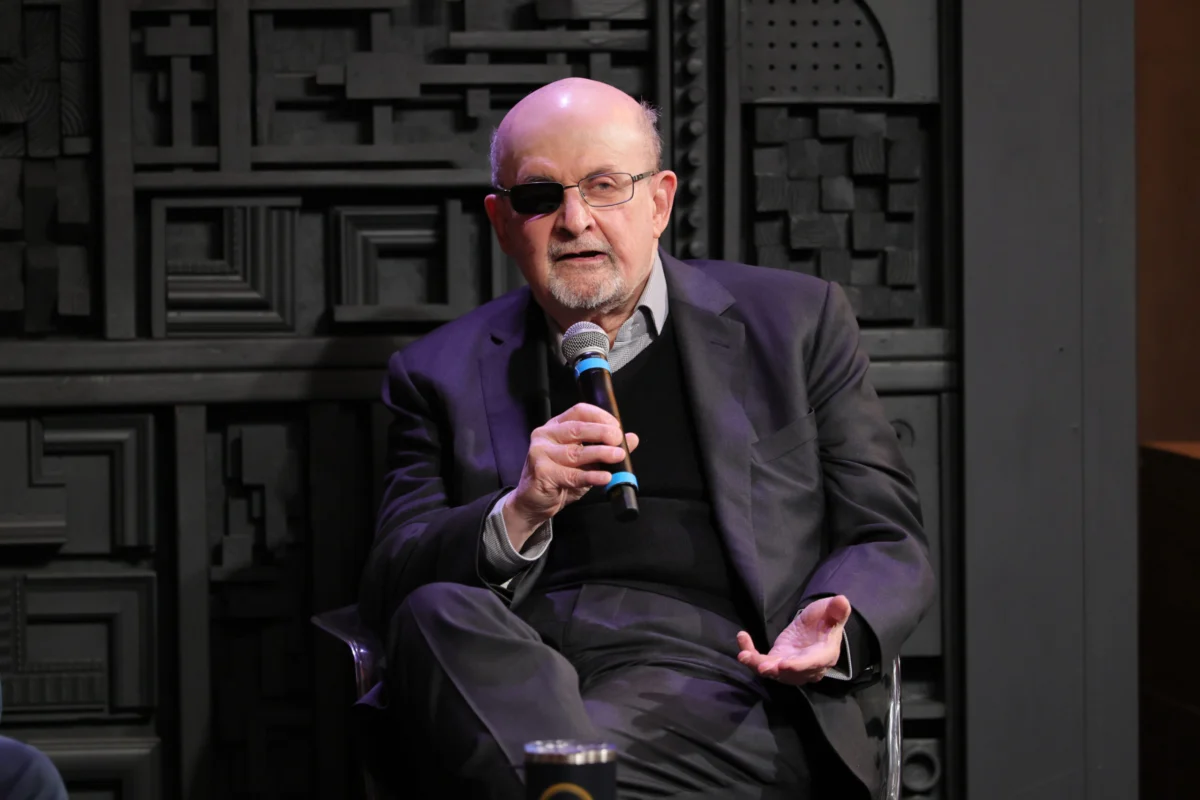
By Literary Correspondent
In the hallowed, cavernous space of the Porto Coliseu, the atmosphere shifted from the typical hushed reverence of a literary festival to something far more intimate—and occasionally darkly humorous—as Sir Salman Rushdie took the stage. The inaugural Babell Literary and Cultural Festival in Porto, Portugal, provided the backdrop for a candid, wide-ranging Q&A session that saw the Indian-born British-American novelist grappling with the existential weight of his past and the artistic challenges of his future.
When a member of the audience ventured to ask the author about his perspective on death, and whether he harbored any lingering fear of it, Rushdie’s response was characteristically sharp. "I’ve had quite a good look at it, and it’s not great," he quipped, drawing a ripple of appreciative laughter from the sold-out crowd. He paused for a beat, his tone softening to a dry, understated gravity: "I’d prefer not to."
The Shadow of 2022: A Chronology of Violence
For most authors, such a question would be abstract, a philosophical inquiry into the human condition. For Rushdie, it is a matter of recent, visceral memory. The setting of the Porto Coliseu—an auditorium filled with spectators waiting for the author’s words—mirrored the scene of the 2022 attack with unsettling precision.
On August 12, 2022, while preparing to deliver a lecture at the Chautauqua Institution in New York, Rushdie was attacked on stage. A 25-year-old assailant, Hadi Matar, rushed the podium and stabbed the author 15 times, leaving him with life-altering injuries, including the loss of sight in one eye and permanent damage to his hand. The incident sent shockwaves through the global literary community, reigniting debates over freedom of expression and the enduring reach of the fatwa issued against him decades earlier.
The motivation behind the assault was traced back to the long-standing, state-sanctioned hostility toward the author. According to federal indictments, Matar was influenced by a 2006 speech delivered by Hezbollah leader Hassan Nasrallah, which endorsed the original death warrant placed on Rushdie by Iranian religious leaders following the 1988 publication of The Satanic Verses. The novel, which remains a touchstone of the controversy, was labeled blasphemous by the Iranian establishment, setting off a decades-long exile and constant security concerns for the author.
In a striking revelation, it was later disclosed that Matar had read only a few pages of the book he deemed so offensive that it warranted a murderous crusade. For Rushdie, this disconnect between the act and the supposed justification remained a source of profound confusion. "How could this young man, growing up in New Jersey, with no criminal record, decide to commit the murder of a stranger?" Rushdie reflected during the Porto session.
Confronting the Attacker: The Anatomy of a Memoir
Rushdie’s journey through the trauma of that day is chronicled in his 2024 memoir, Knife: Meditations After an Attempted Murder. The book serves as an autopsy of the event, dissecting the psychological and physical aftermath of the stabbing.
A centerpiece of the memoir is its final chapter, which features a fictionalized dialogue between the author and his assailant. Rushdie shared with the Porto audience that this literary construct was, in fact, a surrogate for a thwarted real-life ambition. He had initially contemplated visiting Matar in prison—where the assailant is now serving a 25-year sentence handed down in 2025—to confront the man who had tried to end his life.
"My wife didn’t think that was a good idea," he admitted with a wry smile. Beyond the domestic counsel, Rushdie realized the practical futility of such an encounter. "Even if he did agree to it—which he probably wouldn’t, for many reasons—what would I get out of the meeting? He’s not going to open his heart to me. It would’ve been a series of clichés that I could predict anyway."
Faced with the limitations of reality, the novelist returned to his primary tool: the imagination. "I thought, I’m a novelist, why don’t I make it up?" he said. The result—a chapter that balances the cold, predictable malice of the attacker with the author’s own quest for closure—has garnered significant critical attention. Rushdie noted with a touch of irony that while many fellow writers hailed the section as the "best chapter in the book," a few critics dismissed it as the weakest. "That just shows you the problem with critics," he joked, dismissing the dissent with the ease of a man who has survived far worse.
The Evolution of the Novel: Public vs. Private Life
Beyond the shadow of his attacker, the discussion in Porto turned to the craft of writing and the role of the novelist in an increasingly volatile world. Despite a career defined by political firestorms, Rushdie was adamant about his artistic philosophy: he has no interest in writing "polemical fiction."
To clarify his stance, he invoked the example of Jane Austen. He pointed out that Austen wrote her masterpieces during the height of the Napoleonic Wars, yet the geopolitical upheaval of the time is notably absent from her pages. "That’s because public life and private life were so far apart at that time that she could brilliantly and profoundly explain her characters without needing to refer to the public dimension," Rushdie explained.
However, he argued that the world has fundamentally shifted. The boundaries that once protected the domestic sphere from the reach of the state, the global economy, and the clash of ideologies have evaporated. "Since then, the distance between private life and public life has almost disappeared," he observed. "Public life now collides with our private lives almost every day."
For the modern novelist, ignoring this collision is an act of omission. "If you want to write, it seems to me that that dimension needs to be one of the parts of the explanation of your characters," he argued. "It doesn’t have to be the most important part, but love, work, money, class, religion—all these things are part of how a character is made up."
Implications: A Life Defined by Freedom
The implications of Rushdie’s presence in Porto are clear: he is a man who refuses to be silenced by the threat of violence. His insistence on integrating the "public dimension" into his work without sacrificing the humanity of his characters highlights the central tension of his career. He does not want to write tracts; he wants to write the totality of the human experience.
"I think about politics in fiction like that," he concluded. "I want to write fiction that takes into account everything that makes a human being."
As the Babell Literary and Cultural Festival continues through June 29, the presence of Salman Rushdie serves as a potent reminder of the resilience of the written word. He stands not as a victim defined by his scars, but as an author who continues to find meaning, humor, and purpose in the wreckage of a life almost cut short. In a world where public and private lives are inextricably linked, Rushdie remains a steadfast advocate for the complexity of the individual—a man who, despite having had a "good look" at death, remains deeply, irrevocably committed to the business of living.


 Pevita Pearce
 Asep Darmawan




