Basiran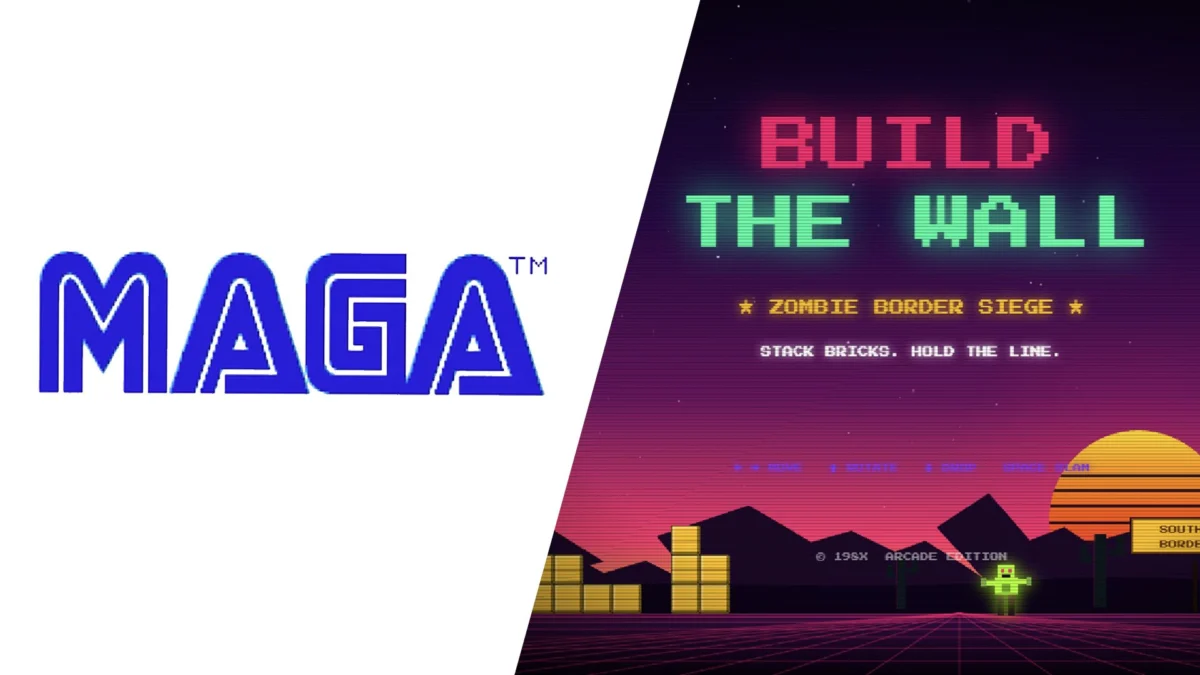
In an era where the lines between political messaging and digital entertainment are increasingly blurred, the White House’s latest foray into gaming has ignited a firestorm of controversy. The launch of Arcade.gov, a government-hosted portal featuring low-budget, politically charged browser games, was intended to reach a younger, digitally native demographic. Instead, the initiative has become a masterclass in how not to handle intellectual property (IP), culminating in a swift, humiliating retreat after The Tetris Company took legal issue with the site’s content.
The incident has opened a Pandora’s box of questions regarding the government’s approach to copyright law, the ethics of political digital propaganda, and the potential liability of public institutions when they engage in the unauthorized use of globally recognized creative assets.
The Chronology of a Failed Digital Campaign
The saga began last Wednesday, when the White House social media apparatus unveiled Arcade.gov with significant fanfare. The platform launched with five titles, each heavily derivative of classic gaming icons. The games included "Build the Wall"—a transparent, albeit poorly executed, clone of the legendary tile-matching game Tetris—alongside adaptations mimicking the mechanics of Snake, Flappy Bird, and Duck Hunt.
Within twenty-four hours, the internet’s collective gaze turned from the platform’s political messaging to its questionable production quality and blatant copyright infringement. By Thursday, The Tetris Company—the entity responsible for managing the worldwide rights to the game—issued a sharp, public rebuke via X (formerly Twitter). The company explicitly distanced itself from the "Build the Wall" title and warned, "We take copyright infringement very seriously."
The response was immediate. By the end of the week, the White House quietly scrubbed the site of the offending game, leaving only four of the original five titles. This retreat marked a rare and swift victory for a private entity against a federal agency, highlighting the vulnerability of the White House’s legal strategy.
Anatomy of a "Shoddy" Clone
The "Build the Wall" game was intended to serve as a satirical, ideological tool, tasking players with "protecting the border from the coming horde." However, beyond the obvious ethical concerns, the game suffered from what critics have described as "broken" design.
Social media users were quick to post footage of the game failing to function, even by the standards of a simple clone. One viral clip showed a player successfully building a wall to the top of the screen—the game’s apparent goal—only to be met with an automatic "Game Over" screen. The irony was not lost on the gaming community; the very mechanism meant to represent the administration’s policy failed to function logically, serving as an inadvertent metaphor for the project’s lack of oversight.
A Pattern of IP Disregard
The removal of the Tetris clone is not the first time this administration has faced scrutiny over the unauthorized use of intellectual property. The White House’s digital strategy has shown a persistent, almost cavalier, disregard for copyright protections.
Previous instances have included the unauthorized use of Nintendo’s Super Mario branding and, in earlier promotional materials, the integration of Pokémon theme music over footage of Immigration and Customs Enforcement (ICE) operations. These actions have drawn criticism from international observers, including Japanese officials who have previously requested that the administration cease the use of domestic creative properties for political agendas.
The inclusion of unauthorized Pac-Man, Xbox, and Sega logos on Arcade.gov further illustrates a systemic issue: a lack of internal review processes that would typically flag trademark and copyright violations before public dissemination.
The Lingering Games: ‘Rio Run’ and ‘Trump Savings Tycoon’
Despite the removal of the Tetris-based game, Arcade.gov remains live with several titles that continue to spark debate. One such game, Rio Run, is a grim reimagining of the classic Snake mechanic. In this version, players control a line of figures representing illegal immigrants in orange jumpsuits, led by a character meant to represent former border official Tom Homan.
Another title, Trump Savings Tycoon, mimics the classic Duck Hunt format, inviting players to "Fill your Kids’ Trump Accounts." These games, while technically original in their coding, rely on the cultural resonance of established gaming genres to convey a specific "America First" narrative.
Implications for Corporate Silence and Legal Precedent
One of the most intriguing aspects of this situation is the relative silence from the broader gaming industry. While companies like Nintendo are notoriously litigious, other major players in the tech and gaming sector have remained largely mute. Some analysts suggest this is due to a fear of being pulled into the polarized political landscape of modern America. Engaging in a legal battle with the federal government, even on grounds of copyright infringement, carries a risk of being framed as a partisan attack.
However, The Tetris Company’s decisive action serves as a proof-of-concept for other firms. By treating the infringement as a matter of brand protection rather than a political debate, they successfully neutralized the unauthorized use of their property. This creates a potential roadmap for other companies whose assets have been weaponized for political gain.
The "AI-Driven" Future and Copyright Concerns
The broader context of this issue is the rise of AI-generated content and the resulting "wild west" of intellectual property. As the barrier to entry for creating games and visual content drops, the ease with which organizations can "remix" or steal existing assets has increased.
Legal experts warn that if the White House continues to treat copyright as an obstacle to be ignored rather than a legal framework to be respected, it sets a dangerous precedent. If the executive branch displays a disregard for intellectual property, it undermines the very laws that the United States represents in international trade agreements. This is particularly relevant as the U.S. looks to protect its own creative industries—Hollywood, Silicon Valley, and the gaming sector—from foreign copyright infringement.
Final Reflections
The Arcade.gov incident is more than just a case of a poorly coded game or a bungled social media campaign. It is a symptom of a political environment that increasingly treats culture as a commodity to be exploited, often without regard for the creators behind the works.
While the White House may have intended to use games to build a bridge to a younger generation, they instead built a wall—not of border security, but of legal liability and public ridicule. As the digital landscape continues to evolve, the necessity for a clear, ethical, and legal standard for how public institutions utilize creative media has never been more apparent. For now, the remaining four games on Arcade.gov serve as a reminder that even in the highest offices of government, the rules of intellectual property are not merely suggestions—they are the bedrock upon which the modern creative economy is built.
As for the gaming community, the takeaway is clear: when a brand is misappropriated, silence is not an option. By speaking up, The Tetris Company protected its legacy and sent a signal to the administration that even in the world of politics, the player is not always right—especially when they are breaking the rules.


 Reynand Wu