

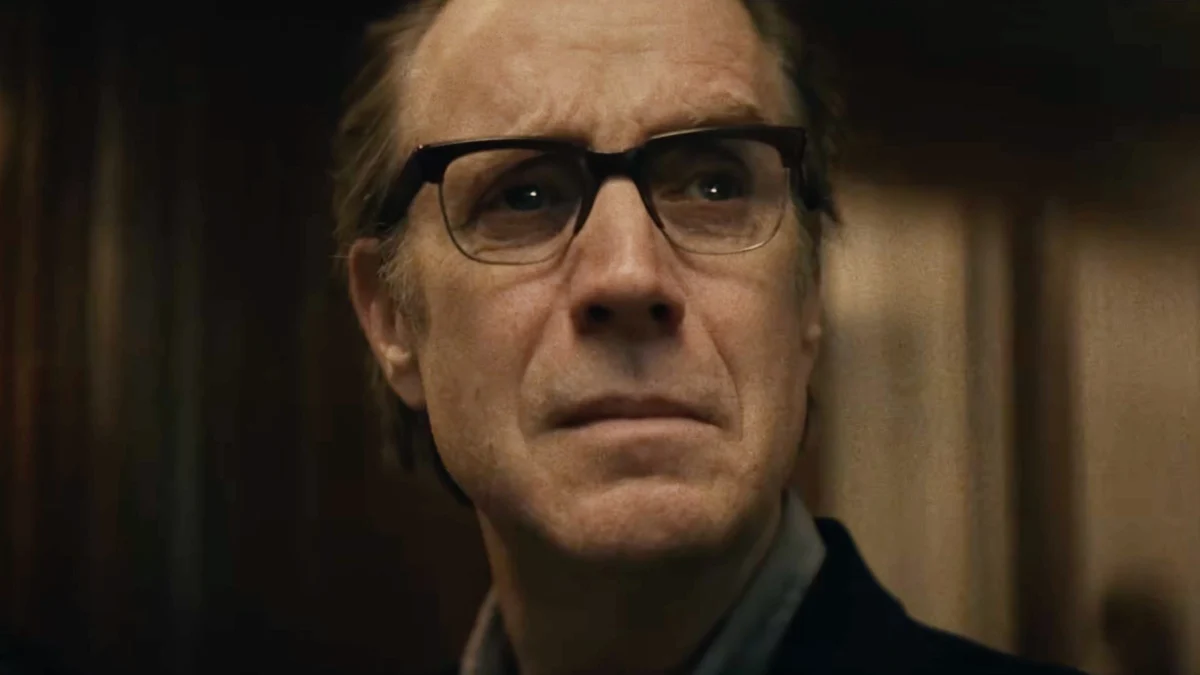
In the expansive landscape of modern television, few actors possess the gravitas and nuanced intensity of Rhys Ifans. Currently, Ifans is commanding the screen in Apple TV+’s Star City, a high-stakes, atmospheric spin-off of the celebrated alternate-history saga For All Mankind. As the mysterious, authoritative figure known only as the "Chief Designer," Ifans has become the anchor of a series that seamlessly blends the claustrophobic tension of a Cold War spy thriller with the awe-inspiring scientific ambition of space exploration.
However, for those familiar with Ifans’ recent work in the Game of Thrones prequel House of the Dragon, the Chief Designer evokes a chillingly familiar archetype: the brilliant, calculated, yet deeply compromised power broker. In an exclusive interview, Ifans breaks down the psychological parallels between his Soviet visionary and the infamous Hand of the King, Otto Hightower.
The Genesis of the Chief Designer
Star City has emerged as a critical darling, surprising audiences by pivoting from the broad, epic scope of For All Mankind to a more intimate, character-driven narrative. Ifans’ character is heavily inspired by Sergei Korolev, the legendary, real-life architect of the Soviet space program. Within the show’s fictionalized timeline, the Chief Designer is a man of singular vision, possessing the rare ability to command a room of hardened Soviet bureaucrats and stare down the highest-ranking KGB officials without blinking.
Yet, as the second episode, "A Bear on a Chain," makes clear, the Designer is not merely a cog in the machine. He is a man caught in the vice of his own ideals, attempting to balance the cold, brutal realities of the Soviet regime with the aspirational, transcendent goal of human progress among the stars.
Chronology of an Archetype: From Westeros to the Moon
To understand the Chief Designer, one must look at the trajectory of Rhys Ifans’ recent career choices. Both the Chief Designer and Otto Hightower exist in worlds where information is currency and loyalty is a liability.
- The Otto Hightower Era: As the Hand of the King in House of the Dragon, Ifans portrayed a man whose intellect was matched only by his political cynicism. Hightower operated on a long-term strategic horizon, manipulating the court of King’s Landing to secure his family’s legacy. His "recklessness" was social and political—he gambled with the lives of the realm to ensure the ascendancy of House Hightower.
- The Transition to the Chief Designer: In Star City, the stakes have shifted from the Iron Throne to the lunar surface and beyond. Ifans notes that while the Chief Designer shares Otto’s intellectual superiority, his motivations are far more altruistic. Where Otto sought power for his kin, the Chief Designer seeks to push humanity toward Venus and Mars, often disregarding the "politics of the room" in favor of scientific necessity.
The Philosophy of Calculated Risk
The core of the performance, according to Ifans, lies in the ethics of exploration. During his conversation with /Film, Ifans offered a poignant defense of his character’s apparent callousness regarding the safety of the cosmonauts under his command.
![Star City's Rhys Ifans Explains What His Character Has In Common With Otto Hightower [Exclusive]](https://www.slashfilm.com/img/gallery/star-citys-rhys-ifans-explains-what-his-character-has-in-common-with-otto-hightower-exclusive/l-intro-1779980191.jpg)
"I think in the spirit of all great pioneers, you have to do crazy stuff. You have to take risks," Ifans explained. He acknowledged the internal conflict of a man who sends young people into the void, fully aware that the probability of their return is low. "It was a question I had in the beginning: he isn’t going to space. He isn’t putting himself on the line in that sense. And I always found it interesting that he would send these young people quite knowingly."
Ifans posits that the Chief Designer views his employees not as expendable pawns, but as willing participants in a grander human evolution. "They know the risk. So, he has no problem with that," the actor adds. "But he is reckless. And if people like him weren’t reckless, we’d still be living in caves."
Supporting Data: Intelligence vs. Agenda
The structural comparison between Otto Hightower and the Chief Designer reveals a profound difference in their ultimate success.
1. The Burden of Vision
While both characters are often the smartest individuals in their respective rooms, they operate under vastly different constraints. Otto Hightower was hindered by the chaotic, emotional volatility of the Targaryens. The Chief Designer, conversely, is hindered by the rigid, bureaucratic paranoia of the Soviet Union.
2. The Nature of Altruism
Ifans highlights that Otto Hightower’s intellect was largely self-serving. He believed he was the architect of order, but he was ultimately a servant to his own ego and family dynasty. The Chief Designer is different; he is a servant to the science. He genuinely cares about the safety and comfort of his cosmonauts, even when the state apparatus views them as mere statistics. This distinction creates a sympathetic layer to the Designer that was largely absent in the cold, calculated demeanor of the Hand of the King.
3. The Power Dynamics
Both men are frequently overruled by "actual power"—kings in the case of Hightower, and the KGB/Politburo for the Designer. Their struggle is one of managing those who lack their vision while maintaining the fragile infrastructure required to keep their respective projects—be it a dynasty or a rocket ship—moving forward.
![Star City's Rhys Ifans Explains What His Character Has In Common With Otto Hightower [Exclusive]](https://www.slashfilm.com/img/gallery/star-citys-rhys-ifans-explains-what-his-character-has-in-common-with-otto-hightower-exclusive/intro-1779980191.jpg)
Implications of the "Dangerous Genius"
The portrayal of the Chief Designer carries significant narrative weight for the future of Star City. As seen in the early episodes, his disregard for traditional hierarchy is already putting him in the crosshairs of the KGB. Just as Otto Hightower’s machinations set the stage for the catastrophic civil war in House of the Dragon, the Designer’s reckless pursuit of Venusian exploration threatens to dismantle the fragile stability of his station.
Ifans’ performance suggests that this character is not afraid of the consequences of his actions. In the eyes of the Designer, the survival of the Soviet Union is secondary to the survival of the human spirit of exploration. This creates a high-stakes dramatic tension: what happens when the smartest man in the room realizes that his masters are not just wrong, but actively obstructing the future of the species?
Conclusion: The Price of Progress
As Star City continues its run on Apple TV+, audiences are invited to watch a masterclass in performance. Rhys Ifans has successfully translated the manipulative, high-pressure energy of a fantasy courtier into the high-tech, high-risk environment of the Cold War space race.
The Chief Designer is a mirror reflection of Otto Hightower, yet he serves as a cautionary tale of a different sort. If Hightower represented the danger of political ambition, the Chief Designer represents the danger of scientific obsession. Both characters remind us that in the pursuit of greatness, the most dangerous thing one can possess is a vision that no one else is prepared to see.
New episodes of Star City air every Friday on Apple TV+. Whether he is navigating the treacherous politics of the Kremlin or the silence of the lunar base, one thing remains clear: Rhys Ifans is currently providing some of the most compelling, layered television performances of the decade.









No comments yet. Be the first to join the conversation!