Nana Wu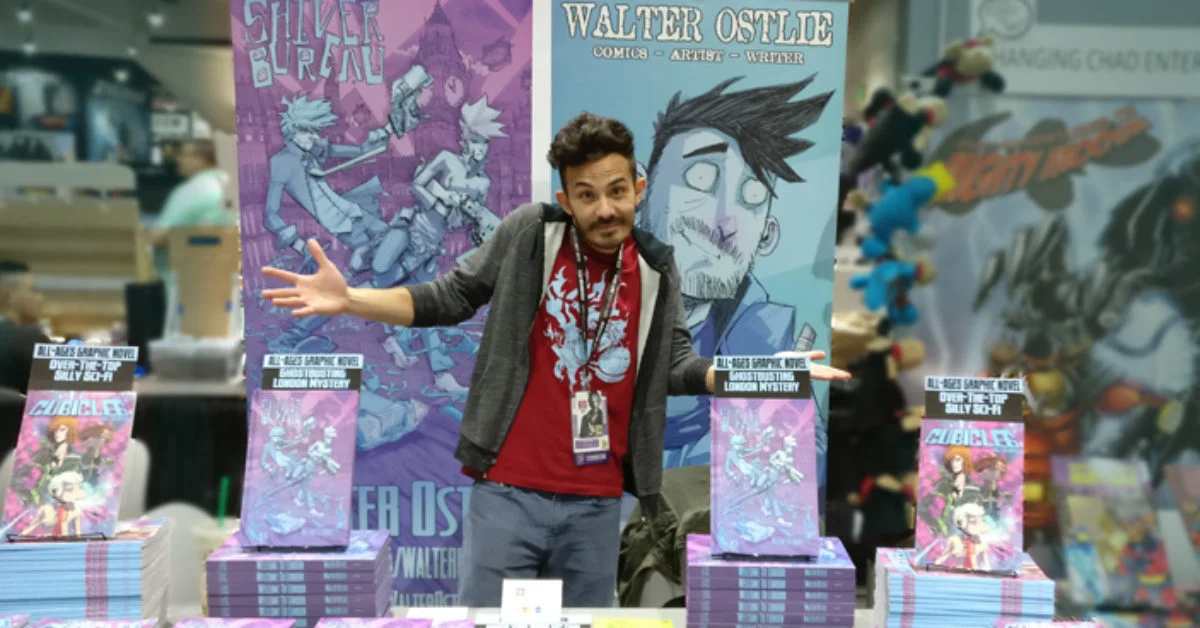
In the rapidly evolving landscape of independent comics, few creators have managed to bridge the gap between traditional print media and the booming digital frontier of Webtoons as effectively as Walter Ostlie. A self-taught polymath—writer, artist, letterer, and YouTuber—Ostlie has spent over a decade carving out a niche that combines high-concept genre fiction with the grueling, fast-paced demands of modern serial storytelling.
From his early days self-publishing graphic novels to his transition into a full-time professional creator, Ostlie’s journey offers a blueprint for how independent creators can navigate, and thrive within, the industry’s digital shift.
The Path to Professionalism: A Chronology of Growth
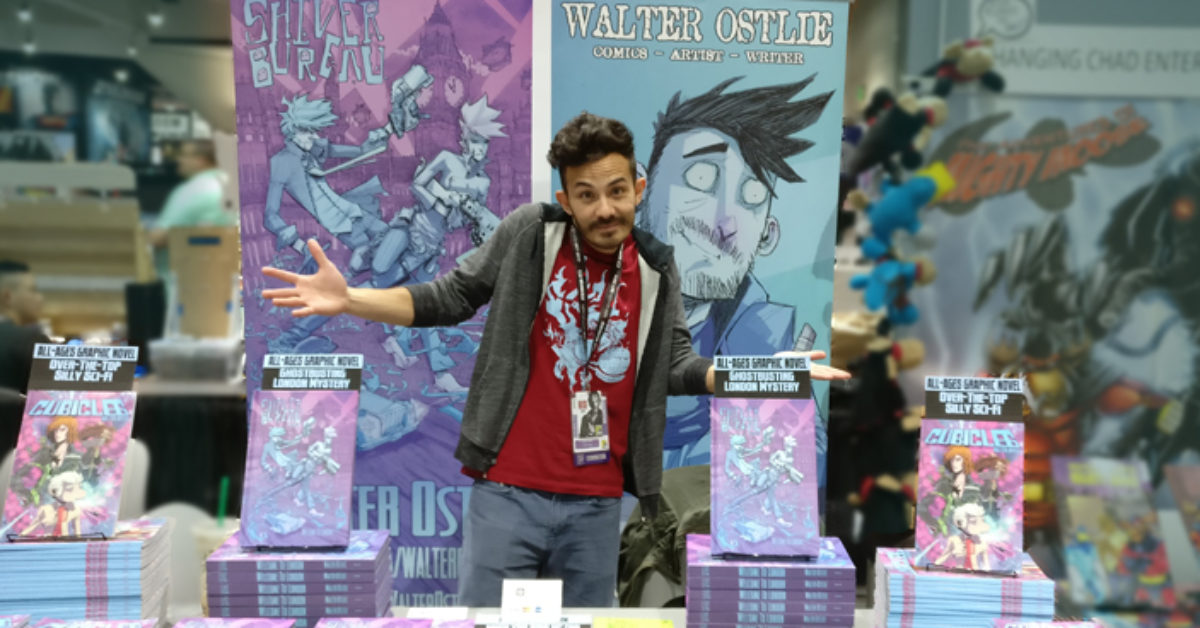
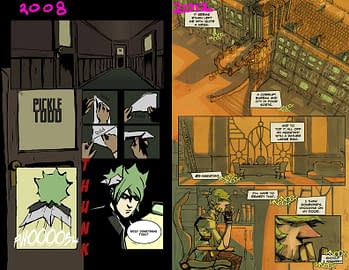
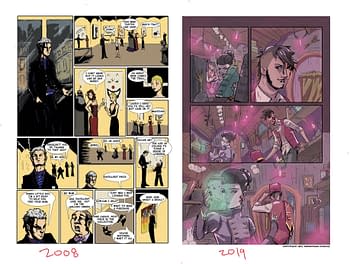
Walter Ostlie’s career began in earnest in 2008, a period he describes as his "formative years" of self-teaching. By 2011, he had successfully launched his first graphic novel, Cubicles, published via Red5 Comics. This initial success provided the foundation for his sophomore effort, Shiver Bureau, a project that would prove to be a turning point.
Shiver Bureau was a testament to the power of the modern crowdfunding model, raising over $13,000 on Kickstarter. While it began as a self-published venture, its critical reception and professional polish caught the eye of Scout Comics, which picked up the title for wider Diamond distribution. This validation solidified Ostlie’s reputation as a creator capable of handling both the creative and logistical hurdles of the comic book business.
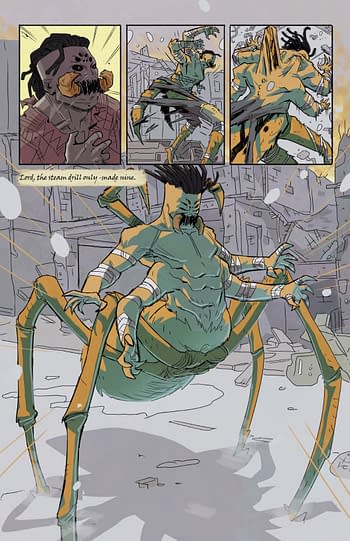
Following this, Ostlie’s trajectory shifted toward the digital space. His work on the graphic novel series Is’nana: The Were-Spider—a collaboration with Greg Anderson Elysee—further expanded his reach. However, it was the Webtoon editorial team’s recognition of his evolving style that led to Haxor, a featured series on the massive Webtoon platform. This move was not merely a change in medium; it was a change in career trajectory that allowed Ostlie to transition from a 9-to-5 professional to a full-time comic creator.
The Pivot to Full-Time: Sustaining a Creative Career
In November 2020, Ostlie marked three years of full-time self-employment. For many artists, the decision to quit a stable day job is fraught with anxiety, but for Ostlie, the move was necessitated by the sheer volume of work required by the Webtoon model.
"The schedule for Webtoon is pretty intense," Ostlie explains. "They release a new episode every week, which equates to about 6-8 traditional American comic pages. That’s writing, drawing, coloring, and lettering. I had to decide: do I pass on Webtoon and keep my 9-to-5, or do I take the plunge?"
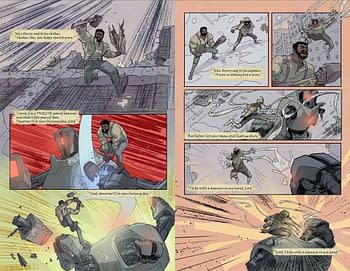
This commitment to the "vertical scroll" format fundamentally altered his artistic process. Unlike traditional print, which relies on the impact of splash pages and wide-angle establishing shots, Webtoons prioritize a seamless, immersive flow. Ostlie has adapted by mastering the art of the "infinite canvas," utilizing extended panels to control pacing and character expression in ways that are impossible in a fixed-page layout.
Supporting Data: The Mechanics of the "Metalshark" Phenomenon
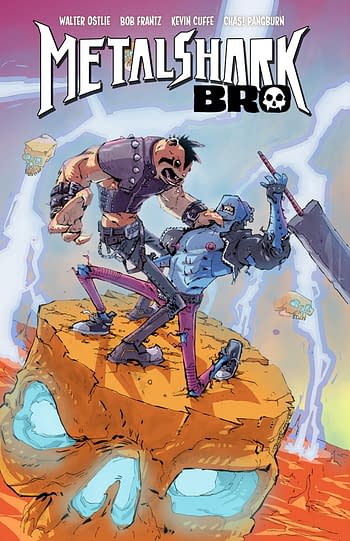
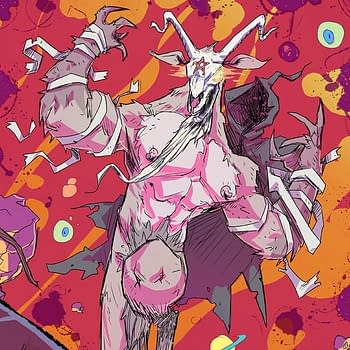
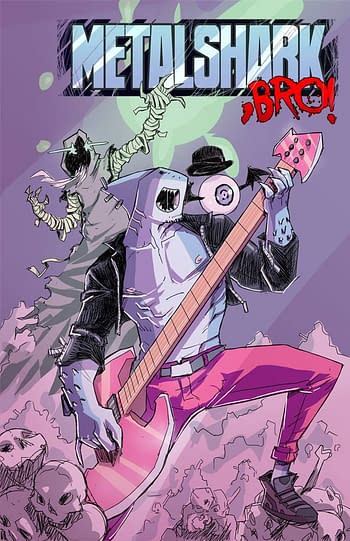
Perhaps the most visible indicator of Ostlie’s marketability is the success of Metalshark Bro. A project that defies easy categorization—a "were-shark battling demons"—it is precisely this eccentricity that resonated with his audience. The project raised over $50,000 on Kickstarter, a figure that highlights the viability of high-concept, creator-owned stories in the digital age.
Ostlie attributes this success to a collaborative process. Working with writers Bob Frantz and Kevin Cuffe, Ostlie was given the creative freedom to translate their chaotic vision into visual reality. "It’s a project that doesn’t really make sense," Ostlie admits. "People see the name Metalshark Bro and immediately think they’re going to get some type of ‘bro’ book. Then they open it up and just aren’t ready for what it actually is."
This success story serves as a case study for indie creators: the combination of a high-energy premise, professional-grade art, and a community-driven marketing strategy is a potent formula for securing funding and distribution.
The Educator: Mentorship via YouTube
Beyond his own output, Ostlie has become an influential figure in the "how-to" space for aspiring comic creators. His YouTube channel, which boasts thousands of subscribers, demystifies the technical aspects of the medium.
Ostlie’s motivation for this venture was two-fold: practical and altruistic. "After you’ve been making comics for a while, people start asking you the same questions," he notes. "Making videos was a way for me to answer those questions at scale."
He focuses on the "mundane" aspects of the trade—the logistics of lettering, the pacing of scripts, and the reality of meeting weekly deadlines. By removing the aura of mystery surrounding the production of a comic, Ostlie is actively lowering the barrier to entry for the next generation of storytellers.
Artistic Evolution: Stylization vs. Technical Skill
When asked about his artistic growth, Ostlie offers a humble, if grounded, perspective. While he acknowledges that his speed has increased dramatically—tasks that once took hours now take thirty minutes—he identifies as a "stylized" artist rather than a technical perfectionist.
"I grew up on Image Comics and I still love Jim Lee’s art," he explains, "but all I look at now is stylized art. It’s amazing how [artists like Skottie Young and Ben Templesmith] can take something normal, like a tree, and draw it in a way that is both familiar and uniquely alien."
This philosophy has allowed Ostlie to maintain a consistent output. By refining a style that emphasizes clarity and impact over laborious detail, he has managed to maintain a sustainable, six-day-a-week work schedule. His routine is disciplined: waking at 7:00 AM, drawing until late afternoon, and dedicating evenings to the less-intensive tasks that keep his projects moving forward.
Implications: The Future of the Comic Industry
Ostlie’s experience provides a window into the broader shifts occurring in the comic industry. The rise of platforms like Webtoon represents a decentralization of the medium. No longer do creators need to wait for a traditional publisher to greenlight a project; they can build an audience, secure funding via Kickstarter, and distribute content globally through digital storefronts.
However, this freedom comes with a trade-off. The "Webtoon grind" is arguably more demanding than the traditional print schedule. The requirement for weekly content means that creators must possess a high degree of project management skills. As Ostlie puts it, "You have to be good at so much stuff. You’re drawing 100 hands, 100 faces, poses, cars, buildings, and monsters all at once."
For writers looking to break into the field, Ostlie’s advice is simple: foster a culture of open communication. The relationship between writer and artist is the bedrock of any successful series. "A writer needs to be okay with telling an artist that something isn’t right," he notes. "An artist needs to be okay with telling a writer that a scene doesn’t work. The more you can communicate, the stronger the final product becomes."
Conclusion: A Sustained Trajectory
As of mid-2020, Walter Ostlie is looking ahead to new, unannounced projects that will keep him occupied well into 2021. Despite the success of his previous works, he remains focused on the next challenge, committed to the idea that an artist’s value lies in their ability to adapt to new narratives.
Whether he is battling demons with a shark-man, teaching a novice how to letter a page, or navigating the complexities of the Webtoon algorithm, Ostlie remains a quintessential example of the modern independent creator: versatile, disciplined, and deeply committed to the craft of storytelling. For those looking to follow in his footsteps, the path is clear: build your community, master your technical workflow, and never stop looking for the "light just up ahead."

 Evan Lee Salim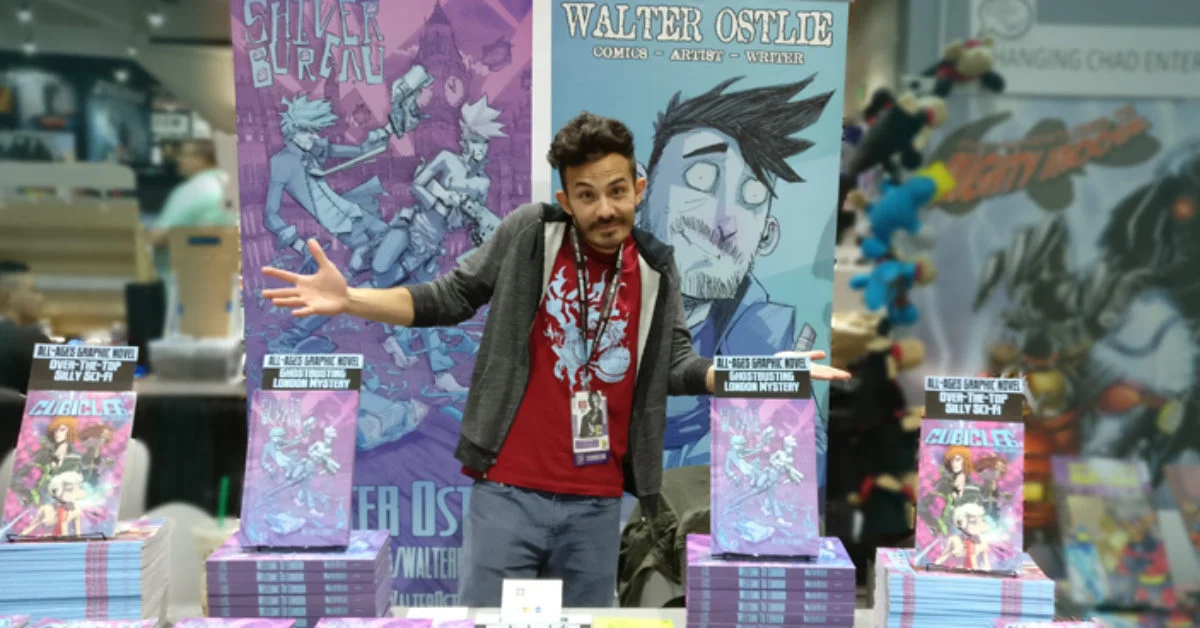
 Nana
Nana