

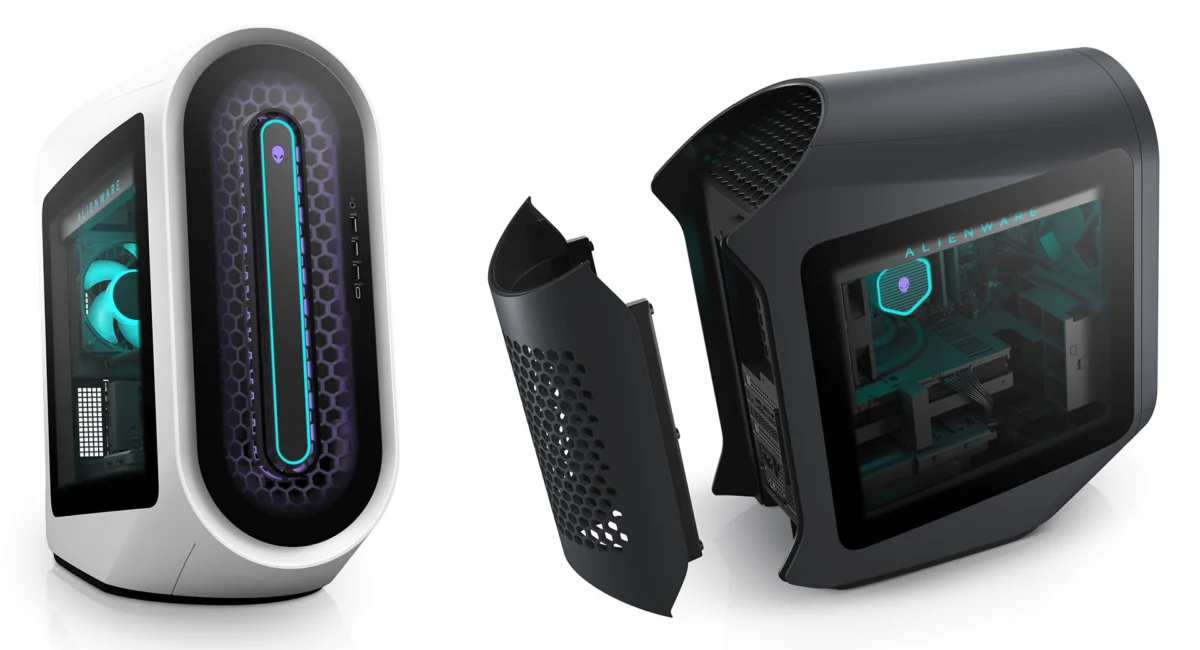
As the gaming industry matures, few brands have managed to maintain the cultural cachet that Alienware has cultivated over the past two and a half decades. To mark its 25th anniversary, the Dell-owned gaming juggernaut has pulled back the curtain on its latest flagship desktop, a significant evolution of its iconic Aurora line. While the company is hosting a commemorative Twitch stream today at 2:00 PM US Central Time (8:00 PM UK Time), early disclosures have provided a comprehensive look at the engineering philosophy behind this refreshed powerhouse.
This latest iteration of the Aurora is not merely a superficial aesthetic update; it represents a fundamental rethinking of thermal efficiency and internal layout, designed to accommodate the power-hungry components of the modern era.
Main Facts: The New Aurora Architecture
At the heart of Alienware’s anniversary celebration is a chassis that prioritizes internal volume and thermal headroom. Visually, the new Aurora maintains the unmistakable DNA of its predecessors, yet it is noticeably more substantial. The company notes that the new design offers 50% more internal volume compared to the previous Aurora R12 model.
This shift toward a "plumper" form factor serves a critical purpose: it addresses long-standing critiques regarding the restricted airflow and cramped internals of previous Alienware desktops. By increasing the chassis dimensions, Alienware has effectively eliminated the "thermal choke" often associated with high-performance gaming rigs, allowing for more robust cooling solutions and better compatibility with standard, off-the-shelf components.
Key features of the new chassis include:
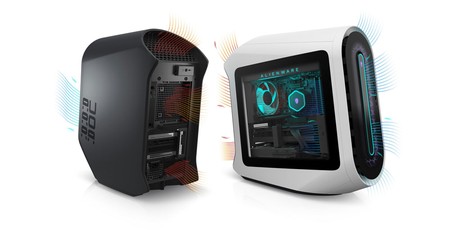
- Enhanced Thermal Management: A minimum of two 120mm fans (intake and exhaust) comes standard, with high-end configurations supporting up to four fans and integrated liquid cooling loops.
- Aesthetic Customization: For the first time, users can opt for a transparent left side panel, offering a window into the machine’s internal lighting and cable management.
- Tool-less Accessibility: The chassis retains a modular, tool-less design, catering to both DIY enthusiasts and those who prefer a streamlined upgrade path.
- Rear Cable Management: A new, optional magnetic rear cable cover provides a clean, professional aesthetic—a feature specifically requested by the eSports community, where the back of the machine is often exposed during tournaments.
A Chronological Perspective: 25 Years of Alienware
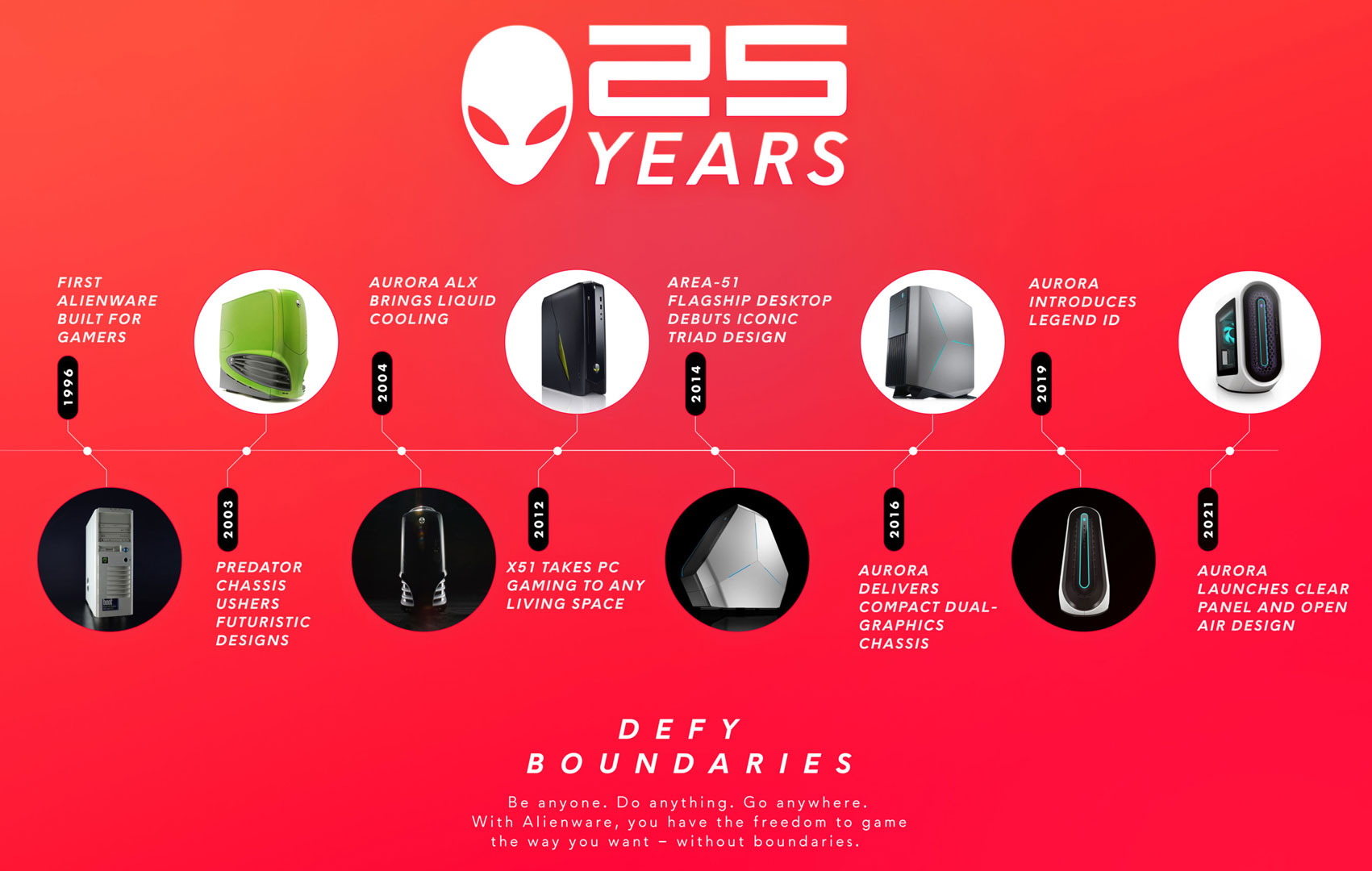
To understand the significance of this launch, one must look at the trajectory of Alienware. Founded in 1996 in a garage in Miami, Florida, by Nelson Gonzalez and Alex Aguila, Alienware was born from a desire to build high-end custom PCs that didn’t exist in the mainstream retail market.
The Early Years (1996–2006)
In its infancy, Alienware became synonymous with aggressive design and uncompromised performance. The brand quickly established itself as the "go-to" for power users, setting the standard for what a gaming PC could look like. By the time Dell acquired the company in 2006, Alienware had already cemented its reputation as a luxury brand, commanding a premium price for its specialized expertise.
The Dell Integration (2006–2015)
The acquisition brought the scale of Dell’s supply chain to Alienware’s design philosophy. However, this period was marked by a transition from boutique hand-built systems to mass-manufactured units. While quality remained high, some purists noted a shift toward more proprietary parts, which made future user upgrades more challenging. The Aurora line became the bedrock of this era, characterized by its distinctive "Alien Head" branding and sophisticated lighting systems.
The Modern Era (2016–Present)
The last five years have seen Alienware pivot toward a more cohesive design language, often referred to as "Legend." This design philosophy emphasizes futuristic curves and high-quality materials. The release of this 25th-anniversary Aurora marks a synthesis of the brand’s history: it acknowledges the need for professional, enthusiast-level cooling and cable management while maintaining the futuristic, sci-fi aesthetic that defined the brand in the late 90s.
Supporting Data: The Metrics of Performance
Alienware’s internal testing provides compelling evidence for the design changes. By comparing the new chassis to the previous generation under identical hardware configurations, the company has documented tangible performance gains:
- Acoustic Improvements: The increased internal volume and refined airflow channels have resulted in a system that is up to 16% quieter during idle states and 9% quieter during intensive gaming sessions. This is a crucial win for a brand that has historically struggled with high-RPM fan noise under load.
- Thermal Efficiency and FPS: Perhaps most importantly for the end-user, the cooling improvements translate to real-world performance. Alienware reported that games run up to 5% faster in the new chassis compared to the old design. This performance delta is attributed to the system’s ability to sustain higher clock speeds on the GPU and CPU for longer durations without hitting thermal throttling limits.
While the company remains tight-lipped regarding the exact CPU specifications—likely waiting for the latest announcements from silicon partners Intel and AMD—they have confirmed that the system will support up to the NVIDIA GeForce RTX 3090. This ensures that the Aurora remains competitive at the absolute bleeding edge of graphical rendering.
Official Responses and Strategic Vision
In the lead-up to the anniversary event, Alienware representatives have emphasized that this desktop is a "listening exercise."
"Our community has been clear about what they want," an Alienware spokesperson noted in a briefing. "They want the aesthetic of the Aurora, but with the modularity and cooling performance of a custom-built enthusiast PC. This chassis is our answer to that feedback."
The decision to include an optional magnetic rear cover is a direct nod to the growing eSports market. As tournament stages become more transparent and production values rise, the visual clutter of standard PC cabling has become a point of concern for pro gamers and tournament organizers. By offering a "clean" rear profile, Alienware is positioning the Aurora not just as a consumer desktop, but as a broadcast-ready piece of hardware for the professional circuit.
Furthermore, the focus on "meticulous internal cable management" visible through the new transparent side panel suggests that Alienware is finally leaning into the "showcase" culture that has dominated the PC hardware space for the last decade. By making the internal components a design feature, they are acknowledging the consumer’s desire to treat their PC as a centerpiece of their gaming setup.
Implications for the Gaming PC Market
The release of this flagship desktop carries several implications for the broader PC gaming market:
The Shift Toward Modularization
For years, Alienware was criticized for its "walled garden" approach—using proprietary motherboards and power supplies that made it difficult for users to swap out parts. While this new Aurora isn’t a "blank check" for total customization, the focus on airflow and standard cooling mounts suggests a move toward a more user-friendly architecture. If Alienware continues this trend, it may bridge the gap between pre-built convenience and DIY performance.
Premium Aesthetic as a Differentiator
In a market saturated with budget-friendly gaming towers, Alienware is leaning hard into its identity as a luxury provider. The "Lunar Light" and "Dark Side of the Moon" finishes are carefully curated, targeting a demographic that views their gaming rig as an extension of their interior design. The move toward a more "plumper" and sophisticated chassis design reinforces this, ensuring that the Aurora remains an aspirational product.
Future-Proofing for the RTX 40-Series and Beyond
While the current max spec is the RTX 3090, the chassis design appears to be engineered with the next generation of GPUs in mind. With rumors of significantly higher power draws for future flagship graphics cards, the increased volume and superior thermal intake of the new Aurora are timely, ensuring that Alienware customers won’t be left behind when the next wave of silicon hits the market.
Conclusion
As Alienware reaches its 25th-year milestone, the company finds itself at a crossroads. It has successfully transitioned from a scrappy, garage-based startup to a dominant force within a multi-billion-dollar corporation. The new Aurora flagship desktop is a testament to the brand’s ability to adapt. By prioritizing thermal efficiency, acoustics, and the specific aesthetic needs of the eSports community, Alienware is signaling that it is not content to rest on its laurels.
Whether this new design will satisfy the hardcore enthusiast community remains to be seen once the units hit the hands of independent reviewers. However, the trajectory is clear: Alienware is betting on the idea that the "perfect" gaming PC is one that balances the raw power of a workstation with the refined, polished presentation of a high-end consumer appliance. As they celebrate their anniversary today, the company isn’t just looking back at 25 years of history—they are clearly setting their sights on the next 25.












No comments yet. Be the first to join the conversation!