Nana Muazin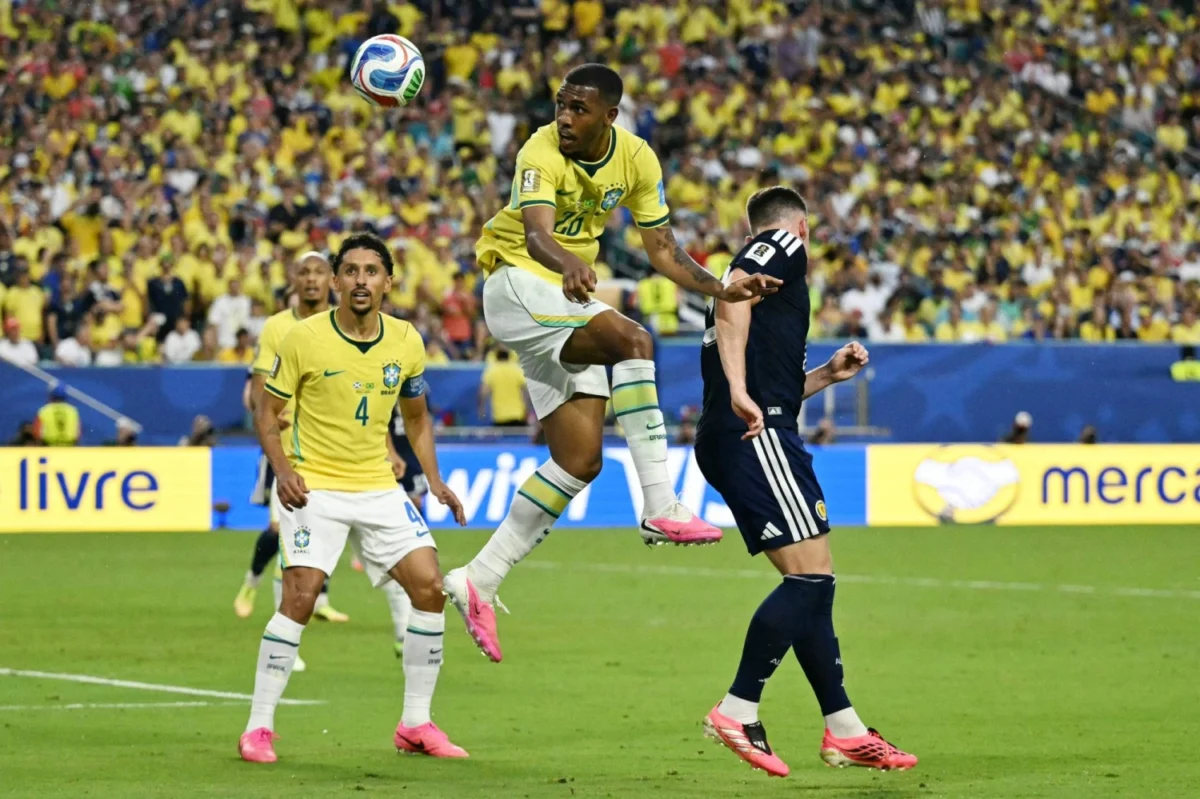
BASKING RIDGE, New Jersey — In the high-stakes theater of the FIFA World Cup, where legends are forged in the crucible of ninety minutes, 19-year-old Brazilian winger Rayan has emerged as the tournament’s most compelling narrative. Having already etched his name into the annals of footballing history with his blistering pace and tactical discipline, the Bournemouth starlet found himself facing a different kind of challenge on Friday: the unforgiving scrutiny of the global press.
As the five-time world champions prepare for a high-octane Round of 32 clash against Japan in Houston this coming Monday, the focus has shifted from the pitch to the preparation room. For a squad chasing an elusive sixth star, the transition from group-stage dominance to knockout-round precision requires more than just raw talent; it requires an intimate knowledge of the adversary. It was here, in the quiet corridors of a New Jersey press conference, that Rayan learned that at this level, tournament football is as much about homework as it is about headers.
The Path to the Round of 32: A Campaign of Momentum
Brazil’s journey to the knockout stages has been defined by a blend of tactical evolution under manager Carlo Ancelotti and the emergence of fresh, hungry talent. The Seleção navigated Group C with clinical efficiency, capping off their opening phase with a resounding 3-0 victory over Scotland at Miami Stadium. That result secured their position at the top of the group, setting the stage for a date with destiny in Texas.
The upcoming fixture against Japan is laden with historical resonance. The two nations have clashed on the world’s grandest stage before, most notably in 2006, when a Brazil side anchored by iconic figures dismantled a Japanese squad managed by the legendary Zico, securing a 4-1 victory. However, the current Japanese iteration is a far more sophisticated beast.
In a stark warning shot fired across the bow of world football, Japan defeated Brazil 3-2 in a friendly match last October. That encounter served as a sobering reminder of the parity in modern football; Brazil had surged to a 2-0 lead, only to see their defensive structure collapse under the relentless, high-pressing intensity of the Asian side. It is a memory that remains vivid in the minds of the Brazilian coaching staff as they finalize their game plan for Monday.
The Accidental Hero: A Rapid Ascent
Rayan’s meteoric rise to the starting eleven was not part of the initial script. The Bournemouth attacker was thrust into the spotlight under unfortunate circumstances when Barcelona’s Raphinha suffered a hamstring injury during the first half of Brazil’s match against Haiti.
What followed was a masterclass in seizing opportunity. Rayan’s impact was instantaneous, providing a dynamic outlet on the wing that forced the Haitian defense into a state of permanent retreat. His performance earned him a starting berth against Scotland, where he proved that his contributions go far beyond simple athleticism.
Seven minutes into that match, Rayan demonstrated the defensive tenacity instilled in him by Ancelotti. He dispossessed a Scottish defender in a dangerous area, maintaining his composure to tee up Vinicius Junior for the opening goal. That assist was more than just a score-sheet entry; it placed Rayan in the company of ghosts. He became the youngest player to provide an assist for the Brazilian national team in a World Cup match since the incomparable Pelé in 1958. Furthermore, he joined an elite fraternity as only the sixth teenager to start a World Cup match for Brazil, and the first to achieve the feat since Marco Antonio in 1970.
The Press Room Incident: An Honest Admissions
The gravity of the moment, however, was punctuated by a brief, humanizing lapse during Friday’s media availability. When a journalist from Japanese public television asked Rayan to identify who he believed to be Japan’s best player, the teenager paused.
With an embarrassed, yet disarming smile, he offered a candid response that echoed through the room: “Mate, I don’t know who their best player is. I’d have to watch the video to be able to tell you.”
The honesty of the admission drew laughter, but for the Brazilian camp, it underscored the rigorous nature of the tournament schedule. While players are immersed in their own tactical roles, the vast library of global football talent is impossible to memorize in its entirety. Yet, the incident has highlighted the "homework" aspect of the World Cup. For a professional athlete, the video room is the primary battlefield before the actual match begins. Following the press conference, it is understood that the Brazilian squad’s preparation for Japan will be significantly bolstered by intensive video analysis, ensuring that when Rayan steps onto the pitch in Houston, he will know exactly who stands in his way.
Tactical Discipline: The Ancelotti Philosophy
At the heart of Brazil’s resurgence is the influence of Carlo Ancelotti. Known for his tactical flexibility and ability to manage superstar egos, the Italian manager has demanded a level of defensive accountability from his forward line that was previously lacking in recent Brazilian iterations.
"Ancelotti talks to us a lot about our defensive duties," Rayan explained during the conference. "He says that marking starts with the forwards. Even when we’re tired, it’s our responsibility to press. I think I’ve improved a lot defensively. You have to defend first and then play. We know that any mistake now could be decisive."
This emphasis on "defending first" is a cornerstone of the modern tournament-winning blueprint. In a knockout match, the margin between triumph and elimination is often measured in inches and split-second decisions. Rayan’s commitment to this philosophy—willingly tracking back and disrupting the opposition’s transition—has been as vital to Brazil’s success as his attacking flair.
Implications for the Knockout Stage
As Brazil looks toward the Round of 32, the pressure to deliver a sixth title is immense. The squad is not merely playing for victory; they are playing under the weight of a nation’s history and the expectation of a global fanbase that views anything less than the trophy as a failure.
The match against Japan will serve as a definitive test of Brazil’s mental fortitude. Japan’s ability to come from behind, as they did in the October friendly, proves that they are capable of exploiting lapses in concentration. For Brazil, the goal is to maintain the intensity of the group stage while refining their defensive shape to prevent the kind of chaotic reversals that have plagued them in the past.
For Rayan, the challenge is twofold: he must continue to provide the creative spark that has made him one of the tournament’s breakout stars, while simultaneously executing the tactical instructions that define his role in Ancelotti’s system. He is no longer just a talented teenager; he is a cog in a machine designed for dominance.
Looking Toward Houston
The atmosphere in Houston is expected to be electric. As the footballing world turns its eyes to Texas, the narrative arc of the tournament continues to bend toward the young. Whether Rayan can overcome his lack of familiarity with the Japanese roster through the coming days of intensive study will be a key subplot.
"Japan are a very strong side," Rayan added as he concluded his media duties. "That makes us prepare even more thoroughly for a tough match and give our all."
In the end, the World Cup is a tournament where the brightest lights shine on those who are best prepared. Rayan has the feet of a prodigy and the guidance of a tactical master. Now, as the knockout rounds loom, he must show that he has the focus to match. If he can bridge the gap between his natural flair and the rigorous demands of tournament preparation, he may well be the architect of Brazil’s next great chapter in footballing history.


 Neng Nana
 Asro
Asro