

In a week marked by significant shifts in the cultural and professional landscape of science fiction, comics, and media, several major developments have taken center stage. From the high-profile withdrawal of an Eisner Award nominee due to generative AI concerns to the surging movement for unionization at Dark Horse Comics, the industry is grappling with its identity in an era of rapid technological and organizational change.
The Eisner Awards and the AI Controversy
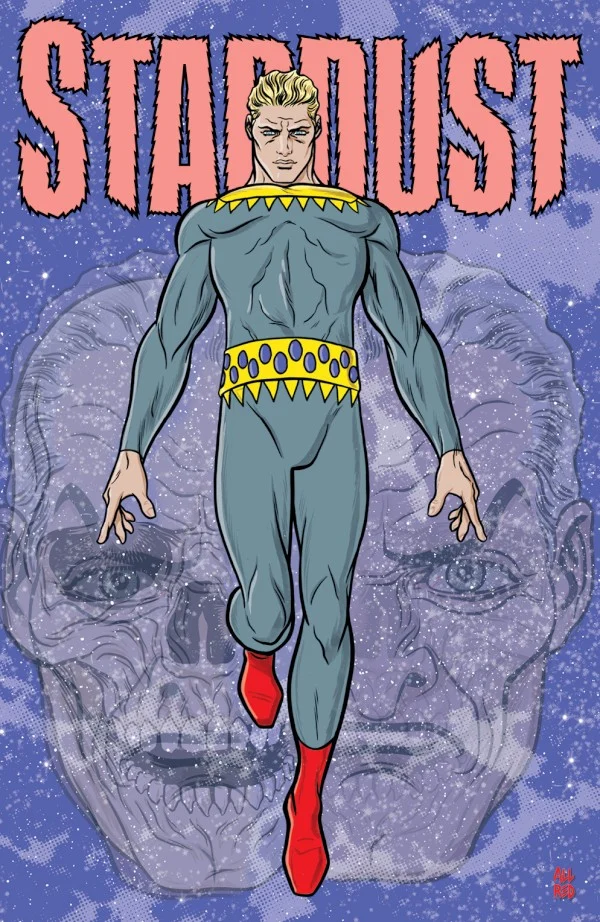
The comics industry, traditionally a bastion of human-centric artistry, is currently navigating its most significant crisis regarding Artificial Intelligence. The recent decision to withdraw the Stardust the Super Wizard Anthology from the Eisner Award ballot serves as a bellwether for how prestigious institutions are reacting to AI-generated content.
Chronology of the Controversy
- May 14, 2026: Comic-Con officially announces the nominees for the annual Eisner Awards. Stardust the Super Wizard Anthology, a crowd-funded project edited by Van Jensen, is included in the "Best Anthology" category.
- Initial Release (2025): The anthology, based on the public domain character created by Fletcher Hanks, is released to backers. Alert readers note that one specific contribution—a one-page story by Michael Todasco—was crafted using an "AI persona" known as Alex Irons.
- May 18, 2026: Following a firestorm of criticism within the comics press and among the Eisner judging panel, Comic-Con announces the formal withdrawal of the anthology from contention.
Official Stance and Industry Implications
The removal was not merely a reaction to public pressure but a reflection of the judging panel’s own ethical standards. A spokesperson for Comic-Con clarified, "In light of the recent disclosure that Artificial Intelligence was included in a work submitted for Eisner Award consideration, the judges have indicated that had they been aware of this information, they would not have voted for its inclusion."
The incident has triggered a broader institutional review. The San Diego Comic Convention has pledged to develop a formal, robust policy regarding AI, aiming to better reflect its long-standing mandate to protect artists and human creators. However, the decision to rescind the nomination post-announcement sparked internal debate, with some arguing that the move unfairly penalized other contributors to the anthology who were unaware of the AI-generated entry.

Labor Movements: The Dark Horse Unionization Effort
Parallel to the debates over artistic integrity, the economic reality of the industry is being challenged by the workers themselves. Employees at Dark Horse Comics have officially requested voluntary union recognition from interim CEO Jay Komas.
Organizing for Representation
Operating under the banner "Dark Horse Workers United," the employees have set a deadline of June 3 for management to acknowledge their union. The workers cite a desire for a collective voice in workplace decision-making and are explicitly calling for management to engage in good-faith negotiations rather than resorting to traditional union-busting tactics.
This move is part of a broader trend of labor organization sweeping across the creative sectors, including video game studios and film production houses. For a publisher responsible for iconic titles like Hellboy, Sin City, and The Umbrella Academy, the unionization effort represents a potential pivot point in how the company balances its historical prestige with the modern requirements of its workforce.
Archival Resurrections: The "No Such Thing As a Vampire" Discovery
While the industry looks to the future, it also remains tethered to its past. In a remarkable find for horror aficionados, a "lost" episode of the 1968 BBC anthology series Late Night Horror has been recovered after nearly 60 years.

The Context of the Find
Late Night Horror was notorious for its visceral, unsettling content, often described as "too scary" even for the BBC technicians of the late 1960s. Much of the series was purged during the mass deletion of tapes that characterized the BBC’s archival practices in the 1960s and 70s—a tragedy that famously resulted in the loss of nearly 100 episodes of Doctor Who.
The episode in question, "No Such Thing As a Vampire," is based on a story by legendary I Am Legend author Richard Matheson. It was unearthed by cinema projectionist Darren Payne in the storage of The Regent, an art deco theater in Christchurch, Dorset. The episode is scheduled for a rare public screening on September 20 at the Grindfest event, marking the first time the footage will be viewed by a public audience in six decades.
Celebrating Excellence: Shirley Jackson and Climate Fiction
Amidst the structural and technological debates, the industry continues to recognize literary excellence. The 2025 Shirley Jackson Award nominees have been announced, honoring the best in suspense, horror, and dark fantasy. Additionally, the Climate Fiction Prize 2026 has been awarded to Helen Phillips for her novel Hum.
These awards highlight the continued vitality of genre fiction, even as the mechanisms of production—and the definition of the "author"—remain under constant, rigorous scrutiny.

The Philosophical Weight of Science Fiction
The intellectual discourse surrounding these developments is perhaps best captured by CrimeReads’ recent essay, "An Aria to the Mad Scientist." The piece explores the trope of the "Mad Scientist," from Victor Frankenstein to modern iterations, as an "inciting character" who forces humanity to confront moral and philosophical conundrums.
The author argues that the "mad scientist" often begins with a virtuous goal—to banish disease or eliminate suffering—but becomes so blinded by ambition and a superiority complex that they ignore the catastrophic ripple effects of their actions. In the context of the current AI controversy, this literary analysis serves as a sobering reminder: the tools we create, no matter how well-intentioned, require a level of human stewardship that cannot be offloaded to an algorithm.
Mentorship and the Craft of Fiction
As the industry navigates these changes, the importance of mentorship remains a constant. James Davis Nicoll’s recent exploration of "Five Mostly Helpful Mentors in SF and Fantasy" for Reactor highlights the essential role of guidance in the creative process. By focusing on characters like Aahz from Robert Asprin’s Another Fine Myth, Nicoll reminds us that the transfer of knowledge—from master to apprentice—is the lifeblood of the genre.
Furthermore, we celebrate the birthday of author Max Gladstone, whose work, such as The Craft Sequence and This Is How You Lose the Time War, exemplifies the synthesis of high-concept worldbuilding and deep, human-centric emotion. His collaborations have pushed the boundaries of what science fiction can be, influencing everything from the structure of modern anthologies to the very criteria by which we judge literary awards.

Looking Forward: The ASU Center for Science and the Imagination
Finally, the ASU Center for Science and the Imagination continues to provide a vital forum for these discussions. Their latest issue of Imaginary Papers examines the intersection of community, catastrophe, and the Three Laws of Robotics in the context of Large Language Models (LLMs). By fostering dialogue between educators, technologists, and authors, the Center ensures that the industry’s "imaginative" output remains grounded in critical, ethical reflection.
As we move through the remainder of 2026, it is clear that the comics and science fiction communities are at a crossroads. Whether through the formalization of AI policies, the strengthening of labor protections, or the diligent preservation of our cultural history, the path forward will be defined by a renewed commitment to the human element at the heart of every story.









No comments yet. Be the first to join the conversation!