

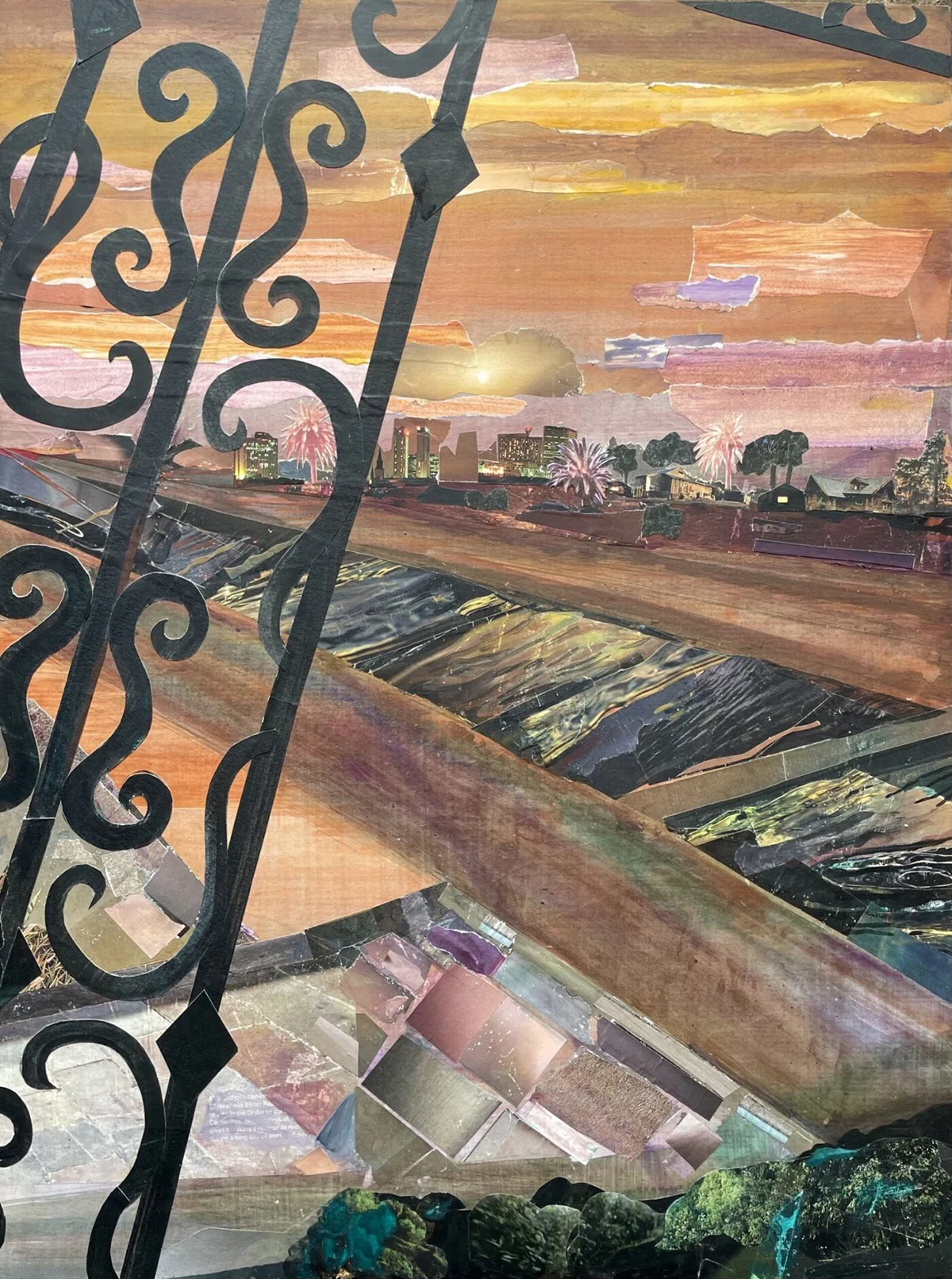
In the quiet, deliberate spaces between reality and recollection, artist Candace Caston constructs her visual narratives. A Louisiana native now rooted in the verdant landscape of Georgia, Caston has emerged as a compelling voice in contemporary collage, utilizing water-based media to map the ephemeral cartography of the human experience. Her work, which acts as both a personal archive and a meditative study of domesticity, invites viewers to step into the hushed, sun-drenched rooms of her past—both real and imagined.
The Foundations of an Artist: Chronology and Formation
Candace Caston’s artistic journey is deeply intertwined with her Southern upbringing. Her formative years in Louisiana provided the sensory baseline for her current aesthetic: the heavy, humid atmosphere, the specific quality of light filtering through aging blinds, and the rhythmic stillness of interior life.
Caston’s formal training took place at the Savannah College of Art and Design (SCAD) in Atlanta. It was here that she refined her technical proficiency in water-based media, moving beyond traditional painting to embrace the textural, layered possibilities of collage. Her time at SCAD served as a bridge between her early sensory experiences and a more critical understanding of space. By examining the structural elements of a room—the way light cuts across a floorboard or the specific angle of a window frame—Caston began to treat the home not merely as a dwelling, but as a vessel for memory.
Following her graduation, Caston’s practice matured into the distinct style she maintains today: a series of intimate, fragmented assemblages that feel like half-remembered dreams.
The Poetics of Solitude: Artistic Philosophy
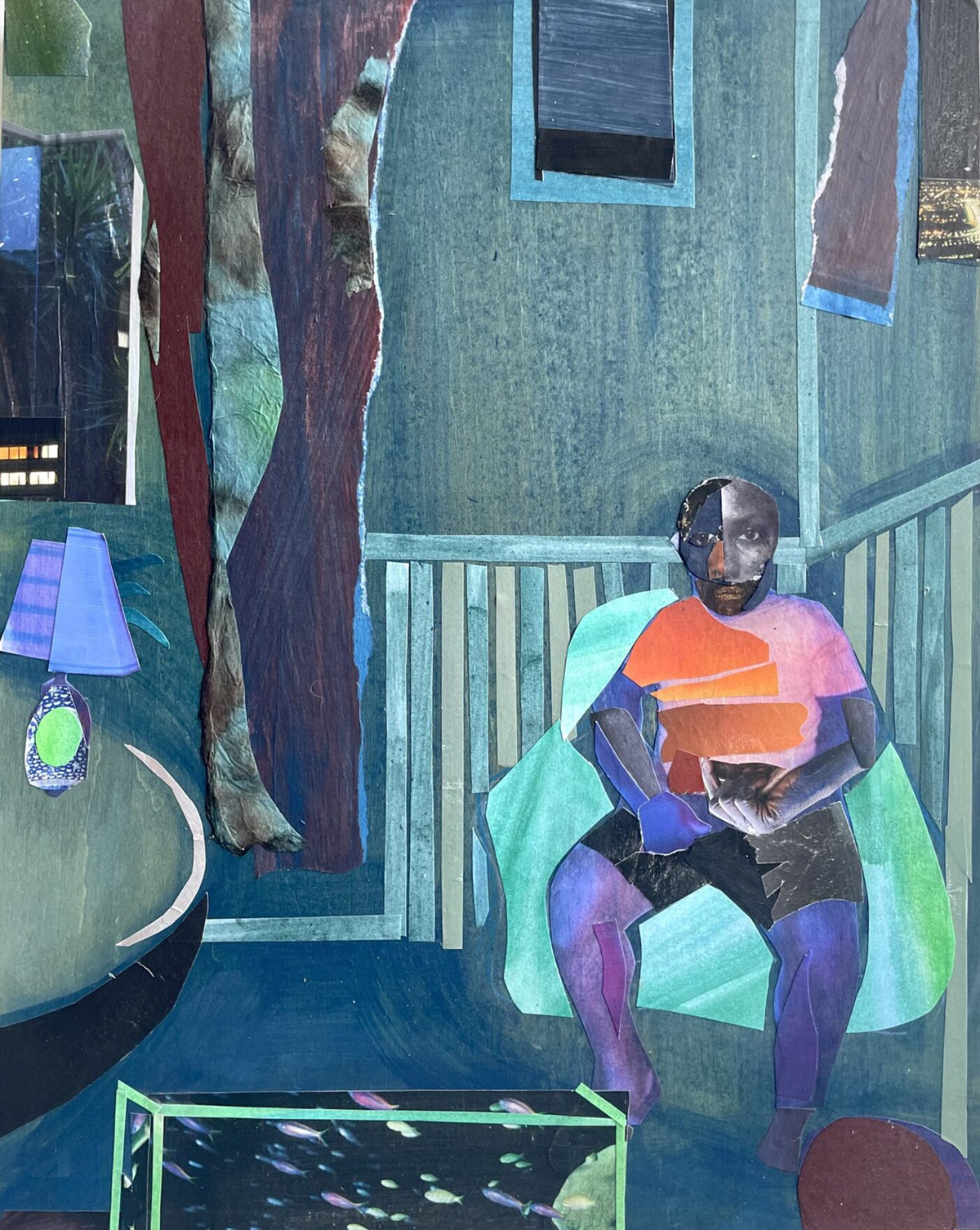
At the heart of Caston’s portfolio is a profound fascination with the "memory of place." Her collages are not merely representations of rooms; they are psychological blueprints. In her own words, Caston describes the genesis of her work as an excavation of the mundane:
"Eyes look through the blinds towards the neighborhood, as the heat from outside seeps into the interior. I recall this as I reflect on the home I grew up in. Memories are captured in the windows, objects, and arrangements of a room or exterior space. They’re evoked by small details—the furniture, the weather outside, how the light moves through and around the house, or the shapes the blinds make as you part them to peek out. In reflecting on moments of solitude, seemingly small scenes become significant."
This philosophy positions Caston within a lineage of artists who prioritize the "micro" over the "macro." She eschews grand gestures in favor of the subtle geometry of a domestic interior. By layering watercolors, inks, and paper cutouts, she mimics the way memories themselves are constructed: incomplete, slightly translucent, and inextricably tied to the atmosphere in which they were formed.
Supporting Data: The Anatomy of a Collage
To understand Caston’s work, one must look at the technical synthesis of her materials. Her reliance on water-based media—predominantly watercolor and gouache—allows for a fluidity that mirrors the subjectivity of memory. Unlike oil, which sits heavily on the canvas, water-based pigments soak into the substrate, creating a feeling of transparency that is essential to her aesthetic.
Materiality and Process
- Layering: Caston frequently uses paper layering to create depth. This literal stacking of physical paper reflects the cognitive process of layering one memory upon another.
- Spatial Geometry: Her compositions often emphasize vertical and horizontal lines—blinds, door frames, and table edges—which act as anchors for the more fluid, chaotic emotional content of the scenes.
- Color Palette: Her use of color is often muted or atmospheric, suggesting the fading quality of a photograph left in the sun or the hazy recollection of a summer afternoon.
The Implications of the "Intimate Archive"
Caston’s work serves as a significant contribution to the ongoing conversation regarding the relationship between space and psychology. In an era dominated by digital permanence and hyper-connectivity, her focus on the "intimate archive" of the home offers a necessary counter-narrative.
By elevating the "small scenes" of life—the way light hits a vase or the shadow cast by a piece of furniture—Caston argues that our identities are forged in the quietude of our private surroundings. Her art implies that we are not defined by our grandest achievements, but by the spaces we inhabit during our most solitary, reflective moments. For the viewer, her work acts as a mirror; it prompts a visceral recollection of one’s own "spaces of origin," encouraging a dialogue between the viewer’s past and the artist’s interpreted reality.
A Wider Context: The State of Contemporary Talent
Candace Caston’s rising profile is reflective of a broader shift in the art world toward narrative-driven, introspective works. This trend is mirrored in recent industry developments, such as the Tomorrow’s Talent 5 publication, which curates the work of over 60 emerging artists.
The inclusion of artists like Caston in such collections highlights a growing appetite for works that prioritize craftsmanship and emotional resonance. As the 2025 Photo Awards winners and other contemporary accolades suggest, the industry is increasingly rewarding artists who can bridge the gap between technical skill and personal storytelling. Whether through the lens of a camera or the tip of a paintbrush, the current artistic landscape is defined by this pursuit of "significant details."
Looking Forward: The Legacy of Domestic Memory
As Caston continues to develop her archive of remembered spaces, her trajectory suggests a deepening exploration of the intersection between architecture and human sentiment. Her work is a testament to the idea that no space is truly empty; every room is saturated with the residue of those who have lived, dreamed, and observed within its walls.
For those interested in following her progress, Caston’s portfolio remains a touchstone for those who find beauty in the quiet corners of the world. As we look toward the future of her practice, one can expect a continued refinement of her vision—a vision that reminds us that, regardless of how far we travel, we are always, in some way, looking through the blinds at the homes we have left behind.
Additional Resources for the Discerning Collector
The art community continues to evolve, and keeping pace with these changes is essential for both collectors and enthusiasts. If you are interested in exploring the work of emerging artists further, we recommend the following avenues:
- The 2025 Photo Awards: Discover the five winners and twenty shortlisted photographers who are redefining the boundaries of visual storytelling. Explore the winners here.
- Tomorrow’s Talent 5: This expansive volume is the largest collection yet, featuring 276 pages of work from over 60 artists. It serves as an essential companion for anyone tracking the next wave of creative talent. Purchase the book here.
- The Secret Email Club: Stay informed about open calls, exclusive artist features, and industry insights that aren’t published elsewhere. Sign up for the newsletter here.
In a world that moves with increasing velocity, artists like Candace Caston provide us with a sanctuary of stillness—a reminder to pause, look closely, and honor the significance of the seemingly small.









No comments yet. Be the first to join the conversation!