Dwi Wanna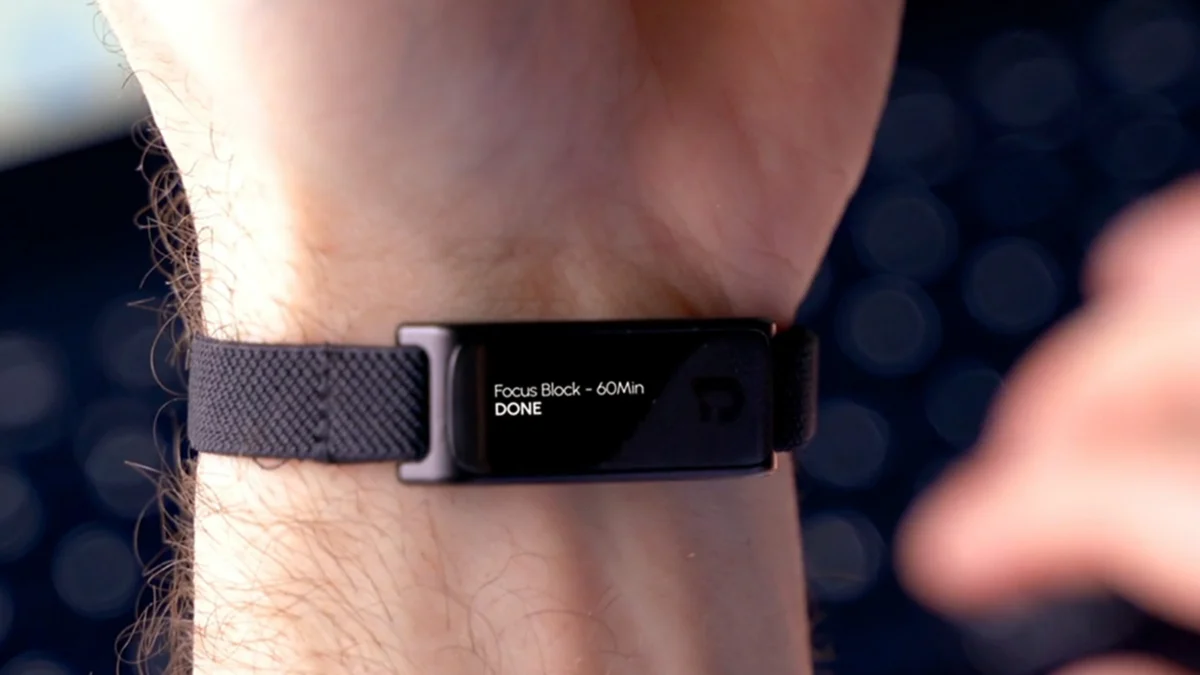
In an era defined by hyper-connectivity, the modern wrist-worn device has become an extension of our digital overload. From the relentless vibration of email notifications to the constant pressure of closing activity rings, smartwatches have evolved into high-functioning companions that demand as much attention as they provide. Enter the Jaye Band: a radical departure from the "more is better" philosophy, launched today on Kickstarter with a singular, quiet promise—to help you stay reachable without losing your mind.
The Jaye Band is not trying to be a smartphone for your wrist. It isn’t trying to count your steps, track your REM sleep, or monitor your blood oxygen levels. Instead, it is positioning itself as a high-end digital filter, a minimalist piece of hardware designed to silence the cacophony of the modern digital landscape.
The Core Concept: Filtering the Noise
The fundamental premise of the Jaye Band is "intentional communication." While flagship wearables from Apple, Samsung, and Google compete to pack more sensors and apps into their devices, Jaye has taken the opposite path. The device acts as a gatekeeper between the user and their smartphone, utilizing a proprietary Bluetooth bridge to curate incoming data.
Users interact with the Jaye Band via a companion app, where they can define a "whitelist" of contacts and essential applications. If an email, text, or call arrives from someone not on that list, the device remains dormant. This allows the user to engage with their digital life on their own terms, effectively turning their smartphone into a passive tool rather than an active siren.
Chronology: Two Years of Stealth Development
The journey of the Jaye Band is one of quiet determination. Unlike many Silicon Valley startups that rely on aggressive venture capital funding rounds, the team behind Jaye has remained entirely self-funded for the past two years.
- Mid-2024: The conceptual phase begins. The core team identifies a growing consumer trend toward "dumbphones" and minimalist tech as a response to rising rates of digital fatigue.
- Late 2024 – Early 2025: Rapid prototyping focuses on form factor. The team experiments with various screen placements, eventually settling on the "inner wrist" design to prioritize user privacy.
- Late 2025: Final hardware specifications are locked in, focusing on power efficiency to ensure the "several days" battery life target.
- June 2026: Official launch of the Kickstarter campaign. The company shifts from internal development to public transparency, aiming to gauge market appetite for a device that actively avoids "smart" features.
- Q1 2027: Current projected timeline for initial unit fulfillment to early backers.
Design Philosophy: Stealth and Subtlety
The hardware itself is a study in restraint. Measuring a compact 38mm by 14.5mm with a slim 7mm profile, the device is designed to vanish on the wrist. Unlike traditional smartwatches that feature a large, glowing glass face intended to be viewed by others, the Jaye Band utilizes a small OLED display strategically placed on the inside of the wrist.
This design choice serves two purposes. First, it ensures that when a notification arrives, it is private. Only the wearer sees the alert. Second, it removes the "glanceability" that keeps users trapped in an endless cycle of checking their wrist for social media updates or workout progress.
The company has also committed to an ecosystem of interchangeable bands, allowing the device to transition from a professional setting to a casual environment without needing to swap hardware. The focus is on jewelry-like aesthetics rather than the "gadget" aesthetic that dominates the current market.
The "Anti-Feature" Strategy
To understand the Jaye Band, one must look at what it intentionally omits. In a market where biometric tracking is considered table stakes, the absence of these features is the Jaye Band’s biggest selling point:
- No Biometrics: No heart rate monitors, ECGs, or stress tracking.
- No Activity Tracking: No step counters, calorie burns, or GPS workout mapping.
- No App Library: Users cannot download third-party games, weather widgets, or navigation tools.
- No Distraction: No social media notifications, unless specifically whitelisted.
By stripping away the "wellness" data, the Jaye Band avoids the "quantified self" trap. It does not tell you if you slept poorly; it simply lets you wake up and decide how you feel without the validation of an algorithm.
Market Implications and Digital Wellness
The rise of the Jaye Band coincides with a significant shift in public sentiment regarding screen time. Recent studies suggest that the "always-on" nature of modern wearables contributes to heightened anxiety, a phenomenon often referred to as "notification fatigue."
By prioritizing human connection over data consumption, Jaye is tapping into the growing "Digital Minimalism" movement, popularized by authors like Cal Newport. The implication for the broader wearable market is significant. If Jaye finds success, it could signal to industry giants that a segment of the population is ready for "de-featured" tech—devices that serve a specific purpose rather than attempting to do everything.
However, the challenge remains: can a device that does less justify a price point that is relatively high? At an early bird price of $129 and a projected retail price of $249, the Jaye Band is priced competitively with mid-range fitness trackers. The question is whether consumers are willing to pay a premium for a device that intentionally limits its own functionality.
Official Commentary: The Founder’s Vision
In early statements accompanying the Kickstarter launch, the company emphasized that the Jaye Band is a tool for reclamation.
"We believe that technology should serve our lives, not dictate them," said a representative for the company. "The goal was never to build the most powerful computer for the wrist. The goal was to build the most human-centric device possible. By removing the metrics and the constant pings, we aren’t just creating a piece of hardware; we are offering our users the ability to reclaim their focus."
The company’s decision to remain self-funded for the development phase suggests a level of autonomy that few hardware startups enjoy. They are not beholden to investors demanding high user-retention metrics or the integration of addictive features. This independence is a core part of their brand identity—the Jaye Band is built to be a quiet partner, not a demanding boss.
Technical Considerations: Battery and Connectivity
While the minimalist approach is the headline, the engineering requirements are non-trivial. Maintaining a stable Bluetooth connection while ensuring the device lasts for several days requires optimized firmware.
The device utilizes a low-energy Bluetooth protocol to communicate with both Android and iOS devices. The companion app acts as the "brain," performing the heavy lifting of notification filtering so that the wristband itself remains lightweight and power-efficient. While the company has not yet released the final mAh capacity of the internal battery, they have indicated that they are targeting a multi-day charge cycle, which would be a significant upgrade over the daily charging requirement of most high-end smartwatches.
The Future of "Quiet Tech"
As we move toward 2027, the Jaye Band serves as a litmus test for the industry. If it gains traction, we may see a bifurcation in the wearable market: one path toward increasingly complex, medical-grade health monitoring devices, and another path toward "Quiet Tech"—minimalist devices that emphasize presence, focus, and digital boundaries.
For the consumer who feels overwhelmed by the modern digital deluge, the Jaye Band offers a compelling proposition. It is an invitation to turn down the volume of the world, to choose which voices matter, and to experience the day without the constant surveillance of an algorithm. Whether this "less is more" approach will disrupt the industry or remain a niche curiosity, the Jaye Band has undoubtedly sparked a necessary conversation about the role of technology in our most intimate moments.
For those interested in supporting the project, the Kickstarter campaign is currently live, offering a window into a future where our devices help us look up from our screens, rather than staring back into them.

 Layla Zulfa
 Nana Muazin