As character designers, our primary objective is to forge an unbreakable bond between our creations and the audience. We are not merely drawing shapes or applying colors; we are architects of fantasy, tasked with pulling viewers into a cohesive world and convincing them of its reality. To achieve this, a character must possess more than just aesthetic appeal—they must radiate a story.
In this deep dive, we explore the intricate process of character development, focusing on the intersection of pose, gesture, and narrative intent. By mastering the "first read"—the immediate impression a viewer receives—designers can dictate the fundamental assumptions about a character’s personality, history, and role within a narrative or gameplay environment.
The Philosophy of the "First Read"
The silhouette is arguably the most powerful tool in a character designer’s arsenal. Much like the cover of a classic novel or a cinematic poster, the silhouette acts as the initial point of contact. It is the gatekeeper of the viewer’s attention. If the silhouette is muddled or lacks a clear line of action, the viewer is likely to lose interest and browse elsewhere.
A successful "first read" relies heavily on gesture. When a character is posed dynamically, the silhouette communicates volumes before a single detail is rendered. Is the character cautious or bold? Are they a playful sidekick or a formidable warrior? These questions are answered through the subtle language of the spine, the tilt of the shoulders, and the relationship between the character and their environment. As designers, our goal is to leverage these elements to empower our images, ensuring that every character serves as an invitation to the viewer to step into our story.
Chronology of Creation: A Step-by-Step Breakdown
The following process highlights the evolution of a character design, tracing the journey from a vague concept to a fully realized, rendered figure.
1. Initial Exploration and Line of Action
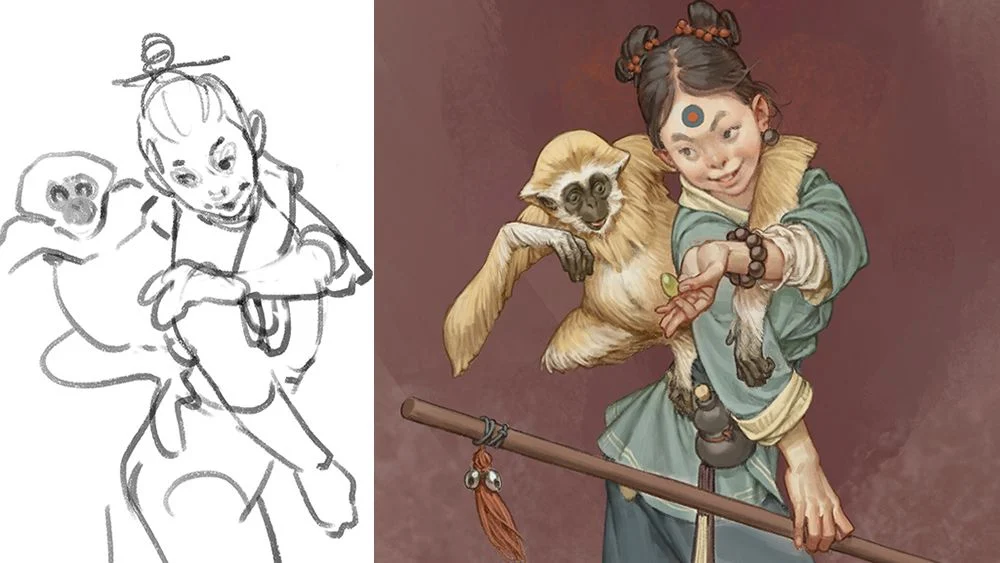
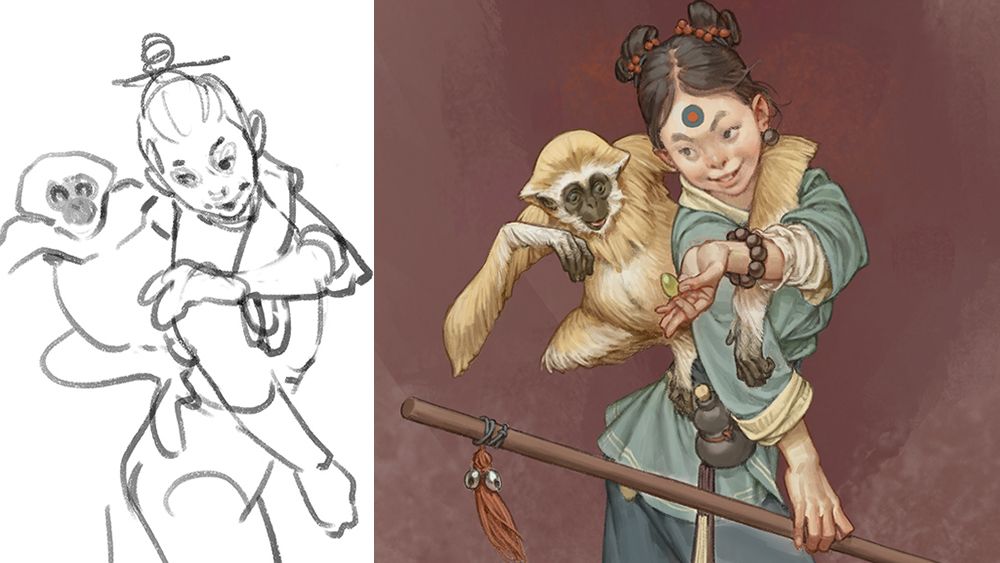
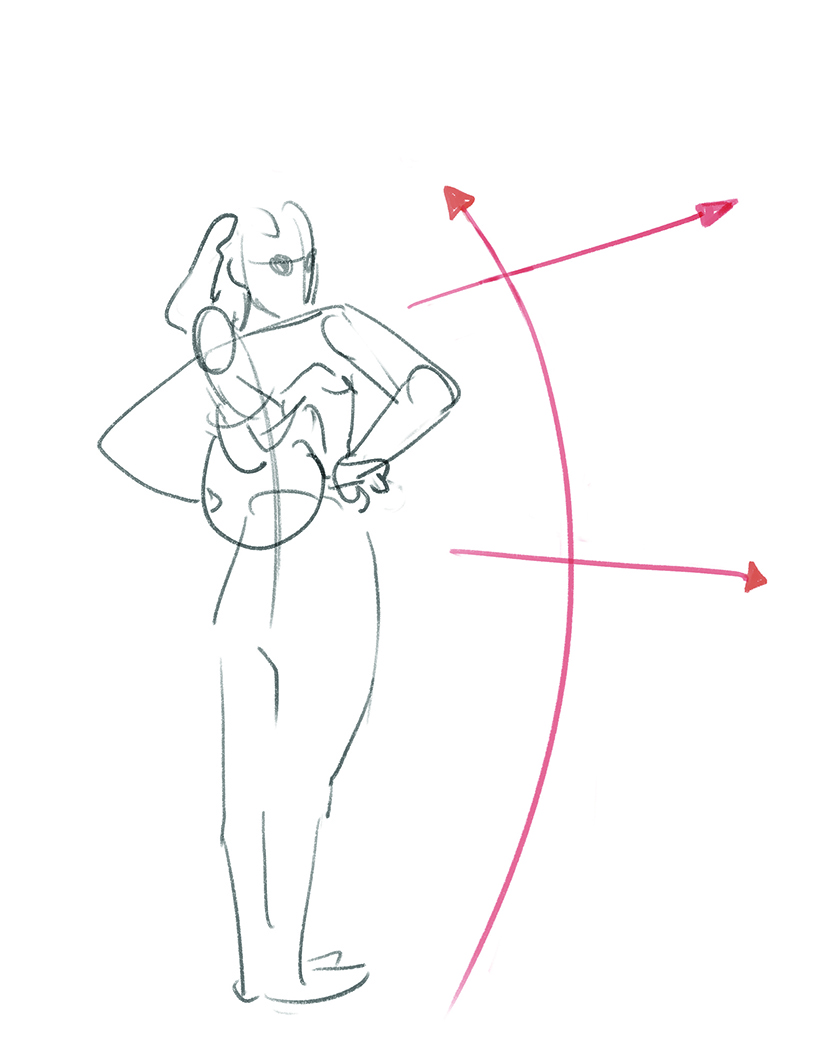
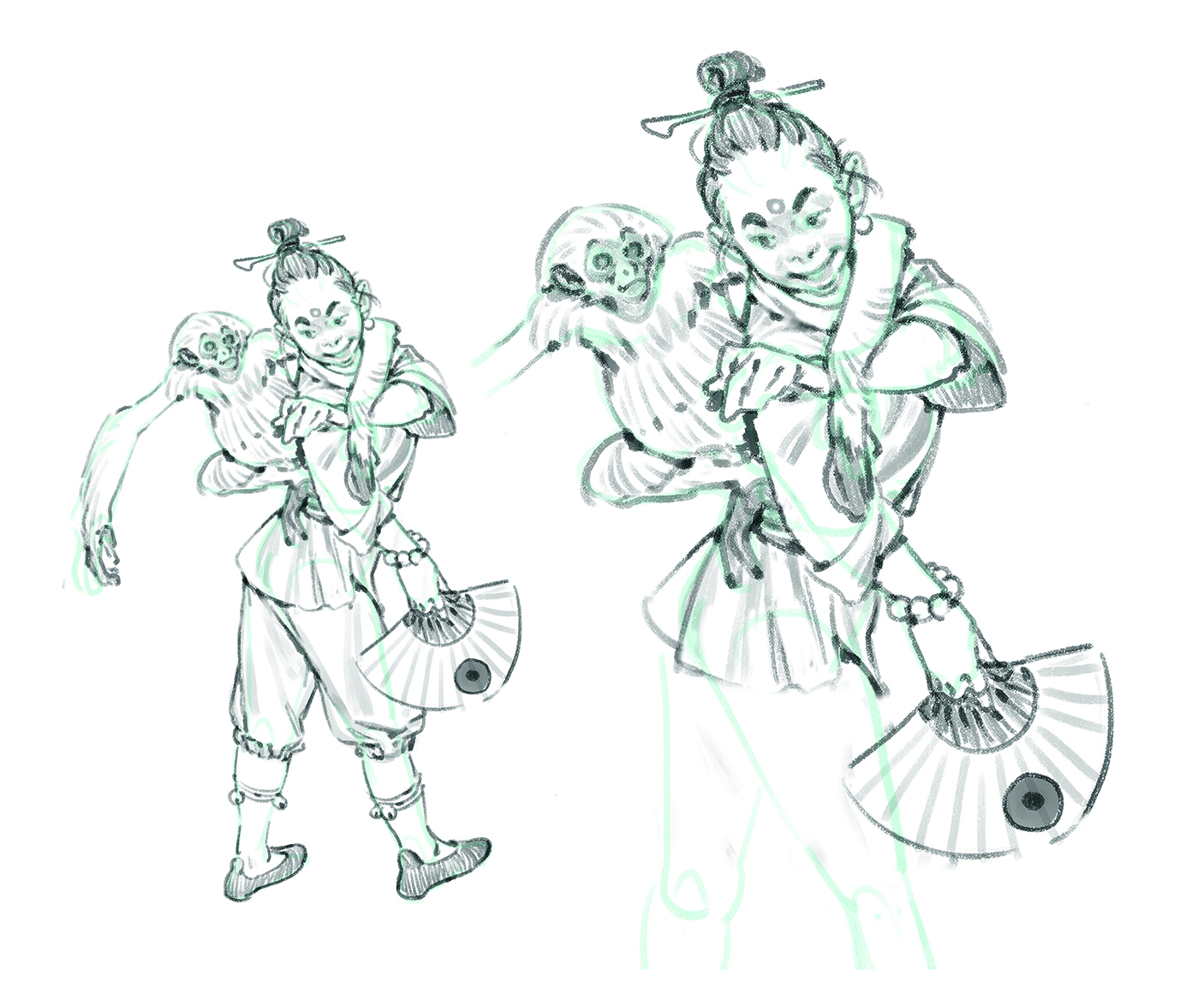
Every design begins with a narrative anchor. In this specific project, the goal was to capture the chemistry between a circus performer and her pet monkey. They needed to feel inseparable, dynamic, and playful. To start, I focus on "scribbling" to find the primary lines of action. By prioritizing the axes of the shoulders and hips, as well as the natural curve of the spine, I establish the structural foundation of the character’s pose.
2. Pushing the Dynamic
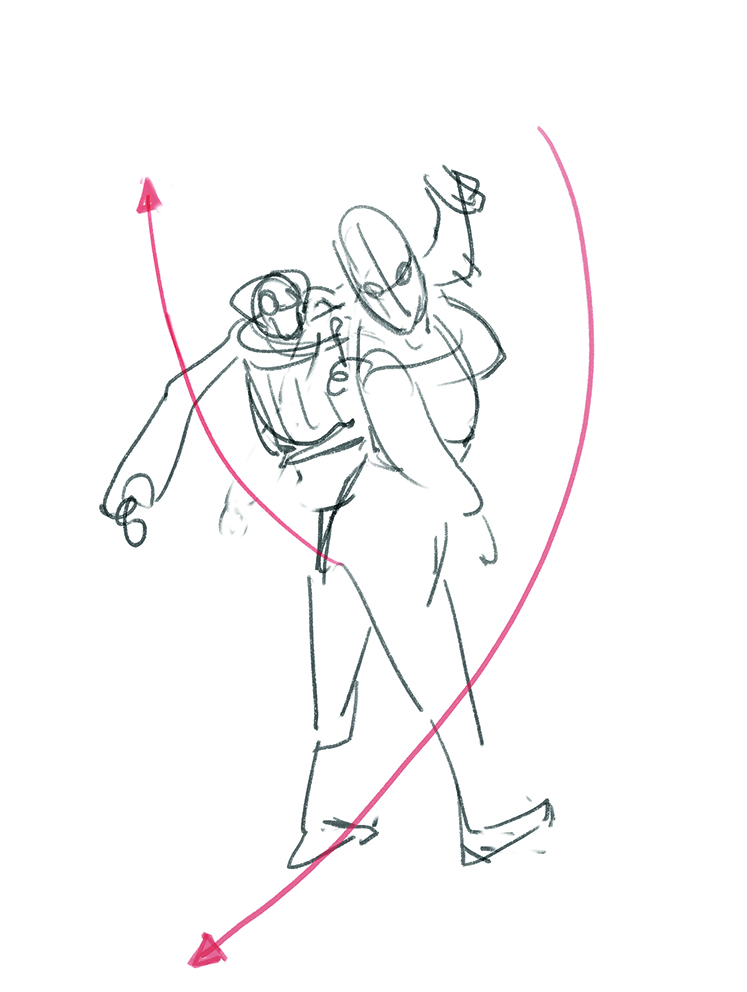
Once the structure is set, I begin to refine the gesture. In the second iteration, I experimented with having the girl twist her torso to face the monkey. This simple shift creates a sense of movement and "active engagement." Narratively, this choice reinforces the idea that she is a traveling circus performer—a character who is constantly in motion, hopping between stages and interacting with her surroundings.
3. Fleshing Out the Volumes
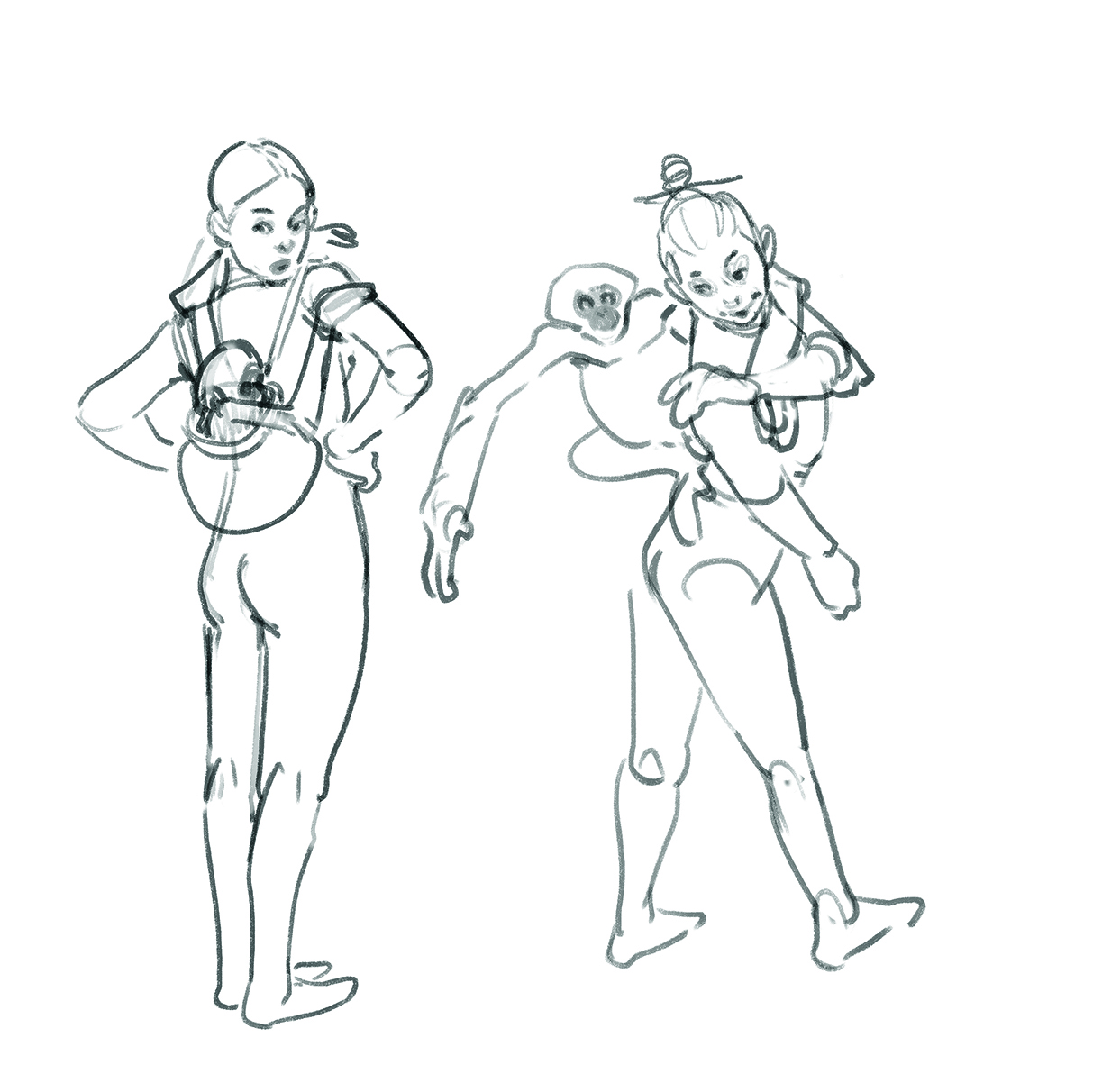
With the gesture locked in, the focus shifts to volume and space. I begin to define the characters as three-dimensional entities, carefully managing the overlaps between them. A common pitfall here is the creation of "tangents"—lines that touch in a way that flattens the image. By carefully separating the limbs and the monkey’s form, I ensure the drawing remains readable even at a glance.
4. Costume, Props, and Refinement
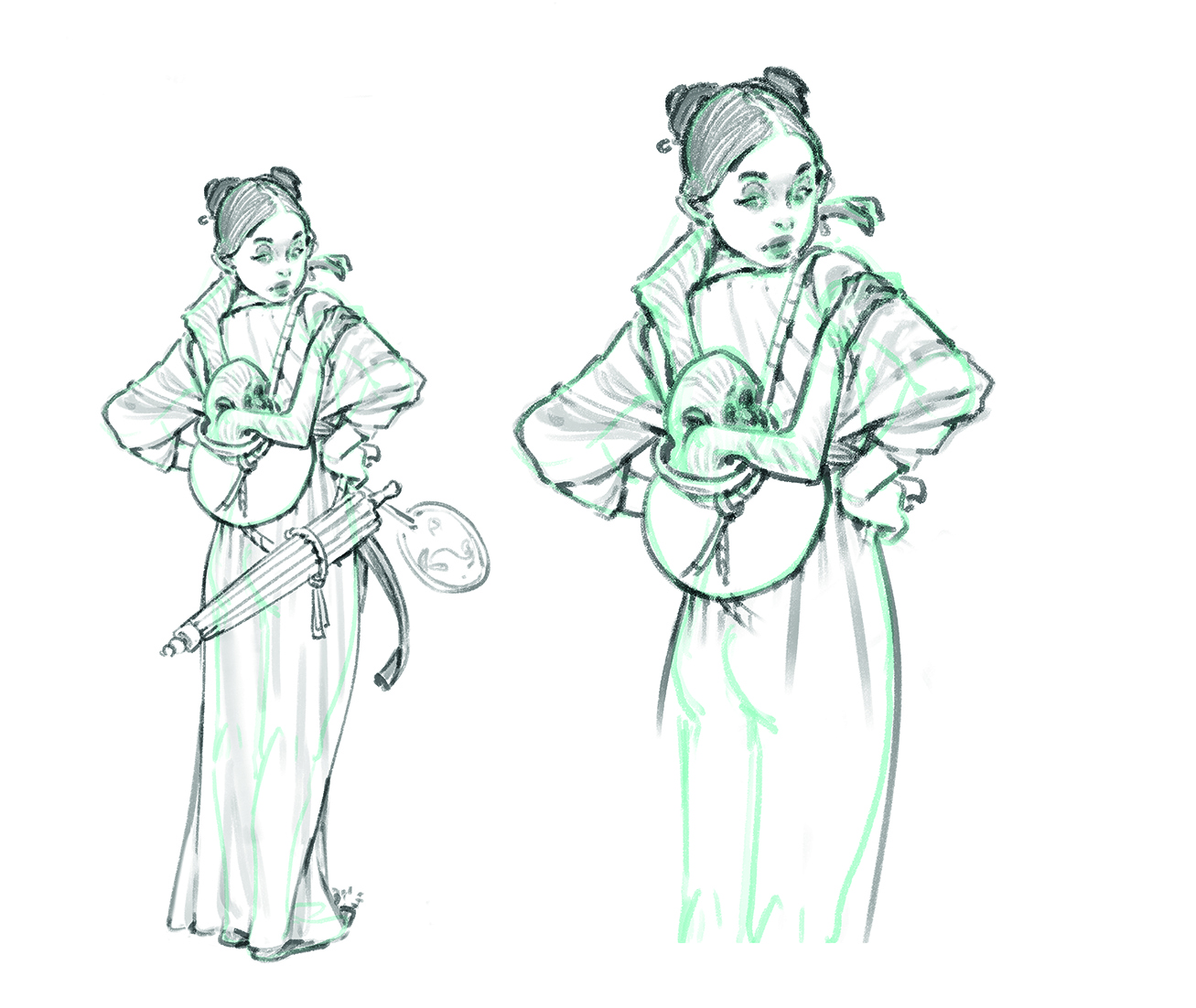
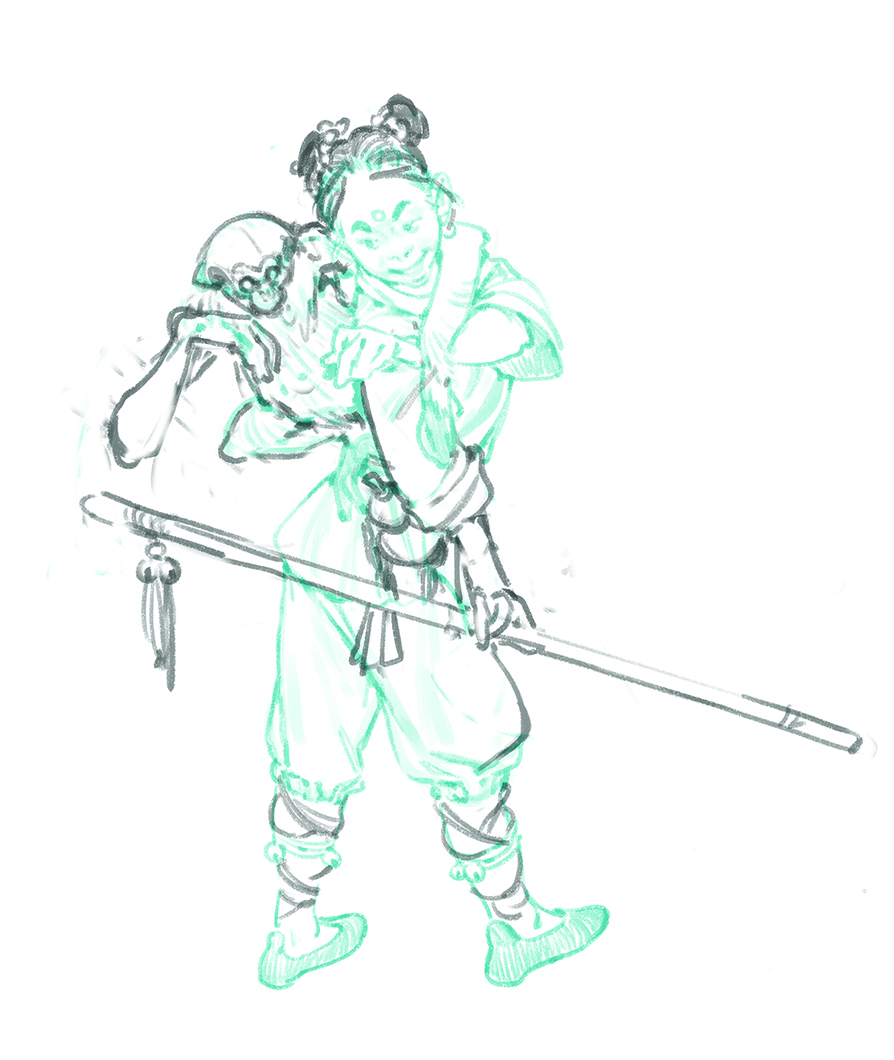
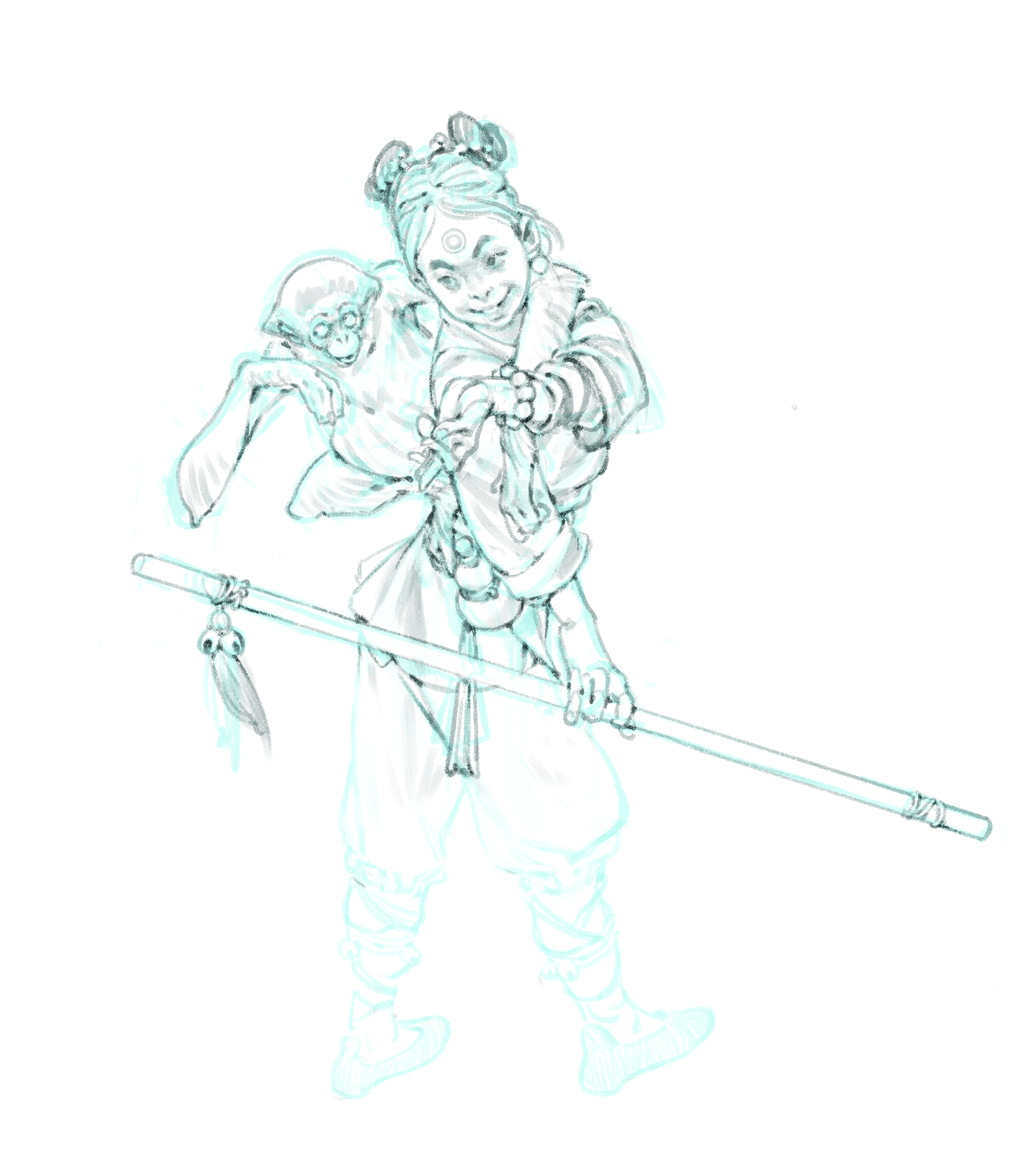
With the thumbnail structure confirmed, I begin the drafting phase. I keep the original thumbnail as a low-opacity guide (often in cyan) to serve as a structural anchor while I layer in details like costumes and props. It is vital to treat this phase as an act of creation rather than mere tracing; even at this stage, I am open to shifting elements to improve the narrative flow.
5. Client Collaboration and Iteration
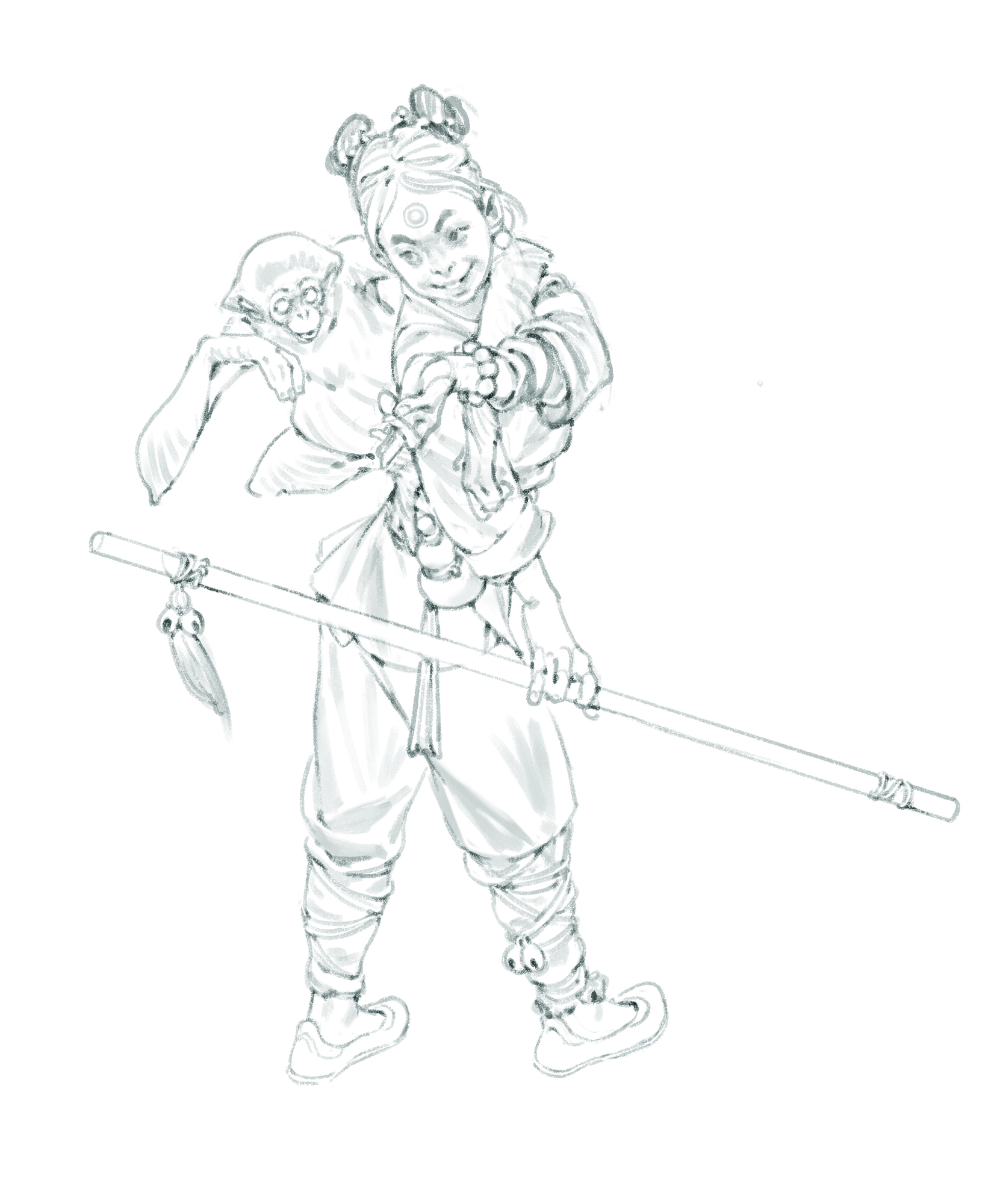
Design is rarely a solitary pursuit. In this case, the client opted for the second, more dynamic pose. However, they requested the addition of a weapon—a staff that could serve as both a defensive tool and a prop for her circus performances. This addition was a masterstroke for the silhouette, adding a new vertical element that anchors the character’s presence.
6. Final Polish and Rendering
The transition from sketch to final render involves a meticulous application of color and light. Starting with soft, watercolor-like tones, I prioritize hue variation over rigid, uniform fills. As I move into the final stages of shading, I focus on the "focal point"—usually the face and the interaction between the girl and the monkey. By intensifying highlights and adding subtle occlusion shadows, the characters gain a tactile, lifelike quality.
Supporting Data: Why Gesture Matters
In the world of character design, the "Gesture" is the invisible skeleton of the drawing. Studies in visual perception suggest that the human eye is hardwired to detect movement and intent in the human form. When a character is "posed" correctly—meaning their center of gravity is clear and their limbs follow a logical line of action—the brain interprets the image as "alive."
- The Power of Tangents: Tangents occur when two lines meet at a point or run parallel, creating a visual "flatness." Avoiding these is essential for maintaining the illusion of depth.
- The Rule of Thirds/Balance: In character design, balance is not just about weight distribution; it is about visual weight. A character holding a large staff needs to balance that visual weight with a corresponding pose or secondary prop to avoid a composition that feels "heavy" on one side.
- Color Temperature: Utilizing warm shadows and cool highlights (or vice versa) creates a sense of atmosphere. By shifting the color temperature, we communicate not just the time of day, but the emotional tone of the scene.
Official Perspective: The Designer’s Reflection
Reflecting on the final design, it is clear that the process of constant refinement is where the magic happens. Even after the rendering was complete, I found myself adjusting the hand holding the staff and resizing the secondary elements to ensure the balance felt correct.
"I think I captured the playful vibe that I was going for," I noted upon completion. "However, the process is never truly static. If I were to approach this piece again, I might experiment with different lighting scenarios or push the facial expressions even further to emphasize the bond between the girl and her companion."
This humility is essential for any professional artist. The ability to look at a completed work and identify areas for growth is what drives the industry forward.
Implications for Future Work
The techniques discussed—from the initial "first read" to the final digital painting—have profound implications for anyone working in character design, whether for video games, animation, or illustration.
- Readability is King: Regardless of how detailed or intricate a character’s clothing may be, if the silhouette is not readable, the design fails.
- Iterate Early: By spending more time on thumbnails and gesture sketches, you save hours of work during the rendering phase. Once the pose is "right," the rest of the drawing flows naturally.
- Narrative-Driven Design: Every prop, every costume choice, and every expression must answer the question: "Does this tell the viewer who this person is?" If an element doesn’t serve the story, it should be removed.
Staying Updated in the Industry
For those looking to refine their own craft, the tools available to digital artists today are more robust than ever. Whether you are using a professional-grade drawing tablet or a high-performance laptop, the core principles of drawing remain the same.
For continuous inspiration and technical guidance, publications like ImagineFX provide a vital resource for professionals and hobbyists alike. Staying connected to the community through apps and newsletters is not just about keeping up with trends—it is about engaging with the collective knowledge of the artistic world.
As we look toward the future of character design, the focus remains on the marriage of technical skill and storytelling. Whether you are creating a hero for a new game or an icon for a brand, remember that your ultimate goal is to create a connection. If you can stop a viewer in their tracks with a compelling silhouette and a powerful gesture, you have succeeded in the most important part of your job: you have brought a new story into the world.