

In a landscape where celebrity-led fashion collaborations have become increasingly formulaic, a new campaign from the performance apparel brand On has shattered the mold. By enlisting the visionary directorial prowess of Spike Jonze and the magnetic star power of Zendaya, the brand has transcended the standard "commercial" format, delivering a whimsical, stop-motion-infused short film that functions more as an avant-garde art piece than a traditional advertisement.
The project, which debuted on May 18, 2026, serves as the primary promotional vehicle for a new, actor-co-created collection. It transforms the concept of product development into a dreamlike journey of self-expression, where the boundaries of physics and fashion are stretched to their limits.
The Genesis of the "Dream Lab"
The central premise of the film—written and directed by Jonze—is a "distraction-free dream lab." Here, Zendaya is granted total creative autonomy, a conceptual "carte blanche" to conceive and refine a wardrobe that defies conventional silhouette and design logic.
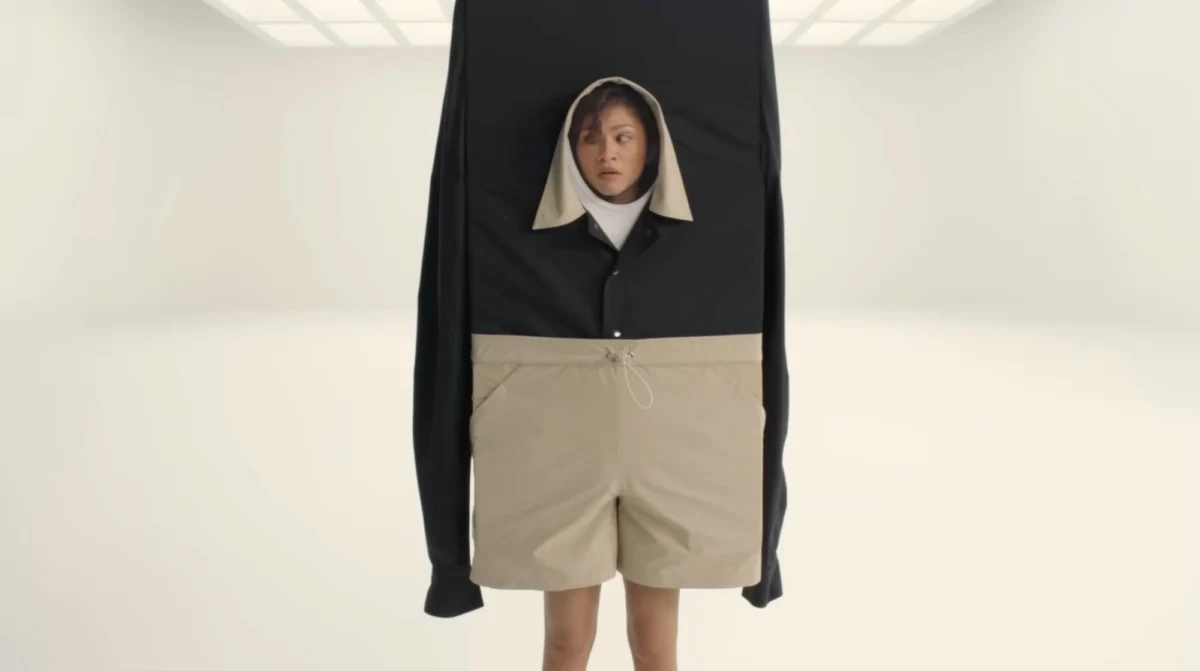
The aesthetic of the film is a masterclass in controlled chaos. It utilizes stop-motion techniques to depict the actor maneuvering through a series of "otherworldly trial and error" scenarios. Viewers are treated to visuals that challenge spatial awareness: reflections of the actor splintering into multiple versions of herself, oversized paintbrushes handled by a small team of assistants, and cartoonishly exaggerated garments that play with volume and proportion.
This is not the first time Spike Jonze has utilized movement and surrealism to redefine corporate messaging. His 2018 "mind-melting" dance film for Apple, which starred FKA twigs, remains a gold standard for brand-integrated choreography. With the On campaign, Jonze builds upon this legacy, replacing the fluid, continuous motion of the Apple film with a staccato, rhythmic stop-motion style that feels both handmade and hyper-modern.
Chronology of a Creative Collaboration
The collaboration between Zendaya and On did not emerge in a vacuum; it is the culmination of a deliberate strategy by the Swiss performance brand to position itself at the intersection of high-performance engineering and high-fashion aesthetics.
- Initial Strategic Alignment (Early 2025): Reports began to surface that On was seeking a cultural anchor to pivot from a purely athletic brand to a lifestyle powerhouse. Discussions with Zendaya, a fashion icon whose red-carpet choices consistently break the internet, began in earnest.
- The Creative Brief (Late 2025): The goal was set: avoid the standard "runway" presentation. The brand sought a narrative that emphasized the process of design, mirroring the experimental nature of their footwear and apparel technologies.
- The Jonze Factor (Early 2026): Spike Jonze was brought on board to lend his distinct directorial thumbprint. His reputation for subversive, visually arresting work made him the ideal candidate to interpret the collection’s focus on fluid movement and ergonomic design.
- Production and Filming (Spring 2026): Filming took place over three weeks in a controlled studio environment designed to look like a minimalist, sterile "dream lab." The focus was on practical effects and tactile interactions with fabric.
- Launch Day (May 18, 2026): The film, titled Shape of Dreams, was released globally, accompanied by a digital lookbook showcasing the collaborative collection.
Supporting Data: Why Surrealism Sells
In the modern digital economy, the "attention economy" is the primary currency. According to recent industry data, traditional 30-second broadcast commercials are seeing a 40% decline in engagement among Gen Z and Millennial audiences. Conversely, branded content that employs high-concept artistic storytelling—often categorized as "entertainment-first advertising"—retains viewers 3.5 times longer than standard product spots.

The partnership with On is a calculated play for the "aspirational athlete" demographic. By utilizing Zendaya—a person synonymous with cultural relevance—On is signaling that their apparel is intended for those who treat life as a creative endeavor. The choice of stop-motion is also significant; it is a time-intensive, labor-heavy medium that conveys an air of craftsmanship. In a world of AI-generated content, the "human" touch of stop-motion serves as a powerful differentiator.
Official Responses and Industry Reception
The reaction from both the fashion and film industries has been largely positive, with critics pointing to the collaboration as a potential new benchmark for brand-led storytelling.
"We didn’t want a campaign that just showed clothes on a rack," said a spokesperson for On. "We wanted to capture the feeling of when you have an idea—that messy, chaotic, and beautiful moment before it becomes a final product. Spike and Zendaya were the only ones who could make that abstract feeling tangible."
Zendaya herself has been vocal about the collaborative process, noting that the "dream lab" concept allowed her to explore fashion as a form of architecture. "It’s not just about what looks good; it’s about how the pieces move, how they occupy space, and how they change the way you move through that space," she stated during the press launch.
Critics at Design Week lauded the visual language, noting that the "cartoonishly large, boxy outfits" in the film serve as a bold subversion of the "athleisure" trend, which has historically leaned toward skin-tight, compression-focused silhouettes.
Implications for the Future of Fashion Marketing
The success of this collaboration signals a broader shift in how luxury and performance brands will interact with their audiences in the coming decade.
1. The Death of the Traditional Runway
While the fashion show remains an essential industry ritual, the "film as product launch" model is proving to be more effective for reaching a global, digital-first audience. By releasing the collection through a short film, On has created a piece of content that is shareable, embeddable, and culturally sticky, extending the life of the marketing campaign far beyond the launch date.

2. The Rise of "Art-Commercialism"
There is a growing expectation for brands to act as patrons of the arts. When a brand hires a director of Jonze’s caliber, they are effectively buying into his artistic credibility. This creates a halo effect where the brand is perceived not just as a manufacturer of goods, but as a supporter of visionary creativity.
3. The "Process-Oriented" Consumer
Modern consumers, particularly those in the luxury sector, are increasingly interested in the "how" rather than just the "what." By highlighting the prototyping, the sketches, and the "dreaming" phase of the wardrobe design, the campaign builds an emotional connection with the consumer. It transforms the garment from a commodity into an artifact of a specific creative moment.
Final Reflections: The Shape of Dreams
The collaboration between Zendaya and On, under the guidance of Spike Jonze, is a definitive statement that the barriers between high art and retail are falling. As we look at the imagery—Zendaya looking into a mirror and seeing three reflections, or the sight of a giant paintbrush in a clinical space—we are reminded that the most powerful marketing is that which invites the audience to imagine, rather than simply consume.
The collection, which features bold, architectural designs that prioritize both comfort and form, seems to be a direct extension of the film’s narrative. It suggests that the future of clothing is not just about utility; it is about the "shape of dreams." In an era of increasing digital saturation, this campaign proves that when you give top-tier creative talent the keys to the lab, the results are, quite literally, worth watching.
As the industry continues to evolve, one thing remains clear: brands that can successfully blend the surreal with the functional will be the ones that define the visual landscape of the late 2020s. For now, the "dream lab" remains open, and it is a space that viewers are eager to visit again and again.









No comments yet. Be the first to join the conversation!