In the crowded landscape of indie survival horror, developers are constantly seeking the "next big thing"—a hook that separates a title from the sea of monochromatic hallways and Victorian mansions. Sometimes, that hook is a groundbreaking mechanic; other times, it is an unsettling narrative shift. Then, there is Don’t Mess With Bober, a title that eschews traditional dread for the sheer, unadulterated absurdity of an anthropomorphic, vengeance-seeking beaver.
While the title might sound like the premise of a low-budget comedy sketch, Don’t Mess With Bober has carved out a niche for itself on the Nintendo Switch. It is a game that oscillates wildly between genuine, flashlight-swinging tension and the kind of "so bad it’s good" camp that has historically propelled cult-classic horror films to stardom.
The Premise: A Cabin Getaway Gone Wrong
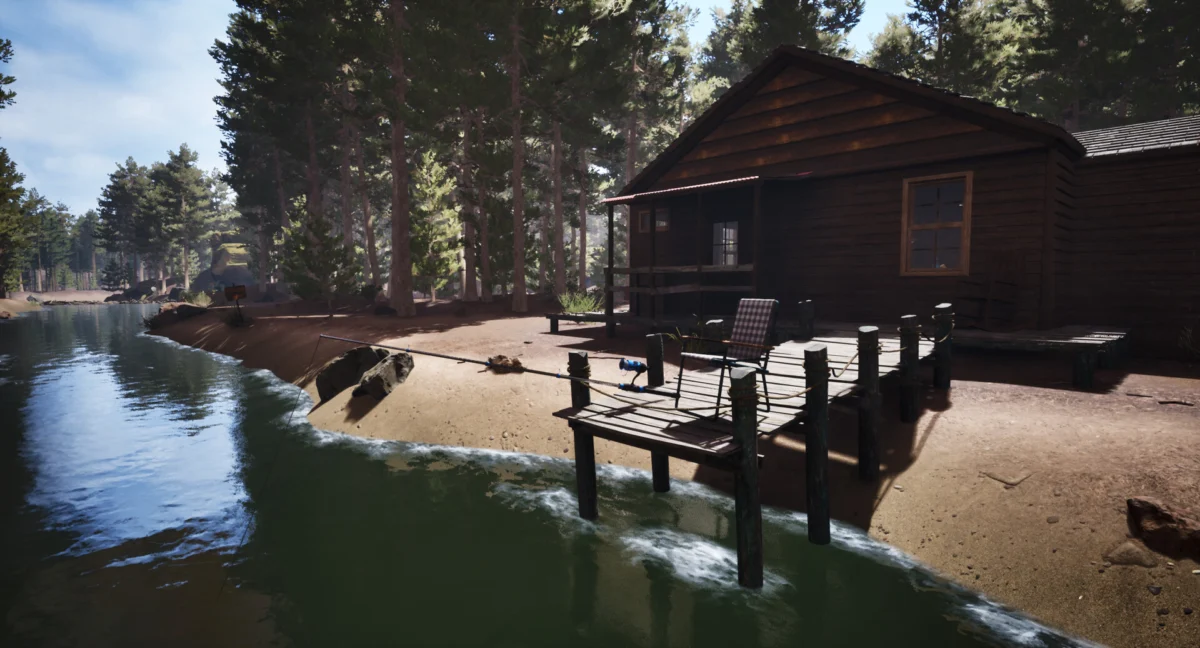
The narrative arc of Don’t Mess With Bober is intentionally thin, serving as a vehicle for its unique antagonist. The player assumes the role of a weary city dweller seeking solace in a remote lakeside cabin. It is the classic horror trope: isolation, nature, and the encroaching dark. However, the catalyst for the protagonist’s nightmare is not a slasher, a ghost, or a cosmic entity, but a local beaver named Bober.
After a fateful, ill-advised encounter with the creature, the player finds themselves the target of a relentless, woodland-based vendetta. The game proceeds through a series of exploration segments, light environmental puzzles, and high-stakes chase sequences. As the player navigates the woods, the objective shifts from simple relaxation to desperate survival, all while being pursued by a creature that has no business being as intimidating as it is.
A Chronology of Chaos: The Gameplay Loop
The experience offered by Don’t Mess With Bober can be broken down into a distinct, repetitive, yet strangely compelling loop:
- The Calm (Exploration): The player begins in a state of relative safety, navigating the cabin and its immediate surroundings. This phase focuses on atmosphere and set-up.
- The Disturbance (Discovery): A narrative beat occurs—often involving Bober—that signals the end of peace and the beginning of the hunt.
- The Pursuit (Survival): The core gameplay kicks in. Players must navigate dense forests or interior spaces, utilizing limited light sources (a flashlight) to avoid the antagonist.
- The Confrontation (Resolution/Jump Scare): The loop concludes with a scripted encounter or a jump scare, designed to punctuate the tension with a sudden adrenaline spike.
This structure is classic in its design but unusual in its execution. Because the antagonist is a beaver, the game occupies a liminal space between parody and genuine suspense.

Supporting Data: The Mechanics of Absurdism
When analyzing Don’t Mess With Bober, it is essential to look at the mechanics through the lens of intent. The game is undeniably "rough around the edges." Critics and players alike have pointed out that the title functions more like a walking simulator than a high-octane survival horror game.
- Gameplay Complexity: The puzzles are deliberately simple, often serving as gatekeepers to progress rather than intellectual challenges.
- Audio/Visual Presentation: The voice acting is notably uneven—a trait that, surprisingly, adds to the game’s charm. It reinforces the idea that the developer was prioritizing a specific aesthetic (the "b-movie" vibe) over technical perfection.
- Runtime: With a total completion time of approximately one hour, the game is a "micro-experience." It avoids the pitfalls of overstaying its welcome, instead delivering a dense, concentrated dose of absurdity.
The Psychology of the "Bober" Effect
Why does an angry beaver work as a horror villain? In traditional horror, the fear often comes from the unknown or the unstoppable. By using a beaver—an animal usually associated with industriousness or whimsical cartoon nature—the developers create a cognitive dissonance.
When a player sees a figure in the dark, their brain expects a monster. When that figure turns out to be a beaver, the player’s reaction is a mix of confusion and laughter. Yet, because the game treats Bober with such deadly seriousness, the tension remains. The absurdity of the antagonist does not negate the fear; it merely alters it, making the game a unique entry for those who enjoy horror that refuses to take itself too seriously.
Industry Implications: The Rise of "Stream-Bait" Horror
The success of Don’t Mess With Bober in the streaming community is not accidental. In the modern era, horror games are often judged by their "streamability"—how well they play for an audience on platforms like Twitch or YouTube.
Don’t Mess With Bober hits several key benchmarks for this demographic:
- Immediate Recognition: A "revenge-driven beaver" is an easy concept to communicate in a thumbnail or stream title.
- Reactive Potential: The game’s jump scares and comedic elements provide streamers with plenty of material to react to, fostering engagement with their viewers.
- Accessibility: Because the game is short and easy to pick up, it is the perfect "one-off" stream, allowing content creators to finish a full game in a single broadcast.
This signals a shift in the indie horror market. We are seeing a move away from sprawling, complex narrative games toward "event-based" horror—short, punchy experiences designed for immediate social media sharing. While some purists may lament this shift, for developers with limited budgets and high creative ambitions, it is a highly viable path to visibility.

Critique: Where the Game Falters
Despite its charm, Don’t Mess With Bober is not without significant flaws. Its technical shortcomings, while part of the "so bad it’s good" charm, can also be barriers to entry.
For players looking for a mechanical challenge—akin to Resident Evil or Silent Hill—the game will likely prove disappointing. The "walking simulator" aspects can feel tedious, and the lack of depth in the mechanics means that by the thirty-minute mark, the novelty of the beaver antagonist may begin to wear thin for some. Furthermore, the reliance on jump scares, while effective in short bursts, is a divisive design choice that some horror enthusiasts feel is a shortcut to earning a reaction.
The Final Verdict: A Testament to Commitment
Ultimately, Don’t Mess With Bober succeeds because of its unwavering commitment to its premise. It is a game that knows exactly what it is: a silly, brief, and slightly unsettling experiment.
In a gaming industry that often feels obsessed with massive open worlds and "games as a service" models, there is a refreshing honesty in a game that says, "Here is a beaver, and it wants to hurt you for an hour." The humor keeps the experience buoyant, ensuring that even when the gameplay feels repetitive or the voice acting misses the mark, the player remains entertained.
For those looking for a traditional horror masterpiece, this is not the title to choose. However, for those looking for a fun, ridiculous, and memorable evening of gaming—ideally with friends or an audience—Don’t Mess With Bober is a bizarrely effective piece of interactive entertainment. It proves that with the right level of self-awareness, even the most unlikely woodland creature can become a horror icon.
About the Author:
Marcus Orchard is a veteran gaming journalist and commentator. When he isn’t replaying the Final Fantasy back-catalog for the umpteenth time, he is deeply embedded in the worlds of comic books, board games, and anime. He remains a steadfast believer in the creative genius of Chip Zdarsky.