

In the rapidly evolving digital landscape of 2026, social media has graduated from a mere broadcasting channel to a sophisticated engine for business growth. As platforms integrate advanced AI, immersive shopping experiences, and hyper-personalized algorithms, the margin for error has narrowed. For enterprise teams and independent marketers alike, the difference between viral vanity and actual ROI lies in one fundamental practice: the setting of rigorous, data-backed social media goals.
The Core Fundamentals: Goals, Objectives, and Tactics
To navigate the complexity of today’s social ecosystem, one must first distinguish between the three pillars of strategic planning. Goals represent the broad, aspirational outcomes—such as "becoming the primary authority in the fintech space." Objectives are the granular, time-bound targets that act as stepping stones, such as "achieving a 25% increase in organic Instagram followers by the end of Q2." Finally, tactics are the specific, actionable maneuvers—like launching a targeted series of short-form educational videos—that propel the team toward those objectives.
![How to set social media goals in 2026 [10 examples]](https://blog.hootsuite.com/wp-content/uploads/2026/05/How-to-set-social-media-goals-in-2026-.png)
Without this hierarchy, social media efforts often devolve into "activity for the sake of activity." In an era where C-suite stakeholders demand transparency and fiscal accountability, defining these parameters is no longer optional; it is the foundation of a scalable, sustainable strategy.
Chronology of a Successful Campaign
The path to success follows a distinct, iterative lifecycle. By adhering to a structured process, marketers can move from reactive posting to proactive, strategic execution:
![How to set social media goals in 2026 [10 examples]](https://blog.hootsuite.com/wp-content/uploads/2026/05/How-to-set-social-media-goals-in-2026--556x556.png)
- Objective Alignment: Begin by auditing your business’s current pain points. Are you struggling with low brand recognition? Is your conversion funnel leaking prospects? Your social goals must mirror these broader corporate challenges.
- The SMART Framework: Every goal must be Specific, Measurable, Attainable, Relevant, and Time-bound. A vague wish to "get more likes" is replaced by a concrete requirement to "increase engagement rate by 15% through community-focused content over the next six months."
- KPI Identification: Map your goals to specific metrics. If the goal is awareness, track reach and share of voice. If the goal is sales, track referral traffic and conversion rates.
- Strategic Execution: Deploy content mapped to your specific audience segments.
- Review and Pivot: Utilize a weekly check-in cadence for performance metrics, a monthly deep-dive into content efficacy, and a quarterly review of the goals themselves to ensure they remain relevant to the changing market.
Supporting Data: Why Metrics Still Define the Future
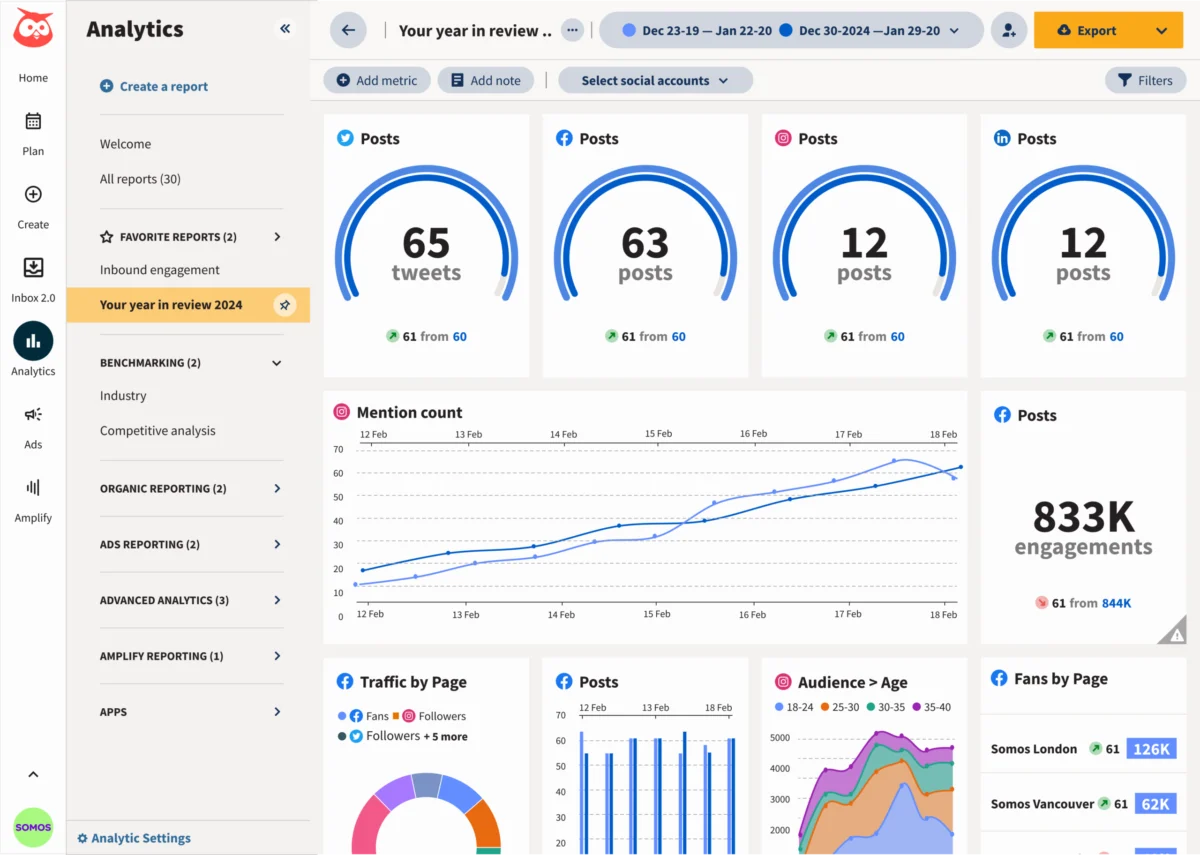
The modern marketing dashboard has become the "single source of truth" for the enterprise. Data from 2026 suggests that teams failing to tie social metrics to business KPIs—such as customer acquisition cost (CAC) or customer lifetime value (CLV)—are significantly more likely to face budget cuts.
For instance, while "likes" and "shares" provide a pulse on content sentiment, they are secondary to hard metrics like referral traffic and lead form submissions. Current industry data indicates that social commerce is projected to surpass $100 billion in 2026, highlighting that the primary goal for many brands is now the direct movement of users from social discovery to purchase.
![How to set social media goals in 2026 [10 examples]](https://cdn.airops.com/rails/active_storage/blobs/proxy/eyJfcmFpbHMiOnsiZGF0YSI6MTY5MDIwMzQ1LCJwdXIiOiJibG9iX2lkIn19--98b840e78726f21e34503c5d7e358310922582c4/NEW%20Analytics.png)
The Ten Pillars of Social Media Goals
To provide a comprehensive roadmap for the coming year, we have identified the ten most impactful goals for brands operating in the current climate:
1. Increasing Brand Awareness
This remains the most common objective. It is not just about reach; it is about "share of voice" in a crowded marketplace. By tracking mentions and sentiment, brands can determine if they are becoming the default choice in the minds of consumers.
![How to set social media goals in 2026 [10 examples]](https://cdn.airops.com/rails/active_storage/blobs/proxy/eyJfcmFpbHMiOnsiZGF0YSI6MjgyNDgyMjcxLCJwdXIiOiJibG9iX2lkIn19--af72520ce7dbcb7eff051e22ee55eff080794825/image.png)
2. Reputation Management
Trust is the currency of 2026. Through active social listening, brands can mitigate PR crises before they escalate and ensure that their brand voice remains consistent across all touchpoints, regardless of whether a user is interacting with a post or a support ticket.
3. Driving Website Traffic
Social platforms are the most effective top-of-funnel discovery engines. By optimizing content for "click-through" rather than just "time spent on app," brands can feed high-intent traffic directly into their digital sales ecosystem.
![How to set social media goals in 2026 [10 examples]](https://cdn.airops.com/rails/active_storage/blobs/proxy/eyJfcmFpbHMiOnsiZGF0YSI6MTY5MDIwMjM0LCJwdXIiOiJibG9iX2lkIn19--62d450864d15db762fe475ec21a017da162f2caf/Hootsuite%20dashboard.png)
4. Improving Community Engagement
Engagement is the indicator of brand health. A high engagement rate suggests that your content is resonating deeply, creating a community of advocates rather than just passive followers.
5. Boosting Conversions and Sales
With the maturation of integrated shopping tools (TikTok Shop, Instagram Checkout, etc.), the path from "scroll" to "checkout" has never been shorter. This goal focuses on conversion rate optimization (CRO) within the social environment.
![How to set social media goals in 2026 [10 examples]](https://cdn.airops.com/rails/active_storage/blobs/proxy/eyJfcmFpbHMiOnsiZGF0YSI6MjgyNDgyNDQ1LCJwdXIiOiJibG9iX2lkIn19--bc1a00dede5d281d99a24b973e204dec22b387d4/image.png)
6. Lead Generation
For B2B brands, social media is a goldmine for qualified leads. By using gated content, white papers, and lead-gen forms, marketers can build a robust pipeline of potential clients.
7. Building Thought Leadership
In an era of AI-generated noise, human expertise is premium. Positioning executives and subject matter experts as credible voices helps build long-term brand equity that transcends individual marketing campaigns.
![How to set social media goals in 2026 [10 examples]](https://blog.hootsuite.com/wp-content/uploads/2024/06/Hootsuite-Analytics-Brand-Awareness-620x503.png)
8. Event and Product Launch Momentum
Social media is the ideal venue for "hype." By building a multi-week countdown strategy, brands can ensure maximum impact for their biggest milestones.
9. Delivering Customer Service
Social media has replaced the telephone as the first line of support. High-performing brands now use social media inboxes and chatbots to resolve issues in real-time, drastically increasing customer satisfaction (CSAT) scores.
![How to set social media goals in 2026 [10 examples]](https://blog.hootsuite.com/wp-content/uploads/2024/08/Listening-Inpost-CTA.png)
10. Attracting Talent
Employer branding is a vital, often overlooked goal. Showcasing company culture and employee testimonials on platforms like LinkedIn is now a core component of modern recruitment strategies.
Implications for the C-Suite
The implications for executive leadership are clear: social media is a boardroom-level asset. When social goals are explicitly linked to revenue, pipeline growth, or operational efficiency, marketing departments gain the leverage needed to secure larger budgets and more advanced technical resources.
![How to set social media goals in 2026 [10 examples]](https://blog.hootsuite.com/wp-content/uploads/2024/06/Hootsuite-Listening-Quick-Search-620x288.png)
Furthermore, the rise of advanced listening tools—powered by sophisticated AI sentiment analysis—means that social media data is now being used to inform product development, regional expansion, and even corporate policy.
Best Practices for Execution: The Expert View
To succeed, organizations must move beyond the "one-size-fits-all" approach. Not every channel is built for every goal. LinkedIn remains the undisputed leader for lead generation and thought leadership; Instagram and TikTok are the engines for commerce and brand awareness; and platforms like X are essential for real-time customer service and crisis communication.
![How to set social media goals in 2026 [10 examples]](https://blog.hootsuite.com/wp-content/uploads/2024/06/Hootsuite-Listening-Quick-Search-Key-Metrics-620x435.png)
Summary Table: Goal-to-Metric Mapping
| Goal | Primary KPI | Measurement Tool |
|---|---|---|
| Brand Awareness | Reach, Share of Voice | Analytics Dashboards |
| Reputation Management | Sentiment Score | Social Listening |
| Website Traffic | Referral Traffic | Google Analytics |
| Community Engagement | Engagement Rate | Native Insights |
| Sales/Conversions | Conversion Rate | Platform Ad Managers |
| Lead Generation | Form Submissions | CRM Integration |
| Thought Leadership | Earned Media Mentions | Media Monitoring |
| Product Launches | Hashtag Mentions | Social Monitoring |
| Customer Service | Response Time | Inbox/CSAT Tools |
| Talent Acquisition | Source of Hire | Applicant Tracking System |
Conclusion: The Path Forward
Setting social media goals is not a static event; it is a continuous, dynamic process. As the digital ecosystem of 2026 continues to shift, the brands that win will be those that remain agile—those that test, measure, and optimize their tactics based on empirical evidence rather than intuition.
By grounding your strategy in the SMART framework and aligning every post with a specific business objective, you transform your social media presence from a cost center into a powerful, revenue-generating engine. The tools to track this progress exist—now, it is up to the modern marketer to use them with intention and precision.











No comments yet. Be the first to join the conversation!