Laily UPN
In a seismic shift for global high-performance computing (HPC), China has officially reclaimed the title of home to the world’s fastest supercomputer. The newly unveiled "LineShine" system, housed at the National Supercomputer Center in China, has shattered previous benchmarks, clocking in at an unprecedented 2.198 exaflops. By crossing the two-exaflop threshold, LineShine has unseated the United States’ "El Capitan"—the Lawrence Livermore National Laboratory’s powerhouse that previously held the crown with 1.809 exaflops.
This development marks a watershed moment in the race for technological dominance. For the first time since 2017, the top spot on the prestigious Top500 list has returned to Chinese soil, signaling not only a recovery of status but a fundamental shift in how the world’s most powerful machines are being engineered.
The Technical Breakthrough: A CPU-Only Revolution
The most striking aspect of the LineShine system is not merely its speed, but its architecture. In an era where the world’s fastest machines have increasingly relied on massive GPU (Graphics Processing Unit) clusters to accelerate parallel computing tasks, LineShine has charted a different course.
According to data verified by Top500.org, LineShine is the first system in history to surpass the two-exaflop barrier using a "CPU-only" architecture. While Western counterparts like Frontier and El Capitan lean heavily on the raw parallel processing power of NVIDIA or AMD GPUs, LineShine is built around a proprietary 304-core processor.
The machine boasts a staggering 13.79 million cores, each operating at a clock speed of 1.55GHz. These cores are linked by a custom, high-speed interconnect fabric designed to minimize latency—a common bottleneck in massive-scale computing. By bypassing the need for GPUs, the designers of LineShine have effectively circumvented many of the supply chain hurdles posed by international technology embargoes. The system draws 42.2 megawatts of power, yielding an energy efficiency rating of 52.07 Gigaflops per watt, a figure that places it among the most efficient systems currently in operation.
A Chronology of the Supercomputing Arms Race
The ascent of LineShine is the latest chapter in a multi-decade competition that has evolved from simple calculation speed to the complex, exascale-driven research of today.
- 2010–2017: The Chinese Ascendancy: China began its rapid climb up the Top500 list in the early 2010s, with the Tianhe-1A and Sunway TaihuLight systems representing significant milestones. In 2016 and 2017, Sunway TaihuLight famously held the #1 spot, shocking the global community with its use of indigenous processor technology.
- 2018–2023: The American Resurgence: As the U.S. government ramped up investment via the Exascale Computing Project, the U.S. regained momentum. Systems like Oak Ridge National Laboratory’s Frontier (the first to officially breach the exascale barrier in 2022) and the Aurora system at Argonne National Laboratory placed the U.S. firmly back in the lead.
- 2024–2025: The Exascale Plateau: The industry saw a period of stabilization where the U.S. dominated the top rankings, with El Capitan taking the top spot in late 2024, demonstrating the power of combined CPU/GPU architectures.
- 2026: The LineShine Debut: Following a period of secrecy, LineShine entered the international testing environment. Its performance verification at 2.198 exaflops was confirmed in mid-2026, officially marking the start of a new, multi-polar exascale era.
The Top500 Landscape: Supporting Data
The latest Top500 list reveals a landscape characterized by extreme architectural diversity. The dominance of a single design philosophy is no longer a reality; rather, a "menu" of technologies is being deployed by the world’s leading research institutions.
The Top 5 Systems (As of Current Rankings)
| Rank | System | Location | Performance (Exaflops) |
|---|---|---|---|
| 1 | LineShine | China | 2.198 |
| 2 | El Capitan | USA | 1.809 |
| 3 | Frontier | USA | 1.353 |
| 4 | Aurora | USA | 1.012 |
| 5 | Jupiter Booster | Germany | 1.000 |
This data highlights that there are now five systems worldwide capable of exceeding the exascale threshold. The inclusion of Germany’s Jupiter Booster at exactly 1.000 exaflops underscores that European research centers remain highly competitive, focusing on energy-efficient architectures suited for climate modeling and complex physics simulations.
Official Responses and Expert Analysis
The reaction from the scientific community has been one of both surprise and admiration. Dr. Jack Dongarra, one of the founders of the Top500 project and a distinguished computer scientist, expressed profound respect for the engineering feat.
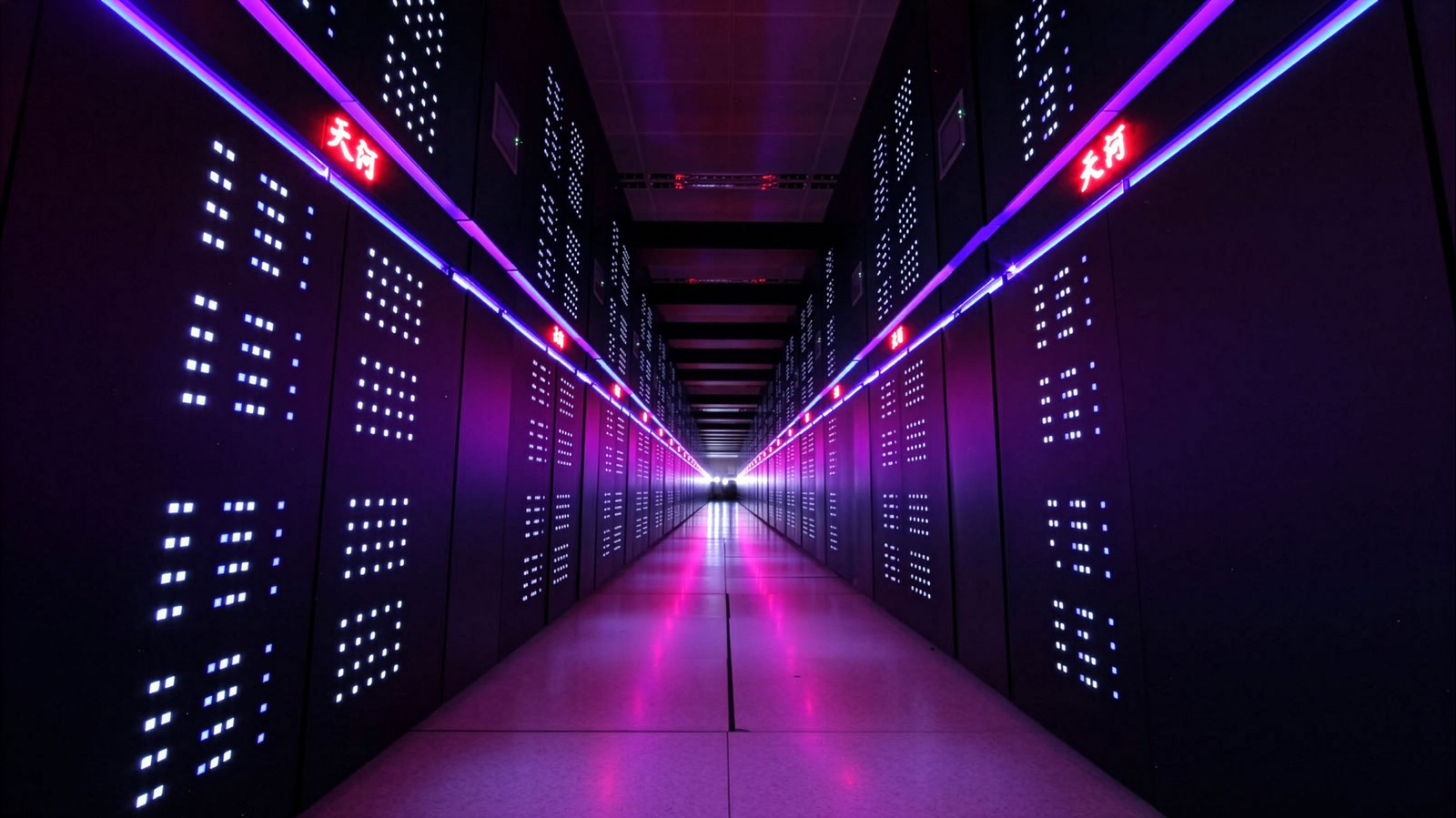
"They upped us by developing a system that is not reliant on GPUs," Dr. Dongarra remarked in a recent interview with The New York Times. "In an environment where access to high-end accelerators is restricted, the ability to achieve this level of performance through custom CPU design is a testament to the sophistication of their domestic semiconductor ecosystem."
The lack of public funding for the LineShine project has fueled speculation regarding its origins. Unlike previous Chinese systems, which were often flagship state-sponsored projects, LineShine was developed through private or independent channels. This allowed its developers to maintain a degree of operational secrecy that would be impossible under the oversight of a public grant. While the specific manufacturer of the 304-core processor remains undisclosed, industry analysts suggest it represents a "leap-frog" technology that may utilize advanced packaging techniques to compensate for the limitations in lithography equipment currently available to Chinese firms.
Implications: The Geopolitical and Scientific Ripple Effect
The emergence of LineShine carries significant weight for both global scientific advancement and international trade policy.
1. The Death of the "GPU-Mandatory" Narrative
For years, the consensus among Western HPC experts was that reaching exascale performance—and beyond—required the heavy lifting of GPUs. LineShine has effectively invalidated that assumption. By proving that massive-scale parallel computing can be achieved via high-density, custom-interconnected CPU cores, China has opened a new front in hardware design that may force Western manufacturers to rethink their dependency on GPU-heavy architectures.
2. Supply Chain Resilience
The geopolitical backdrop cannot be ignored. With ongoing trade restrictions affecting the export of high-end AI and HPC chips to China, LineShine serves as a tangible demonstration of "technological self-reliance." If China can reach 2.198 exaflops without relying on Western GPU silicon, the effectiveness of existing export controls may be subject to renewed debate among policy makers in Washington and Brussels.
3. Accelerated Scientific Research
Supercomputers are not merely vanity projects; they are the engines of discovery. A system capable of 2.198 exaflops will provide Chinese researchers with an unparalleled advantage in fields such as:
- Molecular Dynamics: Designing new materials and pharmaceutical compounds.
- Climate Modeling: Predicting regional weather patterns with unprecedented granularity.
- Astrophysics: Simulating the formation of the early universe.
- National Security: Advanced cryptography and nuclear stockpile simulation.
4. The Race to 10 Exaflops
The competition is now shifting toward the next horizon. With the exascale barrier breached, the race is on to reach 10 exaflops. While the U.S. has massive projects in the pipeline (such as the successor to the Aurora system), LineShine’s success suggests that the path to the next level of performance will be a diversified one. The "architecture wars" have only just begun, and the victor will likely be the nation that can best balance raw power, energy efficiency, and software ecosystem maturity.
Conclusion
The rise of LineShine is a stark reminder that the landscape of high-performance computing is fluid and fiercely contested. As nations continue to pour resources into these digital giants, the competition transcends the numbers on the Top500 list. It is a contest of engineering ingenuity, supply chain independence, and the relentless human desire to simulate the complexities of our reality. As the world digests the news of China’s new champion, one thing remains clear: the exascale era is no longer a future goal—it is a present-day reality, and the boundaries of what is possible in computing continue to expand at a breakneck pace.


 Muslim
 Evan Lee Salim