Asep Darmawan
The transition from the melancholic, introspective narration of Louis de Pointe du Lac to the flamboyant, razor-sharp perspective of Lestat de Lioncourt is not merely a change in protagonist; it is a seismic shift in the DNA of AMC’s Anne Rice’s Interview with the Vampire. Following two seasons of critical acclaim that redefined gothic horror for the modern era, the series returned with its third installment, "Detroit," proving that the "road to perdition" is far more exhilarating when guided by the Brat Prince himself. Sam Reid’s portrayal of Lestat has always been a cornerstone of the series, but as the show pivots to center his voice, the narrative has evolved into something more volatile, toxic, and utterly intoxicating.
A Shift in Perspective: The Unreliable Narrator Returns
For two seasons, viewers were tethered to the worldview of Jacob Anderson’s Louis—a man defined by his trauma, his guilt, and his often revisionist recollection of history. With the premiere of The Vampire Lestat, the lens has shifted. The immediate sensation is one of "narrative whiplash," yet it is a welcome disorientation.

Lestat’s voiceover is a masterclass in chaotic charisma. It is honeyed, dangerous, and dripping with the kind of toxic self-assurance that makes it impossible to look away. Unlike Louis, who often framed his existence as a slow march toward penance, Lestat presents his story as a spectacle. This shift forces the audience to confront the discrepancies in the previously established lore. As Lestat actively critiques and annotates the memories Louis shared with journalist Daniel Molloy, the show raises an essential question: How much of the history we have been told was true, and how much was merely the construction of a heartbroken, vengeful vampire?
The Anatomy of the Premiere: "Detroit" and Its Thematic Beats
The premiere episode, "Detroit," is a dense, high-octane exploration of Lestat’s psyche. We witness the "domesticated" Lestat—a version of the character who buys Halloween candy and attempts a semblance of normalcy—before the inevitable descent back into his trademark rage. The writers have successfully balanced the audience’s familiarity with these characters against a completely new, frenetic visual and tonal style.

The Breakdown of Memory
One of the most compelling aspects of the episode is the meta-narrative element of Lestat "fact-checking" Louis. When Lestat scoffs at the idea of consulting Armand for the truth, the moment lands with a perfect mixture of derision and dark humor. It is a brilliant display of character writing; even when faced with the existential threats that loom over his kind, Lestat remains the ultimate contrarian, unwilling to let anyone—especially his former companions—define his reality.
The Return of the Journalist: Daniel Molloy’s Evolution
Eric Bogosian’s Daniel Molloy continues to be the audience’s anchor, though his role has fundamentally changed. Now a vampire himself, Daniel possesses a new, terrifying level of agency. His abrasive, relentless questioning style remains, but it is now backed by the immortality of his new body. He no longer fears the predators sitting across from him; he challenges them. The tension during his interrogation of Lestat regarding the "stutter" is a masterclass in foreboding cinematography, culminating in the sudden, jarring appearance of Gabrielle de Lioncourt, played by Jennifer Ehle.

Chronology of Disquiet: From Past to Present
The episode deftly maneuvers between timelines, a structural choice that highlights the fractured nature of the vampires’ history. The past is not a static memory but a living, breathing influence on the present.
- The Domesticated Interval: A look at the brief period where Lestat attempted to live a life resembling normalcy, highlighting the fragility of his peace.
- The Conflict of Narratives: Lestat’s active dismantling of Louis’s version of events, particularly regarding the "cloud" and the nature of his relationship with his makers.
- The Awakening of Rage: The inevitable collapse of the domestic facade, fueled by the re-emergence of past trauma and the arrival of his mother, Gabrielle.
- The Present-Day Catastrophe: A glimpse into the current timeline, where Louis and Armand are physically compromised, Lestat is rumored to be dead, and the Talamasca—personified by the ominous Raglan James—is lurking in the shadows.
Supporting Data: Why "Detroit" Works
The success of this premiere relies heavily on the technical execution. The dialogue is punchy and laden with subtext, rewarding viewers for their attention to detail. The decision to employ a "chef’s kiss" editing style that jumps between past and present ensures the pace never flags. Furthermore, the performance of Jennifer Ehle as Gabrielle adds an immediate layer of complexity. Lestat’s shift in demeanor upon her arrival—moving from a defiant, loudmouthed rockstar to a son performing for his mother’s approval—is perhaps the most chilling moment of the episode. It reveals that beneath the bravado, the Brat Prince is still haunted by the expectations of those who formed him.
Implications and Future Speculation
The final act of "Detroit" leaves us with more questions than answers. The cryptic message from Baby Jenks regarding "how badly" Daniel dies casts a long shadow over the season. If Daniel’s fate is already written, what does this mean for the current, precarious alliance between these vampires?
The Talamasca Factor
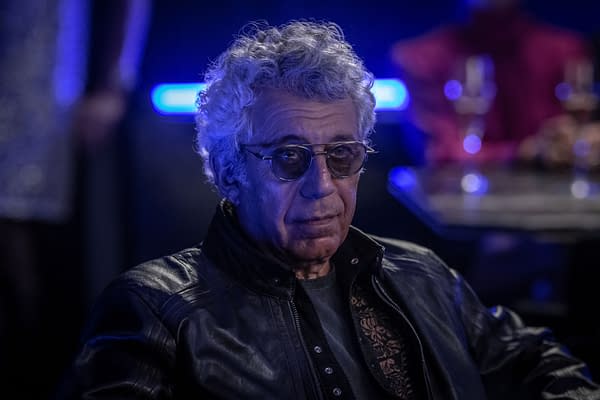
The presence of Raglan James, played by Justin Kirk, introduces a new, external threat. His presence in the present-day timeline, coupled with the mysterious "big" that is being bid upon, suggests that the danger is no longer internal. If the prize is tied to the ancient blood of Akasha—which Lestat possesses—we may be heading toward a conflict that threatens the entirety of the vampire hierarchy.

The Unresolved Questions
- The Nature of the Catastrophe: What specifically led to the ruined state of Louis and Armand in the present?
- The Truth of the Stutter: Is the stutter a biological reality or a manifestation of something more supernatural?
- The Mother-Son Dynamic: How will Gabrielle’s influence shape Lestat’s actions as he moves toward the next stop on his tour, "Toledo"?
Conclusion: A Masterclass in Gothic Television
The Vampire Lestat has managed the impossible: it has taken a well-known literary legend and completely subverted the audience’s expectations through a shift in perspective. By centering the story on Lestat, the show has traded the mournful, static atmosphere of the first two seasons for something that feels alive, dangerous, and deeply unpredictable.
The writing team has earned every bit of praise they are receiving. The dialogue is sharp, the pacing is frantic, and the emotional stakes have never been higher. As we move toward the next episode, the central question remains: do we want to be saved, or are we just as trapped on this "road to perdition" as the characters themselves? One thing is certain: in the world of Anne Rice, there is no turning back, and there is certainly no looking away. If "Detroit" is any indication, the remainder of this season will be an essential, high-stakes journey through the heart of darkness.

 Sagoh
Sagoh
 Ammar Sabilarrohman