

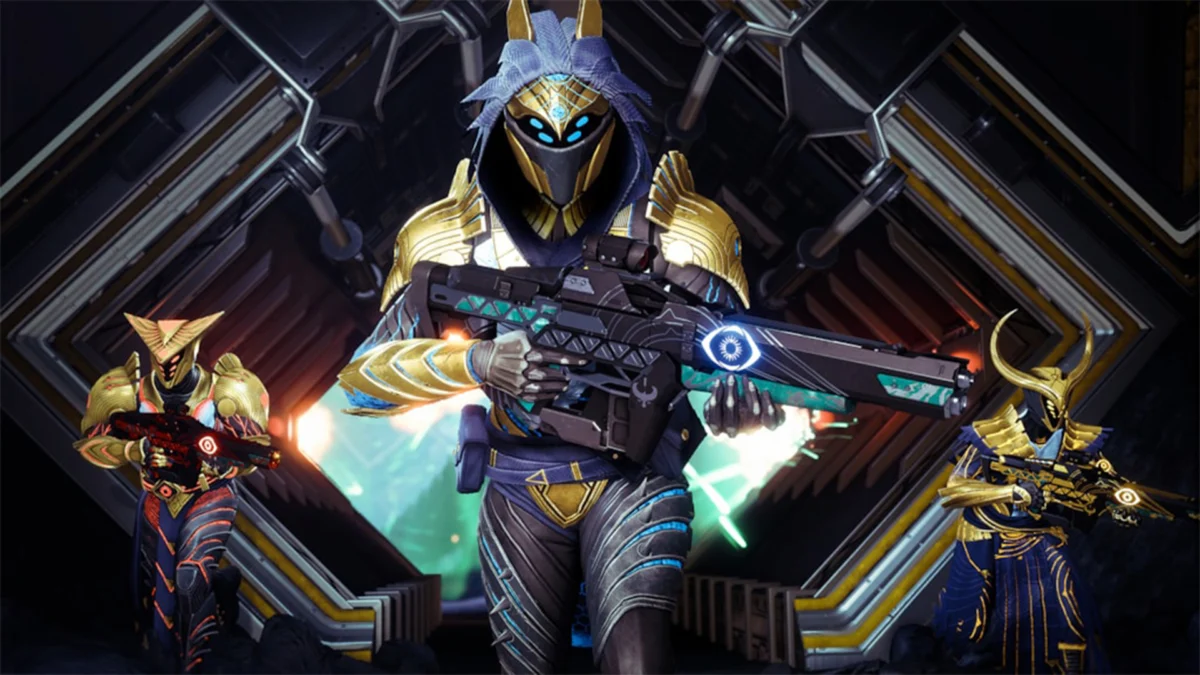
In the competitive landscape of live-service shooters, Bungie occupies a unique and somewhat paradoxical position. In early 2026, the studio released Marathon, a highly anticipated extraction shooter that garnered critical acclaim—including an 8/10 rating from our review team—and a "Mostly Positive" reception on Steam. Yet, just months after launch, the studio’s long-standing titan, Destiny 2, continues to exert a gravitational pull that Marathon has yet to replicate. Despite Destiny 2 effectively entering a state of maintenance following its final major content update, it continues to dwarf its younger sibling in concurrent player metrics by a factor of ten.
A Tale of Two Shooters: The Data Gap
When Marathon debuted in early 2026, it saw a healthy surge of interest. According to data from Steam Charts, the title hit an all-time peak of 77,358 concurrent players, with SteamDB reporting an even more optimistic figure of 88,337. While these numbers were promising for a new IP entering a crowded extraction-shooter market, they pale in comparison to the historical performance of the Destiny franchise.
To put these figures into perspective, we must look at the historical data for Destiny 2. When it transitioned to Steam in 2019—roughly two years after its original release—it saw peak concurrent player counts ranging between 292,000 and 316,000. Even the now-defunct Highguard briefly managed to surpass Marathon’s launch peak, reaching upwards of 97,000 players before its rapid decline.
The disparity becomes even more striking when examining the present day. Destiny 2, which has effectively ceased active development following the release of its final content update, "Moment of Triumph," maintains a consistent daily peak of approximately 47,000 concurrent players. In contrast, Marathon struggles to maintain a baseline, recently hovering around 2,800 concurrent users. This ten-fold difference highlights a startling reality: the "dead" game is outperforming the "live" one.
Chronology of a Shifting Landscape
The divergence between these two titles can be mapped through a series of key dates in mid-2026. On June 2, 2026, Marathon launched its second season, which provided a temporary boost, pushing its concurrent player count to slightly over 40,000. However, this momentum proved ephemeral, as the player base began a steady, predictable decline shortly thereafter.
Conversely, Destiny 2 saw its own significant shift on June 9, 2026, with the arrival of "Moment of Triumph." The final update triggered a massive resurgence of interest, with player counts peaking at over 167,000 that day. While those numbers have since tapered off, the game has maintained a daily peak of over 50,000 players—a level of engagement that Marathon has not been able to sustain since the immediate aftermath of its June content drop.
This timeline suggests that while Marathon is currently in a phase of user acquisition and retention, it is fighting an uphill battle against the sheer inertia of the Destiny brand. Even with the knowledge that no further content updates are planned for Destiny 2, the player base remains deeply attached to the ecosystem, suggesting that the game’s "sunsetting" has not yet resulted in a mass migration to Bungie’s newer offering.
Analyzing the Disparity: Contextual Nuances
It is essential to note that these comparisons are not entirely 1:1. Marathon and Destiny 2 inhabit different sub-genres within the broader first-person shooter category. Destiny 2 is a hybrid looter-shooter with massive-scale raids, deep RPG mechanics, and a decade of narrative lore. Marathon, meanwhile, is an extraction-based shooter that relies on tension, high-stakes looting, and a different cadence of gameplay.
Furthermore, the data for Destiny 2’s original 2017 launch—which occurred on proprietary launchers before moving to Steam—remains difficult to verify with modern precision. However, industry reports from the time, such as those provided by GamesIndustry.biz, noted that Destiny 2 saw peak concurrent player counts exceeding 1 million players across consoles and PC during its launch week.

Even when accounting for the fact that Destiny 2 is a more mature product with a decade of ecosystem building, the current state of affairs poses a difficult question for Bungie: How do you transition a community from a beloved, established franchise to a new, structurally different experience?
The Implications of the "Sunset"
The current player metrics carry significant implications for Bungie’s strategic direction. Typically, a studio would expect players of their legacy titles to transition to their newer projects as support for older games ends. However, the data suggests that the community is not necessarily looking for a replacement, but rather is content playing the existing Destiny 2 sandbox until the last light fades.
For Marathon, the road ahead is precarious. If the game cannot convert the existing Bungie fan base, it must look to external markets to grow its population. The upcoming third season, slated for September 2026, will be a critical inflection point. If Marathon can deliver a substantial enough shift in gameplay or content depth, it may finally break out of its current plateau.
However, the "Destiny effect" acts as both a blessing and a curse. While it provided the studio with the capital and the reputation to develop Marathon, it also set an impossibly high bar for engagement. To the average gamer, Destiny 2 is not just a game; it is a long-term social hub. Marathon is currently viewed as a distinct, perhaps more niche, experience.
Official Stance and Community Sentiment
Bungie has remained largely focused on the execution of its current roadmap. While the studio has not issued a formal statement regarding the player count disparity, internal documentation and developer diaries suggest a "long-tail" approach for Marathon. The team appears committed to iterative improvements, leaning on player feedback from the first two seasons to refine the extraction loop.
Community sentiment, as seen on forums and social media, is equally bifurcated. Many Destiny 2 players express a form of "grief-spending" or "commemorative play," returning to the game to complete collections or run final raids as the sun sets on the title. Marathon players, meanwhile, remain vocal about the game’s high skill ceiling and the need for more diverse mission structures to keep the extraction loop fresh.
The Road Ahead: Can Marathon Find Its Footing?
Whether Marathon can eventually capture the long-term, multi-generational player base that Destiny 2 enjoyed remains one of the most pressing questions in the industry. The fact that Destiny 2 is still seeing 47,000 concurrent players—despite the lack of future content—speaks volumes about the quality of the game’s core loop. It is a testament to Bungie’s mastery of "gun-feel" and world-building that the game remains relevant well past its expiration date.
For Marathon, the challenge is not just to be a good game, but to be an essential one. It needs to offer a reason to stay that isn’t just "the next season." As we move into the latter half of 2026, the industry will be watching closely to see if Bungie can bridge this gap. For now, it is clear that Destiny 2 is not "riding off into the sunset" in any conventional sense; it is standing firmly in the way of its successor, holding the attention of the very audience that Marathon desperately needs to thrive.
Ultimately, the studio’s success will depend on whether they can evolve Marathon into a title that feels as indispensable as its predecessor, or if they must accept that some legacy titles are simply too large to be replaced by anything other than time itself.











