Ammar Sabilarrohman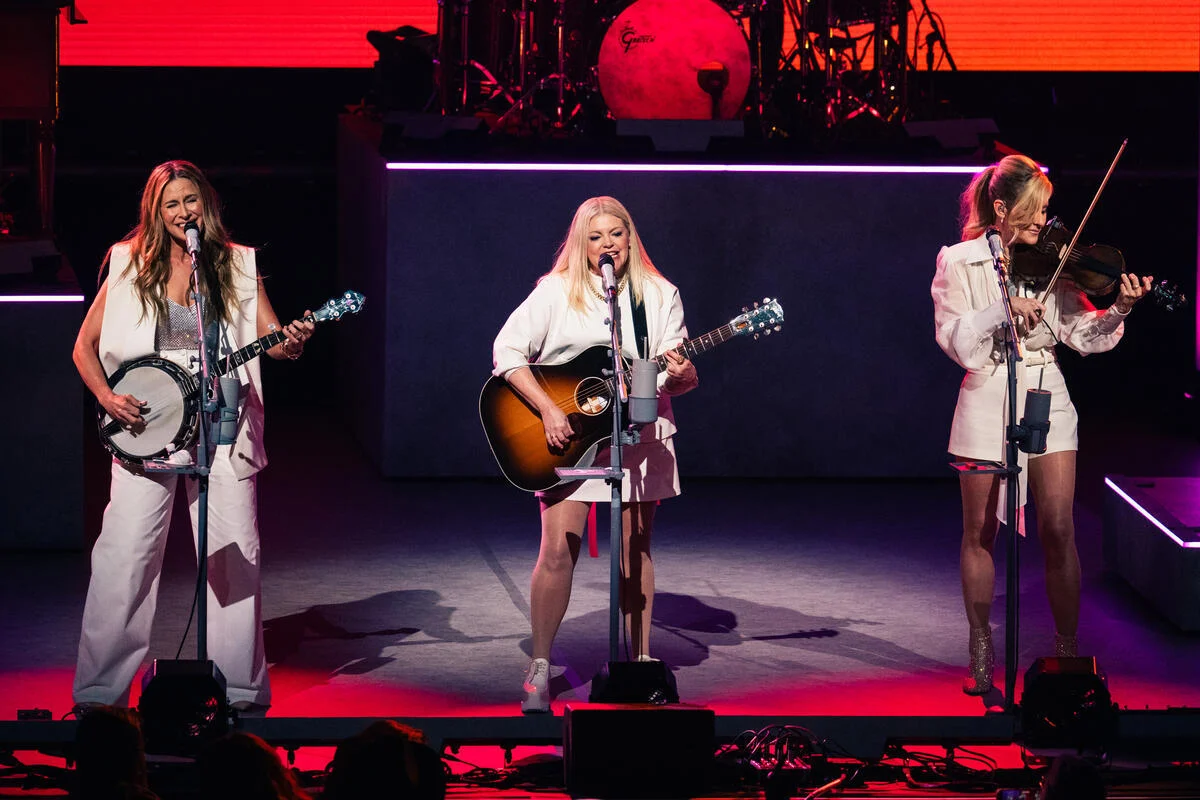
In the pantheon of rock ‘n’ roll history, the debate over the "Greatest American Band" is a perennial pastime. From the sun-drenched harmonies of the Beach Boys to the existential dread of Nirvana, or the improvisational odyssey of the Grateful Dead, music critics and fans have spent decades arguing over legacies. Yet, when we narrow the scope to the 21st century, the field thins considerably. While the White Stripes are often the first to be mentioned, few other acts possess the cultural gravity, the technical virtuosity, and the sheer narrative weight of The Chicks.
Following their triumphant, sold-out performance at the Yaamava’ Theater in Highland, California—the group’s first full-scale U.S. gig in nearly three years—it is time to propose a radical shift in the discourse. To witness Natalie Maines, Emily Robison, and Martie Maguire on stage today is not just to see a musical act; it is to observe the living, breathing, and enduring heartbeat of the American cultural experience.
The Cultural Weight of a Legacy
To understand why The Chicks hold a singular position in the last 25 years, one must look at their role as a social litmus test. In the mid-2000s, at the height of their controversy, the group became a flashpoint for a fractured nation. For millions, the trio represented a bold, necessary defiance; for others, they were an object of intense political polarization.
Rarely does a musical act possess the "constitutional" requirement for every citizen to take a position, a feat only arguably shared by global pop juggernauts like Taylor Swift. Yet, while their political import is undeniable, it is their musicality that has allowed them to survive the firestorms. The Yaamava’ show served as a stark reminder: stripped of the headlines, the core of The Chicks remains their flawless harmonies, their X-treme instrumental tightness, and a catalog that balances sharp-tongued satire with profound, universal sorrow.

Chronology of a Comeback: The "Taking the Long Way" Anniversary
The recent Highland performance served as a vital, energetic prologue to their upcoming national tour, which celebrates the 20th anniversary of their Grammy-sweeping masterpiece, Taking the Long Way.
The tour, which officially kicks off in Detroit on September 30, will see the band hitting mid-sized theaters across the country, including stops in Chicago, New York, Nashville, and a two-night residency at the Dolby Theatre in Hollywood. The choice of venue is significant; by moving away from the "in-the-round" arena setups of their past tours to a traditional proscenium stage, the trio has reclaimed their visual identity.
In a traditional left-to-right lineup, the sisterhood is physically cemented. The audience is once again invited to fix their eyes on the distinct roles each member plays: Maines, the indomitable lead vocalist whose voice remains one of the most powerful instruments in modern music; and sisters Maguire and Robison, whose fiddle and banjo interplay functions as a Greek chorus of unmatched precision and grace.
Musical Evolution and The "Gaslighter" Era
While the tour serves to celebrate the 2006 landmark Taking the Long Way, the setlist at Yaamava’ proved that the band is not merely a nostalgia act. In a balanced performance, they leaned heavily into their 2020 record, Gaslighter.

If Taking the Long Way was the band’s definitive "divorce" from the country music establishment, Gaslighter is Natalie Maines’ definitive divorce record. The juxtaposition is striking. Songs like "Tights on My Boat" and "Sleep at Night" reveal a side of Maines that is as fierce as it is vulnerable. Her delivery on these tracks is, at times, chilling—a testament to her growth as a songwriter and performer.
The setlist also highlighted the band’s versatility. From the bluegrass adrenaline of "Sin Wagon" to the rapturous, universal appeal of "Wide Open Spaces" and "Cowboy Take Me Away," the trio proved they could still pivot between high-octane energy and intimate, acoustic-led storytelling. The inclusion of "Travelin’ Soldier"—a song that has seen its own complex history of reinterpretation—remains a highlight of the set. While others have attempted to strip the song of its anti-war melancholy for patriotic purposes, The Chicks’ version retains the heartbreaking clarity of the original, serving as a reminder that their music is meant to be felt, not just heard.
The Power of the "Unity Ticket"
Perhaps the most striking element of the show was the band’s deliberate tone of unity. At the start of the evening, a quote from Maya Angelou flashed on the screen: "We are more alike, my friends, than we are unalike."
While the band remains the same group that fearlessly met the onslaught of the 2000s with the defiant "Not Ready to Make Nice," the performance was marked by a sense of maturity. Maines’ stage banter was light and occasionally sharp—quipping about Florida and the nature of the country—but the show ultimately focused on shared experience rather than conflict.

This is the "unity ticket" they are running on. They have moved from being the targets of a cultural war to being the elder stateswomen of an American musical tradition that values truth-telling above all else. Whether they are mocking "mattress dancing" in "Sin Wagon" or delivering the homicidal catharsis of "Goodbye Earl," the audience is invited into a space where, for a few hours, the polarization of the outside world is replaced by the communal joy of a perfect chord.
Implications for the Future of American Music
As we look toward the 250th anniversary of the United States, the question of which band truly represents the modern American spirit will continue to be asked. While festivals and commemorative events will likely feature a rotating cast of "safe" acts, The Chicks stand as the most accurate representation of the nation’s last quarter-century.
They have survived the peaks and valleys of fame, the weight of political exile, and the evolution of their own sound. They have proven that a band can be both intensely personal and culturally significant. The shift back to theater-sized venues is, in many ways, an act of reclaiming the intimacy they once shared with their fans before their music became a battlefield.
For the attendee, the experience is transformative. In the Yaamava’ Theater, surrounded by the hum of slot machines and the upscale trappings of a modern resort, there was a palpable sense of witnessing something essential. The Chicks are not just performing songs; they are holding a mirror to the American experience—one that is messy, rebellious, technically brilliant, and ultimately, deeply human.

Whether one views them through the lens of their mid-2000s defiance or their recent, deeply personal records, the conclusion is the same: The Chicks are not just a country band, or a pop band, or a rock band. They are an American institution. As they prepare to embark on their anniversary tour, they do so not as relics of a bygone era, but as the standard-bearers for what is possible when a band refuses to be silenced, refuses to be pigeonholed, and refuses to stop evolving.
If there is a soundtrack to the 21st-century American experience, it is written in the harmonies of The Chicks. They remain, without a doubt, the band of the sesquicentennial—and they are only just getting started.
Setlist: Yaamava’ Theater, Highland, CA
- March March
- The Long Way Around
- Wide Open Spaces
- Sin Wagon
- Texas Man
- Julianna Calm Down
- Cowboy Take Me Away
- Truth #2
- Lubbock or Leave It
- Daddy Lessons/Long Time Gone
- Gaslighter
- Sleep at Night
- Tights on My Boat
- Easy Silence
- Landslide
- Don’t Let Me Die in Florida
- White Trash Wedding
- Travelin’ Soldier
- Manchild
- Not Ready to Make Nice
- Goodbye Earl


 Reynand Wu
 Sagoh
Sagoh