

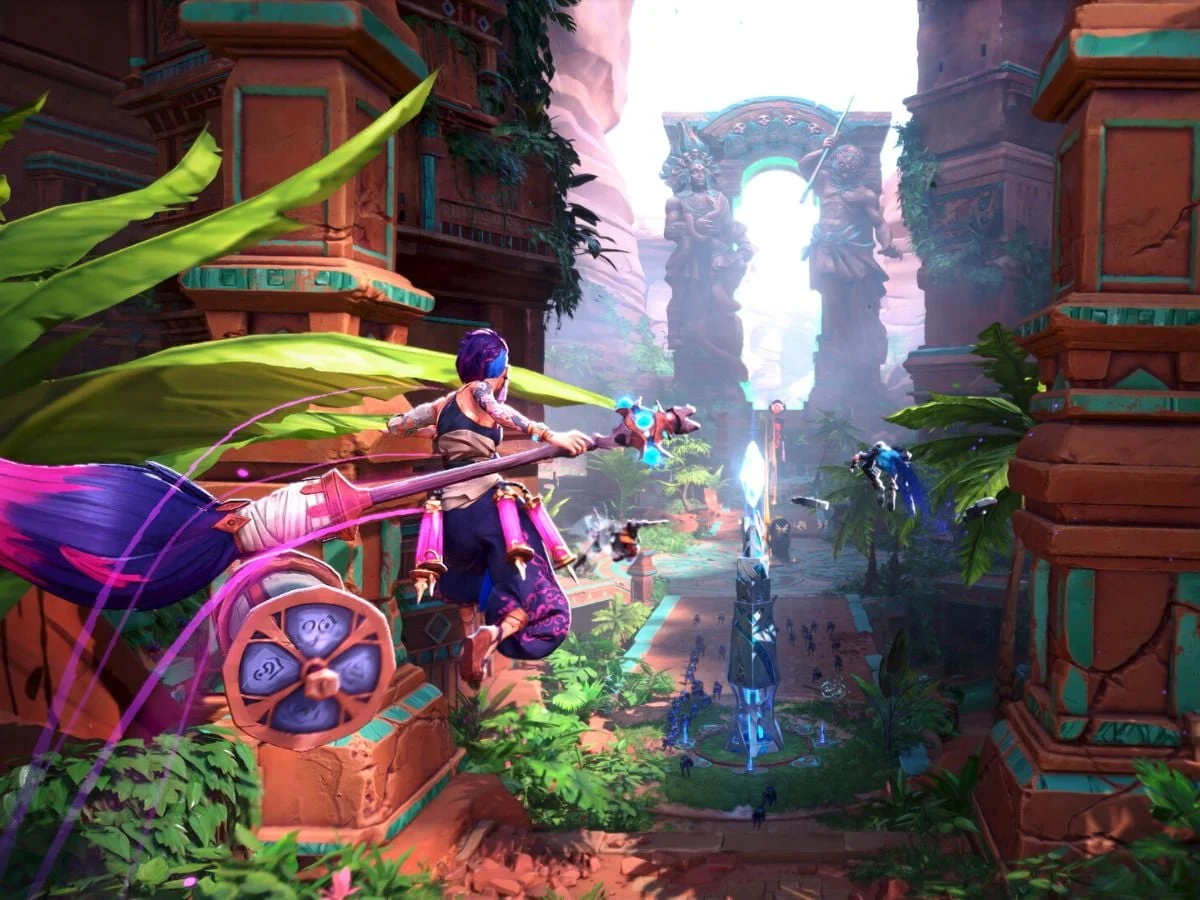
The landscape of the modern video game industry is increasingly defined by a brutal reality: the "live-service" gold rush has hit a wall. In the latest instance of a high-profile studio retreating from the multiplayer market, Quantic Dream—best known for its cinematic narrative titles like Detroit: Become Human and Heavy Rain—has officially announced the discontinuation of its fantasy MOBA, Spellcasters Chronicles.
Launched just months ago on February 26, 2026, the project was intended to be a flagship entry for the studio into the competitive multiplayer arena. Instead, it has become a cautionary tale of development bloat, market misalignment, and the severe human cost of corporate miscalculation.
The End of the Line: A Timeline of Failure
The announcement, delivered via a succinct post on X (formerly Twitter) on May 20, 2026, confirmed that development on Spellcasters Chronicles would cease immediately. The game, which struggled to find its footing since its winter release, will have its servers permanently shuttered on June 19, 2026.
For a project that had been in the works for nearly eight years, the lifespan of the public-facing product was remarkably short. The development timeline suggests a project plagued by scope creep and an inability to adapt to the shifting tastes of the gaming public. While Quantic Dream initially pitched the game as a "reasonably-sized" endeavor, the reality of its eight-year gestation period tells a story of a studio struggling to reconcile its legacy of single-player storytelling with the demands of a fast-paced, online-only multiplayer economy.

The Numbers Game: Why the Market Rejected the MOBA
The failure of Spellcasters Chronicles was not a sudden accident, but a slow-motion collision with market reality. Upon its February launch, the game failed to capture the imagination of the PC gaming community.
Data provided by SteamDB reveals a bleak trajectory. The game reached a modest peak of 888 concurrent players at its launch—a figure that is staggeringly low for a free-to-play multiplayer game designed to sustain itself on a large, active user base. In the weeks leading up to the cancellation announcement, the game’s 24-hour peak had dwindled to a mere 41 players.
This lack of player retention, combined with a "Mixed" rating on Steam, signaled to management that the game had failed to carve out a niche in an already oversaturated genre. In a "particularly challenging market environment," as the studio described it, there was simply no path toward financial sustainability. The cost of maintaining server infrastructure, regular content updates, and anti-cheat measures for a player base of fewer than 50 people rendered the project a fiscal liability.
Official Statements and Internal Repercussions
In its official statement, Quantic Dream framed the cancellation as a strategic pivot. "With this project, our teams set out to explore new creative territories and create a bold, original multiplayer experience," the company stated. "Spellcasters Chronicles allowed us to experiment with new concepts and bring to life an ambitious game shaped by the talent, creativity, and dedication of everyone involved."
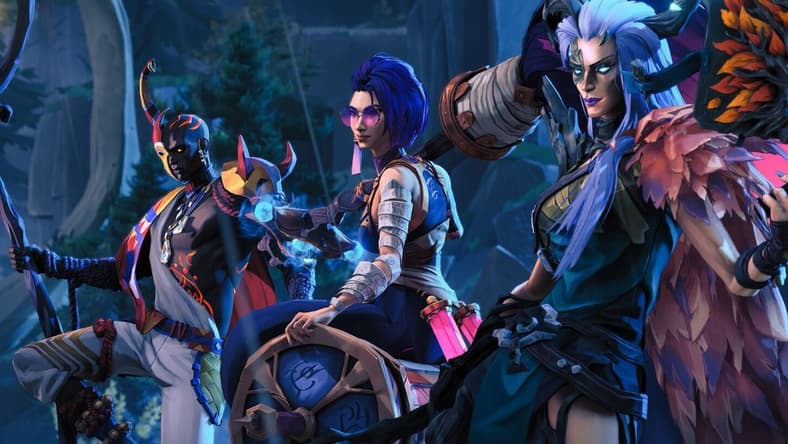
However, the corporate pivot comes with a human price tag. The studio confirmed that it will undergo an "internal reorganization," a euphemism that almost invariably implies layoffs. While the studio has pledged to handle the transition with "fairness, care, and respect" and aims to prioritize internal reassignments to other projects, the mood within the industry is one of concern.
The studio was quick to reassure its fanbase and investors that its high-profile, highly anticipated project, Star Wars: Eclipse, remains unaffected by the collapse of Spellcasters Chronicles. By distancing its upcoming blockbuster from this failure, the studio hopes to maintain confidence in its core competency: the cinematic narrative experience.
A Union’s Accusation: Management Under Fire
While the studio’s official messaging focused on "market environments," the French labor union Le Syndicat des Travailleureuses du Jeu Vidéo (STJV) has provided a scathing counter-narrative. In a detailed blog post, the union placed the blame squarely on the shoulders of the studio’s leadership, including David Cage and Guillaume de Fondaumière.
The union’s critique is piercing: they argue that the project was doomed by "catastrophic project management." According to the STJV, the game was originally planned for a much earlier release, but years of iterative churn and a refusal to acknowledge changing market trends led to a bloated, uninspired product.

Perhaps most damning is the union’s account of the internal culture. Workers reportedly raised concerns about the game’s viability and the risks associated with the chosen business model, only to be dismissed by management. The union claims that executives relied on their "30 years of experience" to justify the project’s trajectory, effectively shielding themselves from the realities of the modern gaming market.
"Failure was never an option, never thought about, never planned for," the union wrote. "Incompetence led us here today. Workers pay for management’s misguided ways."
Implications for the Future of Quantic Dream
The failure of Spellcasters Chronicles raises fundamental questions about Quantic Dream’s future. For decades, the studio has been defined by its specific approach to interactive drama. By attempting to force that design philosophy into a live-service MOBA, the studio arguably ignored what made it successful in the first place.
1. The Death of the "Jack-of-All-Trades" Strategy
The gaming industry is currently seeing a "correction." Studios that have spent the last half-decade trying to force themselves into the live-service model are finding that players are increasingly wary of unfinished or derivative multiplayer titles. Quantic Dream’s retreat is a sign that even mid-to-large-sized studios are finding it impossible to compete with established giants like League of Legends or Dota 2.
2. The Pressure on Star Wars: Eclipse
With Spellcasters Chronicles officially dead, all eyes are now on Star Wars: Eclipse. The studio cannot afford another misfire. The internal reorganization mentioned in their statement suggests that resources are being consolidated to ensure that the Star Wars project is the primary focus. If Eclipse fails to deliver, the narrative of "incompetence" leveled by the STJV will likely become the dominant industry view of the studio’s leadership.
3. The Human Cost of Iterative Development
The saga of Spellcasters Chronicles highlights a growing trend of "crunch" and wasted labor. When a project spends eight years in development only to be canceled months after release, the amount of wasted creative output is staggering. The union’s intervention serves as a reminder that behind every "market failure" are hundreds of developers whose time and talent were effectively neutralized by poor strategic oversight.
Conclusion: A Lesson in Hubris
The cancellation of Spellcasters Chronicles is more than just a server shutdown; it is a profound failure of vision. By ignoring the warning signs, silencing employee concerns, and attempting to pivot into a genre they did not fundamentally understand, Quantic Dream has suffered a blow to its reputation that will take years to recover from.
As the industry moves forward, the collapse of this project serves as a stark warning to other studios: "Experience" is not a substitute for market analysis, and a brand’s legacy does not grant immunity from the laws of supply and demand. For now, the players who invested in the world of Spellcasters Chronicles will be issued refunds, and the employees of Quantic Dream will face an uncertain future. The industry will be watching closely to see if the studio can return to its roots, or if this failure marks the beginning of a broader decline.










No comments yet. Be the first to join the conversation!