

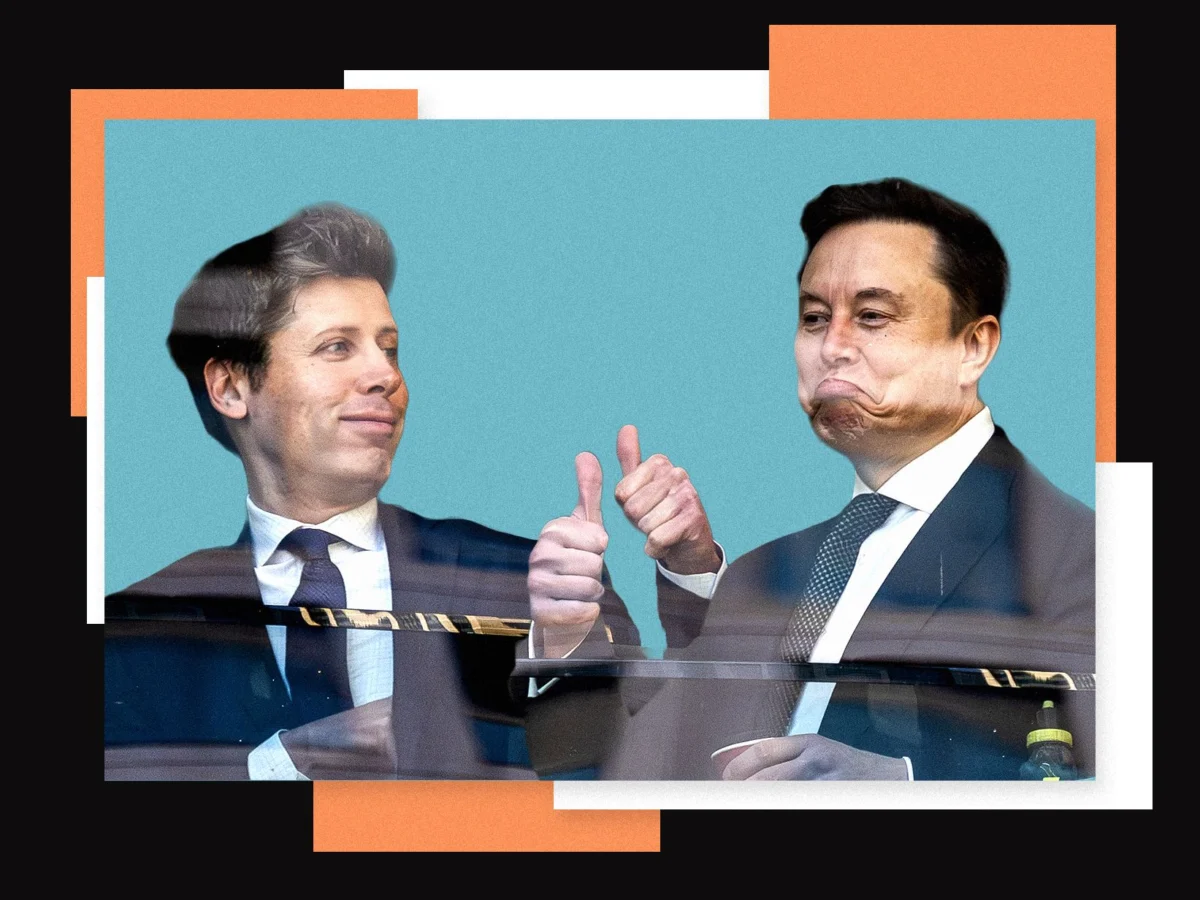
In a courtroom in Oakland, California, a high-stakes, twelve-day legal drama reached a definitive and swift conclusion this week. Elon Musk, the world’s most visible technology mogul, suffered a resounding defeat in his federal lawsuit against OpenAI, the artificial intelligence powerhouse he helped co-found. After less than two hours of deliberation, a nine-member jury delivered a unanimous verdict that effectively dismantled Musk’s attempt to reclaim the company from his former associates, Sam Altman and Greg Brockman.
US District Judge Yvonne Gonzalez Rogers, who oversaw the proceedings, immediately adopted the jury’s nonbinding recommendation as a formal, final judgment. The ruling centered not on the merits of Musk’s ideological grievances regarding AI safety, but on a procedural reality: the statute of limitations. The court found that Musk had waited too long to file his claims, rendering his lawsuit moot.
A Legal Strategy Stalled by the Clock
The core of Musk’s legal challenge was built on the assertion that Altman and Brockman—bolstered by billions in capital from Microsoft—had betrayed the original nonprofit mission of OpenAI. Musk argued that the organization had been transformed into a for-profit juggernaut that prioritized shareholder value over the safe, humanitarian development of Artificial General Intelligence (AGI).
However, the defense successfully argued that Musk’s grievances were "after-the-fact contrivances" born from his own failed bid to take control of the company. William Savitt, lead litigator for OpenAI, characterized the lawsuit as a weaponized effort by a market competitor. "It’s not a technical decision; it’s a substantive one," Savitt told reporters following the verdict. "It says you brought your claims too late, and you did it because you were sitting on them to use them as a weapon of a competitor who can’t compete in the marketplace."
For the jury, which included a diverse mix of professions—ranging from a nurse assistant to a city government worker—the timeline was the deciding factor. Evidence presented during the trial indicated that Musk had been aware of, and even complicit in, the structural shifts of OpenAI for years. By waiting until 2024 to initiate litigation, he missed the legal window to challenge the organizational pivots that had occurred years prior.
Chronology of a Failed Partnership
To understand the magnitude of this legal battle, one must look back to the origins of the partnership. In 2015, Musk and Altman co-founded OpenAI as a nonprofit. Their stated goal was to establish a "moral high ground" in the burgeoning field of AI, specifically to act as a counterweight to the dominance of Google.
- 2015–2016: OpenAI is established as a nonprofit entity. Musk contributes significant funding, totaling $38 million between 2016 and 2020.
- 2018: Tensions begin to rise. Musk attempts to take control of the company, seeking to integrate it into his own operations. After his bid is rejected, he distances himself from the project.
- 2019–2022: OpenAI pivots toward a "capped-profit" model to attract the massive capital required for AGI research. Microsoft begins its $13 billion investment spree. ChatGPT launches in late 2022, turning the startup into a global phenomenon.
- 2023: Musk founds xAI, positioning it as a direct rival to OpenAI.
- 2024: Musk files the federal lawsuit against Altman, Brockman, and OpenAI, alleging breach of charitable trust and unjust enrichment.
- May 2026: After a twelve-day trial, the federal jury dismisses all claims, citing expired statutes of limitations.
The Courtroom Spectacle: Bravado and Absence
The trial was as much a battle of egos as it was a legal dispute. While OpenAI executives were required to spend hundreds of hours in depositions and courtroom testimony, Musk’s presence was notably sporadic. He appeared for only three days of the twelve-day trial.
Most conspicuously, Musk traveled to China for a state visit involving President Donald Trump during the final stages of the proceedings. This absence was not lost on the defense or the judge. "Instead of being in the jurisdiction where he filed the lawsuit, ready to come in front of the jurors who he has caused to be impaneled, [he] decided to get on Air Force One and go to China," Savitt noted.
Judge Gonzalez Rogers, while critical of the motivations behind the suit, maintained that the public trial served a purpose. "I thought it was an important issue to be tried… for us to have a trial to bring clarity," she remarked to the legal teams. Despite the disappointment for the plaintiff, the trial stripped away the veneer of the industry’s most powerful figures, revealing details about executive compensation, internal power dynamics, and the often-fraught relationship between nonprofit ideals and venture capital reality.
Official Responses and Post-Verdict Fallout
The reaction to the verdict was swift and polarized. Musk, taking to his platform X (formerly Twitter), labeled Judge Gonzalez Rogers an "activist" and dismissed the ruling as a "calendar technicality." He insisted that the verdict provided a "free license to loot charities" and maintained his stance that Altman and Brockman had effectively stolen a charitable institution for personal gain.
Conversely, OpenAI celebrated the outcome. Their legal team expressed relief that the case had been resolved, framing the victory as a vindication of their operations and their ongoing mission to scale AI. Microsoft, named as a defendant for "aiding and abetting," issued a brief statement affirming that the facts of the case had long been clear and that they remain fully committed to their partnership with OpenAI.
Musk’s lead trial attorney, Steven Molo, signaled the end of the first chapter, stating, "Our intention is to appeal." Marc Toberoff, another member of the legal team, invoked historical parallels, comparing the loss to the Siege of Charleston and the Battle of Bunker Hill—framing the defeat as a tactical setback in a war he intends to continue fighting.
Implications for the Future of AI
The dismissal of the lawsuit leaves several major questions regarding the future of OpenAI and its competitors.
1. The Nonprofit Paradox
OpenAI remains, in name, a nonprofit. However, its trajectory toward a public stock exchange listing—potentially occurring as early as this year—suggests that the "nonprofit" designation is now largely a governance structure rather than an operational one. With annualized revenues exceeding $20 billion in 2025, the company has effectively outgrown its origins. The trial failed to legally resolve the tension between these two identities, leaving the question of charitable trust open for future regulators to navigate.
2. A Precedent for Future Litigation
While the judge explicitly noted that her ruling does not create a formal legal precedent, the speed with which the jury acted serves as a warning to tech moguls: lawsuits filed as "after-the-fact" strategic maneuvers may find little sympathy in the eyes of the public and the judiciary. The "statute of limitations" defense proved to be a formidable shield for startups undergoing rapid evolution.
3. The Musk-Altman Rivalry
The rivalry between Musk’s xAI and OpenAI has now shifted entirely to the marketplace. With SpaceX having acquired xAI in February and the combined entity eyeing a Nasdaq debut by June 12, 2026, the two companies are no longer just ideological adversaries—they are direct competitors for talent, capital, and global influence. The trial served as a high-profile, albeit costly, public relations skirmish in what is likely to be a decade-long battle for dominance in the generative AI landscape.
As the dust settles in Oakland, the tech industry is left to grapple with a new reality. The era of the "nonprofit" AI laboratory is officially giving way to the era of the trillion-dollar AI corporation. For Elon Musk, the legal path has been blocked, but the competitive arena remains wide open. Whether the "war" he spoke of continues in the courts or remains confined to the data centers and stock exchanges of Silicon Valley remains to be seen. One thing is certain: the vision of AI as a purely altruistic endeavor has been permanently altered by the realities of modern capitalism.












No comments yet. Be the first to join the conversation!