
 Reynand Wu
The legacy of Avatar: The Last Airbender is monumental, having fundamentally shifted the landscape of modern animation. By weaving a dense, high-fantasy mythology with the gravity of a geopolitical epic, the series bridged the gap between children’s entertainment and mature storytelling. However, as Netflix’s live-action adaptation navigates its sophomore season, it is making a deliberate effort to pivot from the subtle, allegorical storytelling of its predecessor toward a more explicit examination of historical accountability.
Central to this evolution is the character of Uncle Iroh, portrayed by Paul Sun-Hyung Lee. In a narrative turn that has sparked significant discourse, Season 2, Episode 4, titled "The Water Falls, the Stones Emerge," forces a reckoning with the character’s dark origins. By confronting Iroh with the visceral, human cost of his past as the "Dragon of the West," the series is stripping away the veneer of the kindly tea-loving mentor to expose the war criminal who once laid siege to Ba Sing Se.
The Anatomy of a Villain: Understanding the Dragon of the West
To understand the weight of this narrative shift, one must first look at the foundation established in the original 2005 Nickelodeon series. Iroh was introduced as a retired general, a man of immense power who had retreated from the front lines of the Fire Nation’s imperial expansion. While the animated series alluded to his past—his former rank, his terrifying military prowess, and the tragic death of his son at the gates of Ba Sing Se—these elements were largely framed through the lens of his current, repentant persona.
Netflix’s live-action series, however, opts to move beyond mere exposition. It shifts the "textual" understanding of Iroh’s past into the foreground of the current plot. In Season 2, we see the consequences of his actions not as distant memories, but as a living, breathing trauma for the people he once sought to conquer.
A Chronology of Consequence
The timeline of Iroh’s transformation is marked by two distinct eras:
- The Imperial Era: As a high-ranking General of the Fire Nation, Iroh was the primary architect of the Siege of Ba Sing Se. His military campaign was characterized by a ruthless pursuit of Fire Nation expansionism, resulting in thousands of casualties and the displacement of countless families across the Earth Kingdom.
- The Era of Reflection: Following the death of his son, Lu Ten, Iroh’s trajectory shifted. He abandoned the siege, sought spiritual enlightenment, and eventually dedicated his life to guiding his nephew, Prince Zuko, away from the path of violence.
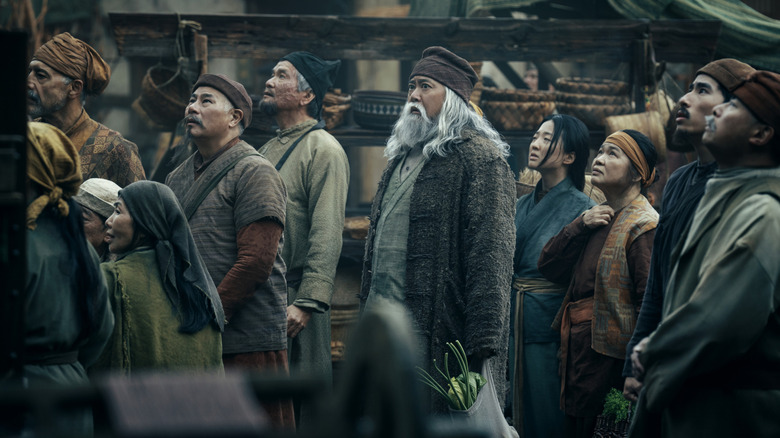
The Netflix series bridges these two eras with a brutal clarity. In the fourth episode of the second season, Iroh’s peaceful journey through Ba Sing Se is interrupted by a public protest. This is not a generalized protest; it is a direct indictment of his legacy. As protesters carve the names of the victims of his siege into the city walls, the series forces the audience to reconcile the man who offers tea and wisdom with the man who once burned cities to the ground.
Supporting Evidence: The Visual Toll of Imperialism
The storytelling in the Netflix adaptation utilizes a "show, don’t just tell" approach that significantly alters the audience’s perception of Iroh’s redemption. In the original animation, the horrors of war were often kept behind a veil, fitting for a network-broadcast children’s show. The live-action series, unburdened by the same standards and practices limitations, presents the scars of Iroh’s campaign with unflinching detail.
During the protest scene in Ba Sing Se, Iroh is forced to look at the citizens who bear the physical marks of his military "accomplishments"—burn scars that serve as permanent reminders of his firebending mastery. These visual cues are crucial. They move Iroh’s arc from a private, internal struggle to a public, social one.
Furthermore, his encounter with Jeong Jeong, a former Fire Nation soldier turned defector, provides a stinging critique of Iroh’s past. By labeling Iroh a "monster" and explicitly referencing his orders to execute civilians who refused to pledge loyalty to the Fire Nation, the series highlights that Iroh’s transition to "good" does not erase his culpability. This interaction serves as a narrative catalyst, forcing Iroh to move beyond passive guilt and into a state of active accountability.
Official Responses and Creative Vision
The creative team behind the Netflix production has been vocal about their desire to expand the show’s maturity. While the original series was a masterpiece of subtext, the live-action medium allows for a more granular exploration of war crimes, colonization, and the weight of individual responsibility.
The decision to lean into the darker aspects of Iroh’s past is not intended to diminish the character’s beloved status, but rather to deepen it. By establishing Iroh as someone who was once the personification of Fire Nation tyranny, the series makes his ultimate path toward peace significantly more earned. The "Dragon of the West" is no longer just a title of military honor; it is a badge of shame that the character must carry as he seeks to rectify the damage he helped cause.
This approach aligns with contemporary trends in fantasy television, where audiences are increasingly demanding that characters—even those in mentor roles—be held accountable for the systemic and individual violence they perpetrated in their youth.
The Implications of Recontextualization
The shift in how Iroh is portrayed has profound implications for the narrative trajectory of Avatar: The Last Airbender. If the show’s most virtuous character is capable of such profound evil, the audience is encouraged to adopt a more critical lens toward the entire Fire Nation ensemble.
1. Nuance in Moral Growth
By acknowledging Iroh as a former villain, the show reinforces the theme that redemption is a process, not a destination. It suggests that one’s past actions do not define their future potential, but they also cannot be conveniently forgotten. This adds a layer of complexity to the show’s morality that elevates it above traditional "good vs. evil" tropes.
2. The Weight of History
The protest in Ba Sing Se serves as a microcosm for the series’ broader themes. It highlights the importance of historical memory. In a world where the Fire Nation has spent decades trying to rewrite history, the act of carving names into the walls is a radical act of resistance. It suggests that even the most powerful figures cannot outrun the truth of their history.
3. Impact on Zuko’s Arc
This development also serves to complicate Prince Zuko’s journey. If Zuko’s mentor is a man with such a violent history, it challenges Zuko to define his own path to honor. He must determine whether he is following the Iroh who led the siege, or the Iroh who serves tea. It forces Zuko to grapple with the legacy of his family’s violence in a way that feels increasingly urgent.
Conclusion
Netflix’s Avatar: The Last Airbender is successfully carving out its own identity by daring to look back at the original series and interrogate the foundations of its most beloved characters. By explicitly framing Uncle Iroh’s past as that of a villain, the production has added a necessary layer of grit to the fantasy epic.
In doing so, the series does not ruin the character; it honors the difficulty of his path to redemption. Real-world history is rarely clean, and by reflecting that complexity in Iroh, the show provides a more compelling, mature, and resonant narrative. As the series continues, the question remains: can one ever truly atone for a legacy of fire and blood? If the current trajectory of Season 2 is any indication, the answer is not a simple "yes," but rather an ongoing, painful, and deeply human struggle to be better than the person one used to be.


 Raul Delapena Setiawan
 Nana Wu





