In the rapidly evolving landscape of interactive media, few genres have remained as static as the visual novel. Defined by a tradition of static sprites, dialogue boxes, and binary choices, the medium often prioritizes narrative density over mechanical ingenuity. However, every so often, a title arrives that fundamentally redefines the boundaries of its format. and Roger, the latest project from developer Tearyhand Studio and publisher Kodansha, is precisely that: a masterclass in emotional resonance and mechanical synergy that demands to be experienced rather than merely read.
Main Facts: A New Benchmark for Interactive Storytelling
and Roger is not merely a story told with pictures; it is a meticulously crafted psychological experience. Released initially for PC and Nintendo Switch on July 21, 2025, and expanded to the Switch 2, iOS, and Android platforms on June 18, 2026, the game has quickly garnered a reputation as a "pinnacle of the genre."
At its core, the game is a three-chapter, 90-minute narrative journey that avoids the bloat common in modern gaming. Priced at an accessible $4.99, it stands as a testament to the idea that brevity, when paired with intent, is the soul of impact. The game’s brilliance lies in its refusal to treat the player as a passive observer. Instead, it weaves interactive gameplay—ranging from slide puzzles to stealth segments—directly into the narrative fabric, ensuring that the player does not just watch the protagonist’s struggles, but physically engages with their environment.

Chronology of Development and Release
The path to and Roger began under the creative vision of yona and Yasuhiro Nakashima. Their goal was to move beyond the traditional "reading" experience by integrating dynamic audio and visual effects that respond to player input in real-time.
- July 21, 2025: The initial launch of and Roger on PC and Nintendo Switch. Early adopters praised its unique art style and the seamless way the gameplay reinforced the narrative.
- June 18, 2026: The global release of the title on Nintendo Switch 2, iOS, and Android. This version introduced advanced mouse control compatibility, which critics noted significantly improved the flow of the game’s signature "click-and-drag" mechanics.
The staggered release allowed Tearyhand Studio to refine the experience, particularly the interface, ensuring that the transition from a traditional controller to the more precise inputs of the Switch 2 and mobile devices felt intuitive.
The Architecture of Empathy: Design and Mechanics
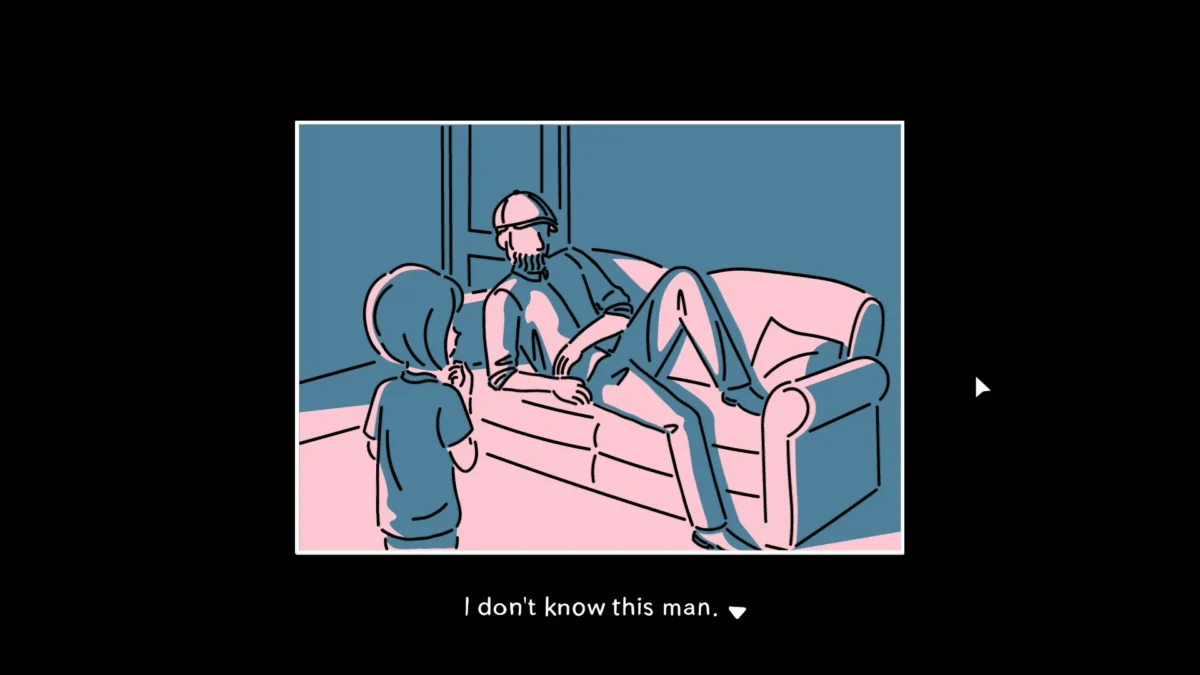
What separates and Roger from its contemporaries is its structural fluidity. The developers employ a "comic book" framing technique for mundane or quiet moments, which slowly gives way to full-screen, immersive set-pieces during moments of high stakes. This shift in perspective is not just aesthetic; it is a narrative tool. When the screen expands to fill the user’s vision, the player’s agency becomes tied to the emotional state of the character.

Interactive Gameplay as Emotional Conduit
The game utilizes a variety of mini-games—slide puzzles, stealth-based navigation, and rapid-fire button inputs—that serve to ground the narrative in physical struggle. These tasks are never "filler." Instead, they mirror the internal state of the protagonist. For instance, when the narrative descends into panic, the interface reacts by cluttering the screen with erroneous buttons, forcing the player to navigate the same overwhelming anxiety that the character feels. When the game strips this control away, it serves as a powerful metaphor for hopelessness, a moment that has left many players profoundly affected.
Artistic and Auditory Cohesion
The art direction is entirely hand-drawn, with every element, from characters and backgrounds to the mouse cursor and interactive UI buttons, animated frame-by-frame. This consistency creates a unified world that feels tangible. The use of color is particularly striking: warm palettes are reserved for fond, nostalgic memories, while cold, desaturated tones highlight the sharper, more painful realities of the protagonist’s life.
Complementing this visual language is an expertly crafted soundscape. The audio cues are woven into the timeline with surgical precision. Disconcerting instrumentals are triggered by visual anomalies, creating a Pavlovian response where the player feels the character’s dread before the game explicitly explains the threat.

Supporting Data: Why "Blind" is Best
It is rare for a critic to advise a reader to stop reading a review immediately, yet and Roger is the exception that proves the rule. Because the game relies so heavily on discovery and the subversion of player expectations, spoilers act as a detriment to the experience.
The runtime of 90 minutes is a strategic choice. By design, there are no filler moments—the pacing is relentless, designed to be consumed in a single, intense sitting. This structure ensures that the emotional momentum is never lost. The data from the initial 2025 release suggests that the game’s completion rate is exceptionally high for an indie title, a testament to its "unputdownable" nature.
Official Responses and Industry Reception
Kodansha, the publisher, has been vocal about their commitment to supporting titles that push the boundaries of Japanese visual novel conventions. In the months following the Switch 2 release, the title has been highlighted as a prime example of how hardware like the Switch 2—with its enhanced touchscreen and pointer capabilities—can elevate the "point-and-click" genre.

Critics have pointed to the "emotional synchronicity" of the title. It is a rare game that manages to induce tears in players who may not share the specific personal experiences of the protagonist. This universal appeal is achieved through a focus on fundamental human themes—panic, longing, and the loss of control—that resonate across demographics.
Implications for the Future of the Genre
and Roger serves as a wake-up call to developers in the visual novel space. It proves that the genre does not need to rely on static imagery or long-winded dialogue to be effective. By embracing interactive gameplay, dynamic UI, and, most importantly, emotional pacing, Tearyhand Studio has created a blueprint for future narrative-driven games.
The success of and Roger implies a shifting trend: players are increasingly seeking "boutique" experiences—shorter, high-impact titles that prioritize a cohesive artistic vision over hundreds of hours of repetitive content. As the industry moves toward more diverse ways of telling stories, and Roger stands as a reminder that the most profound experiences are often the ones that respect the player’s time and intelligence.

Final Thoughts
In a landscape crowded with massive open-world epics and endless service games, and Roger is a quiet, devastatingly beautiful intervention. It is an experience that does not just ask you to look, but to feel, to touch, and to lose yourself in its carefully curated world. Whether you are a veteran of the visual novel genre or a newcomer looking for a story that will stay with you long after the credits roll, this is a masterpiece that demands your attention.
At $4.99, it is not just a bargain; it is an essential piece of interactive art. To play it is to understand the potential of what happens when narrative, art, and sound are brought into perfect, agonizing harmony.