

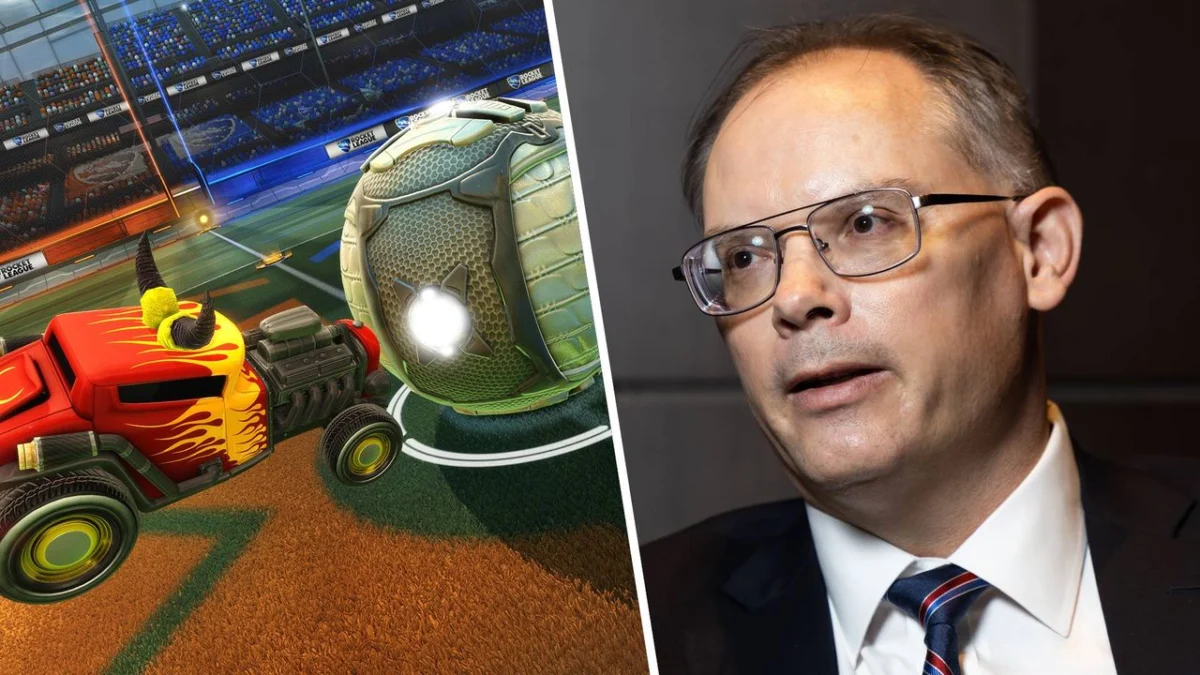
In a move that has sent shockwaves through the global gaming industry, Epic Games has officially pulled back the curtain on Unreal Engine 6 (UE6). The announcement, delivered during the high-octane spectacle of the Rocket League Championship Series (RLCS) Paris Major, marks the beginning of a significant technological transition for one of the most influential middleware providers in the world.
While the industry had been speculating about the next evolution of Epic’s toolset for some time, the reveal was strategically tied to a surprising showcase: a technical demonstration within Rocket League. As Epic Games looks to the future, the introduction of UE6 promises to redefine the boundaries of graphical fidelity, physics-based simulations, and the seamless integration of live-service architecture.
The Announcement: A Seismic Shift in Paris
The reveal came as a stunning interlude during the Paris Major. A short, polished trailer debuted on the broadcast, showcasing familiar Rocket League vehicles rendered with unprecedented detail. The footage highlighted enhanced lighting, complex reflections on metallic surfaces, and cinematic camera angles that felt far removed from the game’s current aesthetic.
The trailer’s messaging was concise: "A new era. A new engine." Following the montage, the Unreal Engine 6 logo flickered onto the screen, signaling that the platform’s next generation of development tools is no longer a matter of "if," but "when."
For observers, the choice of Rocket League as the launchpad for this announcement was particularly poignant. While Fortnite has historically served as Epic’s primary showcase for engine advancements, Rocket League—a game built on the aging Unreal Engine 3 architecture—represents the most dramatic possible "before-and-after" comparison.
Chronology: A Decade of Engine Evolution
To understand the significance of Unreal Engine 6, one must look at the historical trajectory of the Unreal ecosystem. Epic Games has historically maintained a steady, if rigorous, release cadence for its engine technology:
- 2012: The Unreal Engine 4 Era Begins. Introduced to the public in 2012 and seeing widespread adoption by 2014, UE4 democratized high-end game development. It provided developers with a visual scripting system (Blueprints) and a level of graphical fidelity that defined the mid-2010s.
- 2022: The Unreal Engine 5 Revolution. Following a lengthy gestation period, UE5 arrived with "Lumen" (global illumination) and "Nanite" (virtualized geometry), tools that effectively eliminated the polygon count limitations that had plagued developers for decades.
- 2026: The Unreal Engine 6 Paradigm. Now, four years after the arrival of UE5, Epic is signaling its next leap. With the release of UE6, the focus appears to shift from pure visual rendering to deeper integration of massive, persistent environments and advanced AI-driven game logic.
The inclusion of Rocket League in this timeline is a testament to the game’s longevity. By running on Unreal Engine 3, Rocket League has survived three distinct generations of hardware and two generations of engine updates. The transition to UE6 represents a generational leap of roughly 15 years in underlying technology.
Supporting Data: Why Engine Upgrades Matter
The significance of an engine shift is often lost on the average player, who may see only "shinier graphics." However, for the development ecosystem, a new engine is an overhaul of the foundational "digital plumbing" upon which a game is built.
The Middleware Dominance
Unreal Engine is not merely a tool for Epic Games; it is the backbone of the modern gaming industry. In recent years, we have seen a massive migration of major studios toward Epic’s ecosystem. CD Projekt Red, the developers behind The Witcher and Cyberpunk 2077, famously moved away from their proprietary REDengine to adopt Unreal Engine for their future projects.
The Industry Standard
The economic implications are massive. UE5 became the gold standard for high-fidelity production, and UE6 is expected to cement this status by further blurring the lines between real-time gameplay and pre-rendered CGI. When Epic announces a new version of Unreal, it dictates the hardware requirements and the technical capabilities of the next five to ten years of game development. For indie developers, who rely on Unreal’s accessibility, UE6 represents a new set of tools to compete with AAA studios on a level playing field.
Official Responses and Industry Sentiment
While Epic Games has kept technical details under wraps regarding the specific "under-the-hood" improvements of UE6, the reception from the development community has been one of intense curiosity.
"The announcement feels like a promise of stability and longevity," says one industry analyst. "Epic has proven with Fortnite that they can upgrade an engine while keeping a massive live-service economy intact. They don’t need to break the game to fix the engine."
There has been, however, a notable silence regarding when UE6 will be available for third-party licensing. Traditionally, Epic provides "Early Access" periods for partners before a full public release. The Rocket League demonstration serves as the primary "proof of concept," showing that the engine is stable enough to run complex, physics-heavy multiplayer simulations.
Implications: What This Means for the Future
The introduction of Unreal Engine 6 poses several critical questions for the future of interactive entertainment.
1. The Death of the "Standalone Sequel"
Epic’s approach to Rocket League reinforces a trend that has been growing in the live-service sector: the "evergreen" game. Rather than releasing Rocket League 2, Epic appears to be opting for a technical refresh. This preserves the player’s investment—their skins, progress, and inventory—while upgrading the engine. This "Ship of Theseus" approach to game development is likely to become the new industry standard.
2. The Film and TV Connection
Unreal Engine has become just as vital to Hollywood as it is to gaming. Disney, Lucasfilm, and countless other production houses use Unreal to power virtual production stages. UE6 is expected to offer better "real-time ray tracing" and "photorealistic environmental synthesis," tools that will inevitably migrate from the gaming console to the film set.
3. Hardware Requirements
With every new iteration of Unreal, the "minimum requirements" for PC and console gaming creep upward. If UE6 pushes the boundaries of geometry and lighting even further than UE5, developers may face the challenge of optimizing for a widening gap between high-end PCs and the aging hardware of current-generation consoles.
4. The Competition
The competition between Unreal and other engines, particularly Unity and Godot, will likely intensify. While Unity has struggled with public perception and licensing controversies, Unreal’s dominance is anchored in its ability to offer a "complete package" for high-fidelity development. UE6 will need to prove that it can remain efficient and accessible, rather than becoming bloated with unnecessary features.
Conclusion: A New Horizon
The announcement of Unreal Engine 6 at the Paris Major is more than just a tech reveal; it is a statement of intent from Epic Games. By using one of their most beloved, long-running titles as the stage, they have signaled that they are committed to the future of the games as they exist today, rather than replacing them with sequels.
As we await further technical documentation and a roadmap for public access, the industry finds itself in a familiar position: watching and waiting to see how the next generation of digital tools will reshape the worlds we play in. For the Rocket League community, the promise of a modernized engine is a breath of fresh air. For the rest of the gaming world, UE6 is the next great frontier.
This is a developing story, and as Epic Games continues to trickle out information regarding the capabilities of Unreal Engine 6, the industry will be watching closely. Whether this engine will be the final piece in the puzzle of "photorealistic real-time rendering" remains to be seen, but one thing is certain: the bar has been raised once again.












No comments yet. Be the first to join the conversation!