


In the vast, often stagnant waters of the real-time strategy (RTS) genre, a new contender is preparing to make waves. ZeroSpace, a collaborative project between Starlance Studios and Ironward, is positioning itself as a hybrid titan, blending the frantic, top-down tactical precision of StarCraft with the deep, narrative-driven role-playing elements popularized by BioWare’s Mass Effect series. As the industry approaches the game’s early access launch on July 20th, players are beginning to take notice of a title that promises to marry "kitbashed" mechanical beauty with the grim realities of interstellar political turmoil.
The Convergence of Mechanics and Narrative
At its core, ZeroSpace is a quintessential science-fiction strategy game, yet it refuses to be confined by the traditional boundaries of the genre. Players take on the mantle of a commander leading a galactic "Protectorate" army. This force is not a monolith; rather, it is a curated collection of units drawn from diverse species and factions. The primary gameplay loop involves intense, macro-level combat against swarms of hostile, arachnid-like entities that threaten to overrun the Orion sector.
However, the game distinguishes itself through its narrative architecture. Unlike traditional RTS campaigns that relegate story to mere mission briefings, ZeroSpace integrates branching dialogue trees. These moments are designed to force the player into the shoes of a commander who must navigate the moral gray areas of war. As seen in the promotional trailers, players are faced with high-stakes dilemmas: do you prioritize the success of the mission at any cost, or do you sacrifice tactical efficiency to preserve the lives of your soldiers? This "human element" serves as a counterpoint to the cold, calculated efficiency of the game’s mechanical units.
Chronology of Development: From Warcraft Roots to Galactic Warfare
The pedigree behind ZeroSpace is one of deep industry experience and grassroots origins. The team at Ironward is no stranger to the mechanics of complex strategy; they cut their teeth in the modding community, specifically with Night of the Dead, a popular mod for Warcraft III. This history is crucial, as it suggests a studio that understands the foundational "feel" of modern RTS combat—a feel they successfully refined in their previous title, The Red Solstice.
- Foundation: Development of ZeroSpace was initiated by Starlance Studios with a vision to revitalize the single-player RTS experience.
- The Artistic Pivot: In a major move for the project, the team enlisted Aaron Kambeitz, a co-founder of Relic Entertainment and the visionary artist behind the iconic aesthetic of the Homeworld series. His involvement marked a significant turning point in the game’s visual identity.
- Early Access Announcement: Following a period of behind-the-scenes polish, the developers officially set the Early Access release date for July 20th, 2024.
- Community Integration: Throughout the development cycle, the team has leaned heavily on player feedback, ensuring that the complex, faction-based systems feel balanced before the wider public launch.
Artistic Evolution: The Kambeitz Influence
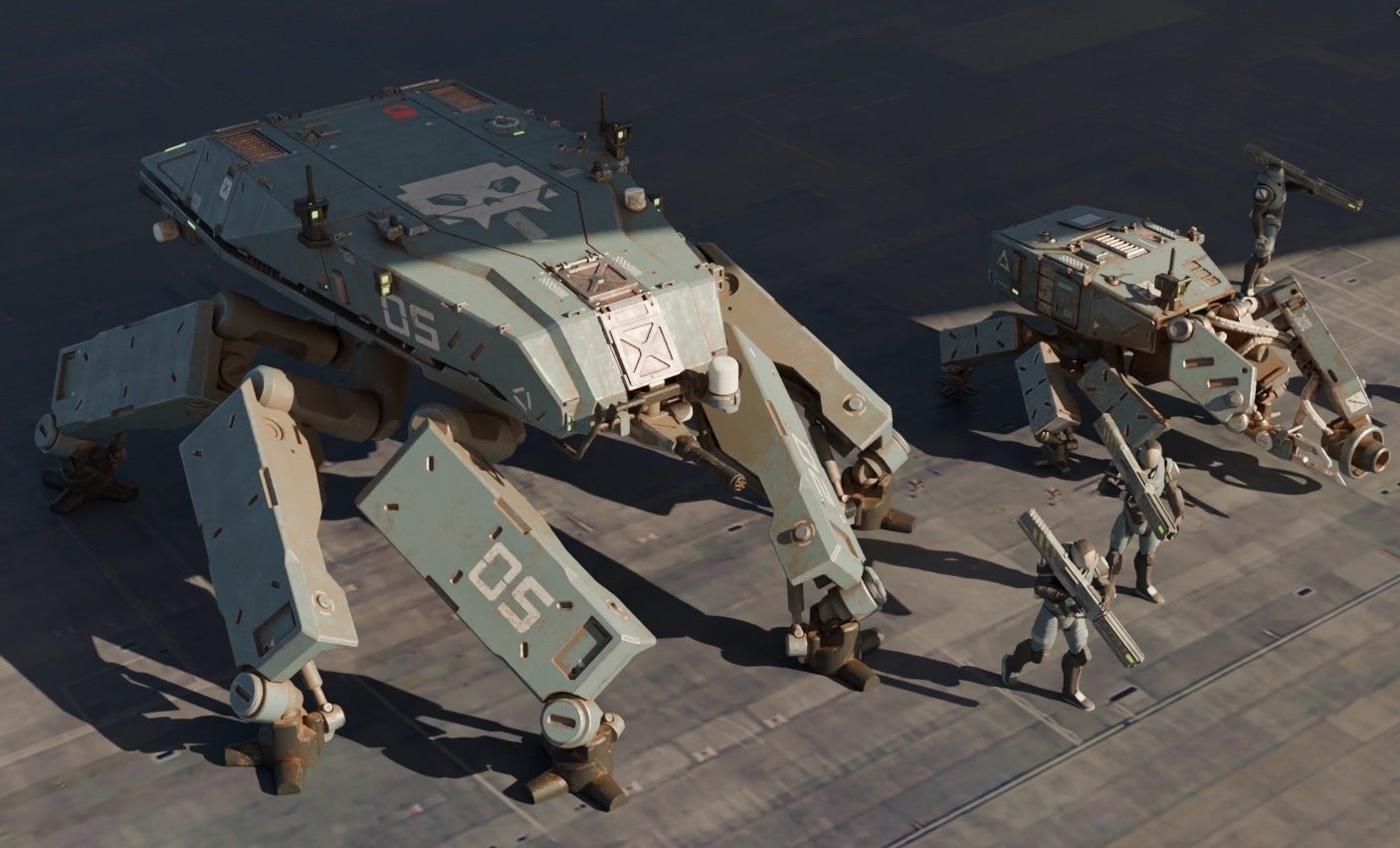
One of the most discussed aspects of ZeroSpace is its visual overhaul, spearheaded by Kambeitz. While the humanoid character models have faced criticism for appearing somewhat "bland" or overly polished—drawing comparisons to generic sci-fi protagonists—the mechanical design tells a different story.
The mechs in ZeroSpace are a masterclass in "kitbashed" aesthetic. They are rugged, six-limbed machines that feel like they were forged in the heat of a desperate, long-term war. The contrast between these gritty, utilitarian war machines and the overly smooth, "floor-polished" appearance of the human characters is striking. This juxtaposition suggests a world where the technology is the only thing standing between humanity and total annihilation, even if the soldiers operating them look like they just stepped out of a corporate PR photoshoot.
Supporting Data and Features
Beyond the campaign, ZeroSpace is betting heavily on its "Galactic War" mode. This component draws clear inspiration from the persistent, massive-scale conflicts seen in titles like Planetside. It is an online, persistent map where alliances compete for territorial control, effectively "painting" the galaxy in their own colors.
Core Gameplay Pillars:
- Asymmetric Factions: Players can mix and match units from various alien cultures, allowing for a highly customized army composition that caters to different playstyles.
- Branching Narrative: Decisions made during dialogue segments impact the morale and loyalty of your forces, influencing the availability of certain units and the outcome of the campaign.
- Persistent Multiplayer: The Galactic War map provides a long-term goal for competitive players, moving away from isolated matches toward a unified, ongoing conflict.
- Customizable Tech Trees: The integration of different species allows for a vast array of unit synergies, encouraging experimentation in build orders.
Official Stance and Philosophical Dilemmas
The developers have been transparent about their goals: to create an RTS that values both the head and the heart. In recent communications, Starlance Studios emphasized that ZeroSpace is not just about the "splattergun" mechanics of combat, but about the burden of command.
"We want players to feel the weight of their orders," a spokesperson noted in a recent developer diary. By forcing players to choose between the safety of their units and the objective of the mission, the game attempts to humanize the often clinical, top-down perspective of the strategy genre. This is not just a game about building bases; it is a game about managing a society on the brink of collapse.
Implications for the RTS Genre
The launch of ZeroSpace comes at a pivotal time for the RTS genre. For years, the market has been dominated by legacy titles and a handful of indie experiments. ZeroSpace represents a middle ground—a game with high-production aesthetic values and a clear, ambitious scope.
If successful, the game could provide a blueprint for how to successfully blend RPG storytelling with traditional RTS gameplay. The "Mass Effect-style" dialogue, when combined with high-octane, real-time tactical combat, addresses a common critique of the genre: that the units are expendable tools rather than characters with stakes in the outcome.
However, the game faces significant hurdles. The "beefcakey" and derivative nature of some of its aesthetic choices may alienate players looking for a fresh visual identity, and balancing a complex, faction-splicing system is notoriously difficult. If the developers can successfully balance these systems while maintaining the depth of their campaign, ZeroSpace may well earn its place as a genre staple.
Conclusion: A Protectorate Worth Protecting?
As the countdown to the July 20th Early Access launch continues, the gaming community remains cautiously optimistic. ZeroSpace is a project that wears its inspirations on its sleeve—from the Homeworld-esque industrial design to the Warcraft-infused combat pacing. Whether it can transcend these influences to become something truly unique remains to be seen.
Ultimately, the question "Who protects the protectorates?" is not just a thematic hook for the game—it is the central challenge facing Starlance Studios. They must prove that their game is more than just a collage of better, older titles. If they can deliver on the promise of a truly personal, high-stakes galactic campaign, they might just secure their own future in the annals of strategy gaming. For those hungry for a new single-player RTS that offers more than just clicking on units, ZeroSpace is undoubtedly one to watch.











No comments yet. Be the first to join the conversation!