
 Basiran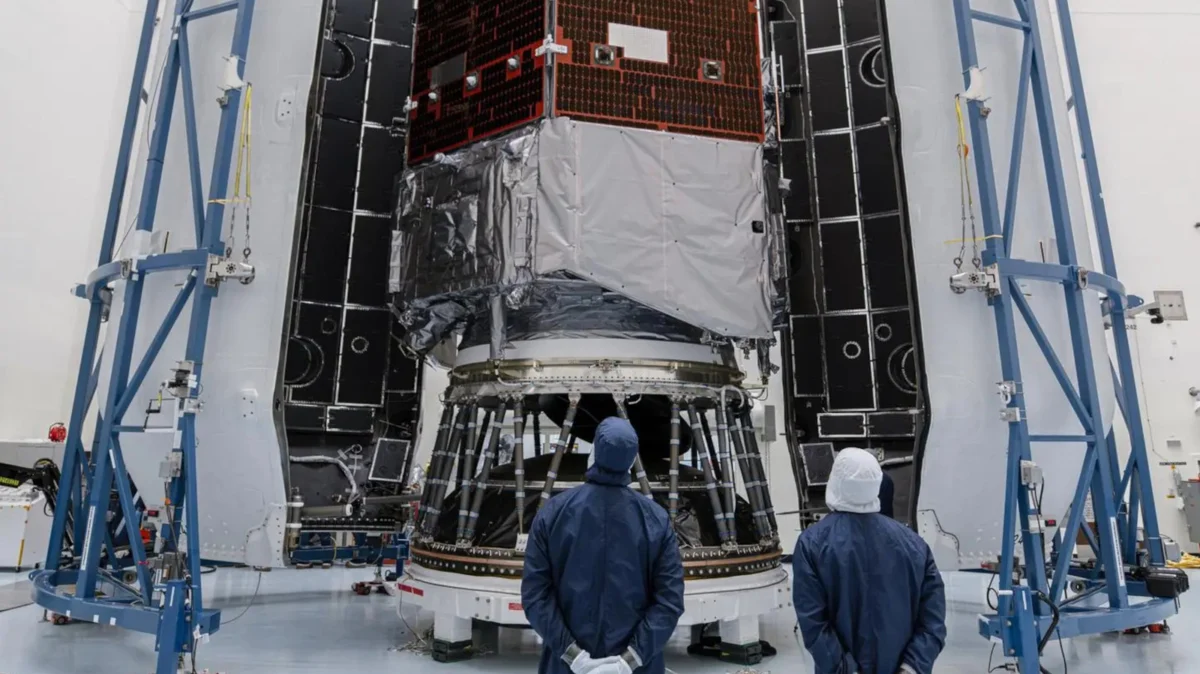
The countdown to the next great leap in space exploration has officially begun. On August 30, NASA is set to launch the Nancy Grace Roman Space Telescope, an observatory designed to fundamentally reshape our understanding of the cosmos. As the successor to a legacy of space-based observation, the Roman telescope represents a massive technological advancement, promising to peer deeper into the dark mysteries of the universe than any instrument that has come before it.
The launch, scheduled to occur no earlier than 7:26 AM Eastern Time from Launch Complex 39A at NASA’s Kennedy Space Center in Florida, marks the culmination of years of rigorous engineering and scientific planning. As the mission prepares to board its SpaceX Falcon Heavy launch vehicle, the global scientific community watches with bated breath, eager to see the next generation of infrared astronomy take flight.
Main Facts: A Technical Marvel
The Nancy Grace Roman Space Telescope is not merely an upgrade; it is a transformative tool. Named in honor of Nancy Grace Roman, NASA’s first Chief of Astronomy and a visionary who earned the moniker "Mother of Hubble" for her pivotal role in bringing the Hubble Space Telescope to fruition, this new mission is designed to build upon the foundations she helped establish.
The primary mission of the Roman telescope is to address some of the most significant enigmas in modern astrophysics, specifically dark energy, dark matter, and the distribution of matter in the universe. To achieve this, the telescope is equipped with a field of view that is at least 100 times larger than that of the Hubble Space Telescope. This massive increase in capability allows the observatory to capture expansive, high-resolution imagery of the universe in a fraction of the time, effectively creating a "panoramic" view of space that was previously impossible.
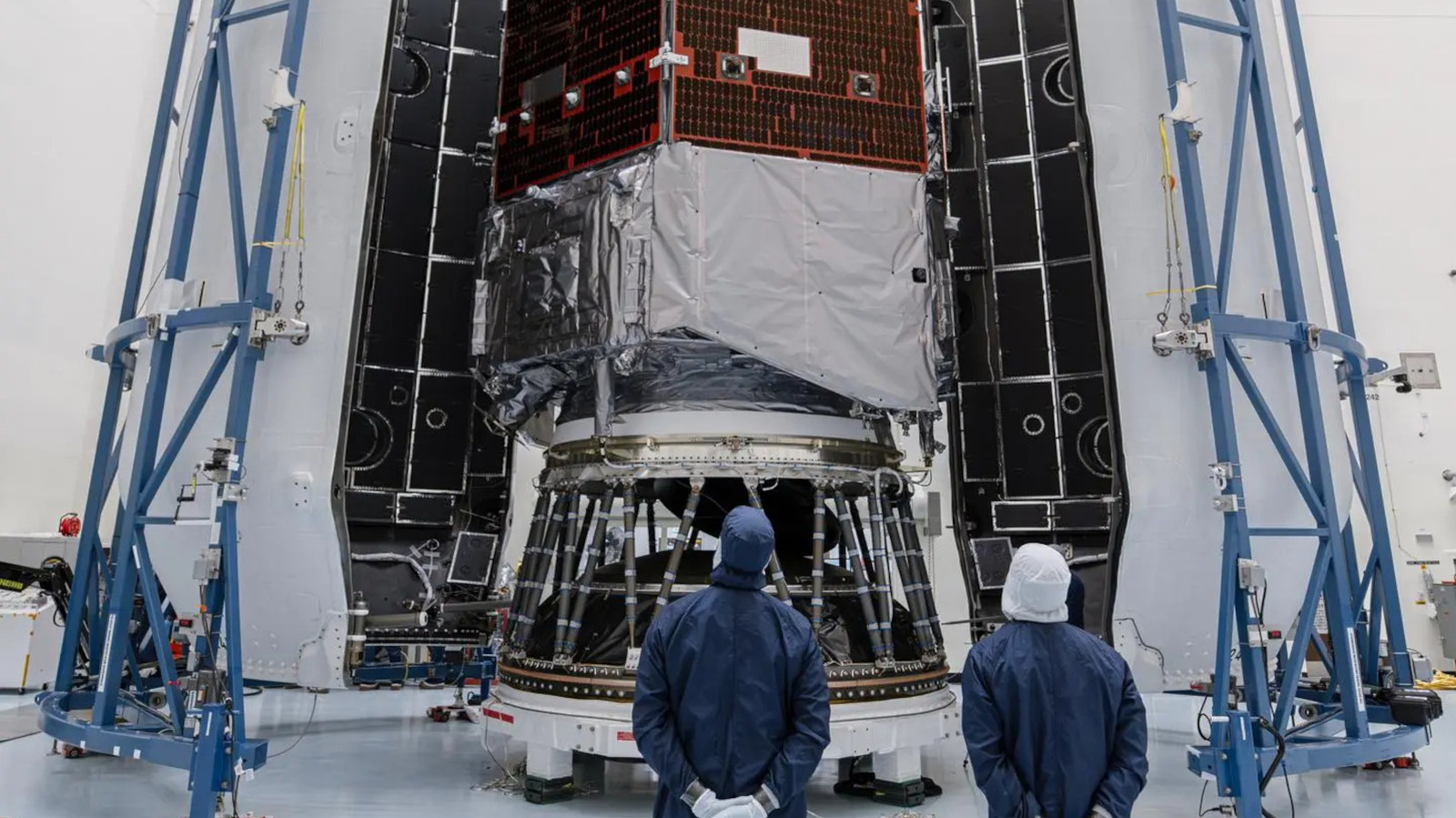
The telescope is currently encapsulated within the payload fairing of a SpaceX Falcon Heavy rocket, safely housed at the Kennedy Space Center. The final inspection of its primary mirror, completed in late May, confirmed that the delicate optics survived the intense environment of pre-launch testing, ensuring that the observatory is ready for the rigors of its journey into orbit.
Chronology: From Concept to Launchpad
The road to the launchpad has been defined by precision and accelerated timelines.
- Late May 2024: Engineers successfully concluded the final inspection of the telescope’s primary mirror, verifying its integrity after extensive vibrational and thermal testing.
- Early June 2024: NASA made the strategic announcement that the launch window would be moved forward, shifting from a previously slated September timeframe to the current August 30 target. This acceleration reflects the readiness of both the hardware and the launch infrastructure.
- Late August 2024: The telescope was integrated into the SpaceX Falcon Heavy fairing.
- August 29, 2024: NASA will host a comprehensive mission science briefing at 9:00 AM ET, featuring the Roman telescope team, followed by a pre-launch news conference to discuss final mission parameters.
- August 30, 2024: The primary launch window opens at 7:26 AM ET, with live coverage beginning at 6:20 AM ET.
- August 31, 2024: Should weather or technical constraints delay the initial attempt, a backup launch window is scheduled for 7:22 AM ET.
Supporting Data: Why "Roman" Changes the Game
To understand the significance of the Roman Space Telescope, one must look at the technical capabilities that distinguish it from its predecessors. While Hubble is a narrow-focus instrument—comparable to looking through a straw—Roman acts as a wide-angle lens.
The Infrared Advantage
The telescope is optimized for infrared observation, which is critical for looking through the dust clouds that permeate our galaxy. By observing in infrared, the telescope can effectively "see through" cosmic obstacles to witness the birth of stars and the formation of galaxies in the early universe.
Mapping Dark Energy
One of the most pressing questions in physics is the nature of dark energy—a mysterious force that is causing the expansion of the universe to accelerate. The Roman telescope will perform a systematic survey of the cosmos, measuring the shapes and distances of millions of galaxies. By analyzing these data points, scientists hope to map the expansion history of the universe with unprecedented precision, potentially revealing whether dark energy is a constant property of space or a dynamic force that changes over time.
Exoplanet Detection and Habitability
Beyond cosmology, the Roman telescope is a powerful exoplanet hunter. It utilizes a sophisticated coronagraph instrument—a technology designed to block the intense glare of a host star. By suppressing this starlight, the telescope can directly image exoplanets orbiting distant stars. This data will allow researchers to refine their models of planetary habitability, helping to determine how common solar systems like our own are throughout the Milky Way.
Official Responses and Mission Oversight
NASA’s decision to move the launch date up reflects a high level of confidence in the mission’s readiness. In official press releases, the agency has emphasized the collaborative nature of this project, involving partnerships with international space agencies, industrial contractors, and leading academic institutions.
"The Roman Space Telescope is a testament to the legacy of Dr. Nancy Grace Roman," stated a NASA spokesperson during the latest project update. "By enabling us to observe wider swaths of the universe with the clarity we’ve come to expect from our flagship observatories, we are entering a new chapter of astronomical discovery."
The SpaceX partnership is equally significant. Using the Falcon Heavy, one of the most powerful launch vehicles currently in operation, ensures that the telescope can reach its intended orbit with sufficient fuel reserves for a long-duration mission. The decision to use a heavy-lift vehicle underscores the importance and the weight of the scientific instrument onboard.
Implications for the Future of Astronomy
The launch of the Nancy Grace Roman Space Telescope signals a shift toward "survey-scale" astronomy. For decades, space telescopes have focused on specific targets of interest. Roman, however, is designed to generate vast datasets—petabytes of information that will fuel research for decades to come.
A Legacy Continued
Nancy Grace Roman’s career was defined by her ability to look past the immediate challenges of her time to see the long-term potential of space science. By pushing for the development of Hubble, she laid the groundwork for modern observational cosmology. The telescope bearing her name is a fitting tribute, as it utilizes the same spirit of innovation to answer the questions that Hubble helped us identify but could not fully solve.
The "Big Data" of the Universe
The influx of data expected from the Roman telescope will require new analytical frameworks. Astronomers will use machine learning and advanced statistical models to process the images of billions of stars and galaxies. This transition from "observational" to "data-driven" astronomy will likely result in the discovery of thousands of new exoplanets, a clearer understanding of the evolution of galaxies, and perhaps a definitive answer to the nature of dark energy.
How to Follow the Launch
For the public, the launch offers a rare opportunity to witness a pivotal moment in scientific history. NASA’s coverage, which begins at 6:20 AM ET on August 30, will provide a play-by-play of the final countdown, the liftoff, and the separation of the stages.
- Online Streaming: Viewers can access the live stream via the official NASA website.
- Social Media: Real-time updates and supplemental footage will be provided via SpaceX’s official X (formerly Twitter) account.
- Briefings: Those interested in the technical aspects should tune in to the August 29 mission science briefing, which will provide deep-dive insights from the lead scientists involved in the project.
As the Falcon Heavy stands ready on the pad at Kennedy Space Center, it carries with it more than just metal, glass, and sensors. It carries the curiosity of humanity. The Nancy Grace Roman Space Telescope represents the next step in our quest to understand our place in the universe. Whether it confirms our current theories or upends them entirely, the data it returns will undoubtedly define the field of astronomy for the next generation. We stand on the precipice of a new frontier, and on August 30, we begin the journey into the unknown.


 Raul Delapena Setiawan
 Neng Nana




