Pevita Pearce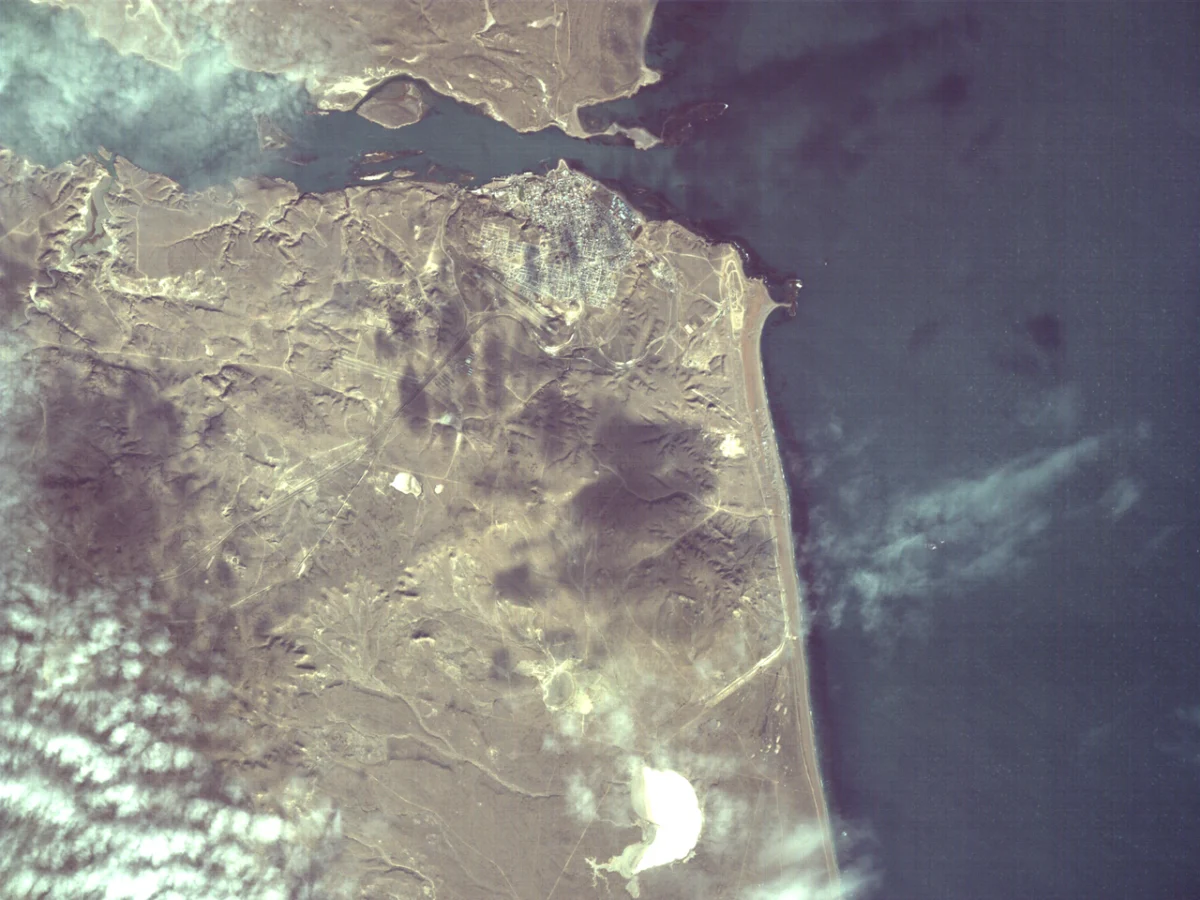
In a landmark achievement for orbital intelligence, a satellite has successfully identified specific terrestrial targets on its own, marking a historic departure from the traditional model of space-to-ground data analysis. This milestone, achieved in April, represents the first reported deployment of a Vision-Language Model (VLM) in orbit. By bypassing the need for human analysts to interpret raw imagery, this breakthrough signals a fundamental shift in the capabilities—and the economic value—of space-based sensor suites.
The Traditional Bottleneck: Why Space Data Needs a Brain
For decades, Earth observation has functioned as a massive, labor-intensive data pipeline. Satellites capture high-resolution imagery and telemetry, which are then transmitted to ground stations. From there, these "chunks" of data are processed by algorithms or human analysts to extract actionable insights. This process is inherently reactive and inefficient; bandwidth constraints often mean that by the time an analyst reviews a piece of imagery, the situation on the ground may have already changed.
The demonstration on the Yam-9 spacecraft, built by the orbital infrastructure specialist Loft Orbital, effectively collapses this pipeline. By integrating a specialized software package developed by NASA’s Jet Propulsion Laboratory (JPL), the satellite moved from being a passive camera to an active, intelligent sensor capable of executing natural language queries.
Chronology of the Breakthrough: From Lab to Low Earth Orbit
The journey to this orbital milestone began well before the Yam-9 launch in the fall of 2025. The project relied on the synergy between Loft Orbital’s hardware-as-a-service model and NASA’s cutting-edge AI research.
- The Conceptual Foundation: The project, dubbed "NAVI-Orbital," originated from the mind of JPL researcher Taran Cyriac John. Initially conceived as a tool to aid astronauts on the Moon or Mars, the concept was simple yet revolutionary: if an astronaut in a bulky pressurized suit cannot operate a keyboard, they need an interactive, voice-responsive AI assistant.
- The Hardware Integration: Loft Orbital equipped the Yam-9 with an Nvidia Jetson Orin AGX GPU. As one of the most powerful computing chips currently space-rated, the Orin provided the necessary "edge" compute power to run complex models in the harsh, resource-constrained environment of space.
- The Software Optimization: Juan Delfa Victoria, a technical lead in JPL’s AI group, spearheaded the development of the NAVI-Orbital software. The team’s primary challenge was optimization. While Google DeepMind’s Gemma 3—the VLM powering the demonstration—is a sophisticated model, it was not built for the storage and power limitations of a satellite. Engineers had to meticulously streamline the software, stripping away unnecessary libraries and memory overhead to ensure the model could function reliably while orbiting the Earth.
- The April Milestone: In April, the system was put to the test. Researchers issued natural language queries to the satellite, asking it to classify sensor data based on specific criteria, such as where natural environments intersect with human development or identifying infrastructure around complex railway hubs. The Yam-9 processed these requests autonomously, successfully identifying the targets without human intervention from the ground.
The Technical Architecture: Why Gemma 3 Matters
The success of this mission rests on the emergence of "purpose-built" edge AI. Unlike Large Language Models (LLMs) that require massive, server-farm-grade compute, Gemma 3 is designed for edge applications. It combines the contextual, semantic understanding of language models with the spatial and visual processing power of computer vision.
This dual capability is what makes the technology so transformative. By "understanding" what it is looking at, the satellite can perform real-time triage. Instead of sending terabytes of useless cloud-covered imagery back to Earth, the Yam-9 can prioritize data that matches the user’s specific search parameters. This dramatically reduces latency and bandwidth costs, effectively turning the satellite into an "always-on" patrol layer.
Implications for Global Security and Commerce
The transition to onboard AI intelligence carries profound implications for multiple sectors, from environmental monitoring to national security.
1. The "Always-On" Patrol Layer
Paul Lasserre, Head of AI at Loft Orbital, describes this shift as the creation of a "patrol layer" in space. With a VLM-enabled satellite, the ground user no longer needs to wait for a scheduled download to analyze a region. Instead, they can provide high-level logic: "Monitor this border and alert me if you see suspicious vehicle activity." The satellite acts as an autonomous sentry, interacting with the user in a back-and-forth dialogue.
2. Infrastructure-as-a-Service (IaaS)
Loft Orbital’s business model is a departure from traditional satellite manufacturing. By treating the spacecraft as an infrastructure platform rather than a proprietary tool, they allow third-party customers—such as EarthDaily, which recently launched six satellites with Loft—to deploy their own sensors and software. The Yam-9 serves as the "pathfinder" for this model, proving that sophisticated AI can be hosted on shared, multi-tenant orbital platforms.
3. Scaling the Constellation
The current goal, according to Lasserre, is to achieve real-time, persistent coverage of the entire globe. He estimates that a constellation of 50 to 100 satellites, all equipped with the processing power of a Yam-9, would be sufficient to provide this level of monitoring. Currently, Loft operates 12 spacecraft, but the path is now paved for rapid scaling.
Competitive Landscape and Future Directions
Loft Orbital is not alone in the race to bring "brains" to orbit. Other industry leaders are watching these developments closely:
- Planet Labs: Already flying satellites equipped with Jetson Orin processors, Planet is currently focusing on object detection. However, spokespeople have confirmed that research into more advanced VLM applications is already underway.
- Kepler Communications: Operating what is widely considered the largest orbital compute cluster, Kepler has remained tight-lipped regarding specific VLM deployments, citing non-disclosure agreements. However, they have noted "several undisclosed use cases" for their compute environment, suggesting that the industry is already moving toward widespread AI adoption.
Challenges Ahead: Power, Memory, and Reliability
Despite the success of the Yam-9 demonstration, significant engineering hurdles remain. The space environment is notoriously unforgiving. Radiation can flip bits in memory, and the power budget on a small satellite is razor-thin.
"Lessons learned in deploying these smaller models will inform how companies attempt to deploy larger-scale compute infrastructure," notes Delfa Victoria. The industry is currently learning how to manage the "prosaic-but-vital" aspects of spaceflight: heat dissipation, power fluctuations, and long-term hardware degradation.
Conclusion: A New Frontier of Interaction
The ability of a satellite to "see" and "think" represents a paradigm shift. By moving away from the "data-dump" model of space operations, the industry is moving toward a more conversational, intelligent relationship with the assets we put in the sky.
As JPL’s Juan Delfa Victoria noted, the vision is not merely technical, but human-centric. By treating the satellite as an intelligent assistant, the agency is preparing for a future where astronauts and ground-based researchers can interact with orbital sensors as easily as they interact with a modern digital assistant on a smartphone.
While the researchers behind the project jokingly insist, "Don’t call it HAL 9000," the reality is that the Yam-9 has taken the first step toward a sentient-like presence in orbit. The age of the autonomous satellite has arrived, and it is changing the way we look at our planet from above.


 Asro
Asro
 Rifan Muazin