

The study of the Japanese language is often perceived as a daunting labyrinth of kanji, honorifics, and complex sentence structures. For many learners, the bridge between textbook memorization and the ability to consume native-level content feels insurmountable. However, a new educational resource, the Biographies of Great Japanese Figures digital bundle, is attempting to dismantle this barrier by anchoring grammatical acquisition in the rich, contextual narratives of Japan’s most influential historical and cultural icons.
The Intersection of Biography and Linguistic Fluency
The core philosophy behind this new series is rooted in the concept of "contextual immersion." By utilizing the life stories of transformative figures—such as Osamu Tezuka, the visionary often cited as the "Godfather of Manga"—the materials provide a narrative framework that makes vocabulary and grammar retention significantly more intuitive.
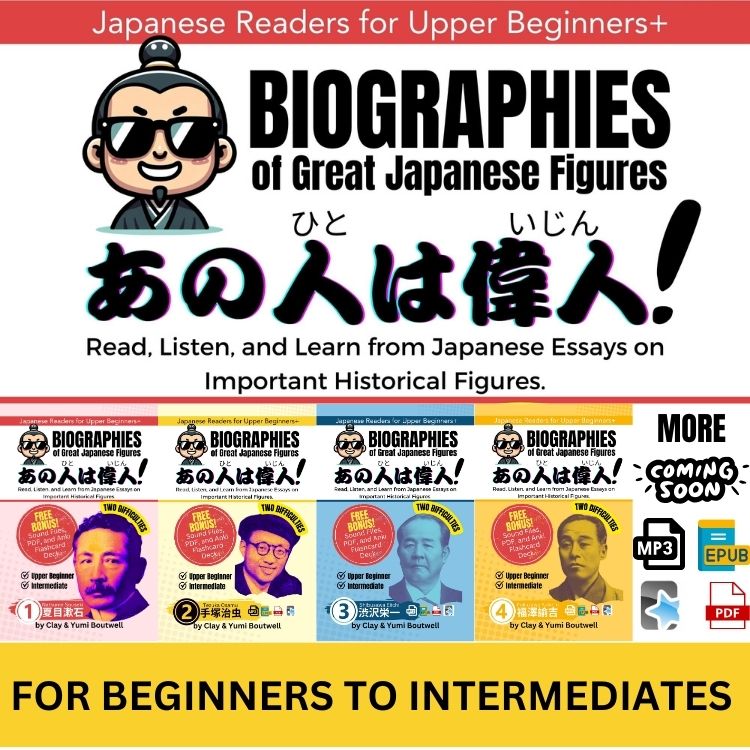
Each volume in the bundle is meticulously crafted to serve two distinct proficiency levels simultaneously. The content is presented in two versions: a simplified Japanese text tailored for JLPT N5 and N4 learners, and a more nuanced, natural version designed for intermediate students. This dual-track approach ensures that a beginner can follow the historical arc of a subject’s life while simultaneously internalizing the foundational grammatical structures required for higher-level proficiency.
By analyzing the life of someone like Tezuka, a learner isn’t just memorizing abstract verbs; they are tracing the trajectory of an artist who shaped a global medium. This engagement fosters a deeper cognitive connection to the language, turning a rote study session into an intellectual exploration of Japanese history.
Chronology: The Evolution of a Teaching Methodology
The development of this resource follows a clear chronological progression in modern language pedagogy. Historically, Japanese learners were forced to choose between rigid, sterile textbooks that lacked cultural depth, or jumping headfirst into native materials that were far beyond their comprehension level.
- Phase One (The Foundation): The materials begin by deconstructing complex sentences found in the biographies. By isolating specific grammatical structures, such as the transformation of verbs into "to become able to" (〜ようになる), students are given a clear roadmap for how to express personal growth and skill acquisition.
- Phase Two (Structural Analysis): The methodology moves beyond simple translation, focusing on the mechanical function of particles. For instance, the role of the subject marker (が) is examined not as a static rule, but as a dynamic tool that identifies the performer of an action within a specific historical or anecdotal context.
- Phase Three (Syntactic Integration): The final phase involves the use of compound verbs, such as those indicating continuity (〜つづける). By studying how these verbs are used to describe long-term professional efforts, learners gain a sophisticated understanding of how to narrate persistent action in Japanese.
Supporting Data: Grammar in Action
To understand why this approach is effective, one must look at the specific grammatical mechanics being taught. The curriculum provides a detailed breakdown of three critical pillars of Japanese syntax:

1. The Expression of Change: Verb [plain form] + ようになる
This construction is fundamental for describing transitions over time. In the biography of a historical figure, this is used to denote how they transitioned from a novice to a master. It implies that a change—brought about by rigorous practice or environmental adaptation—has occurred. This is a common hurdle for students, yet in the context of a biography, it becomes the logical way to describe a person’s career progression.
2. The Subject Marker: Noun + が
While English speakers often struggle with the distinction between wa (は) and ga (が), this resource simplifies the process by focusing on the "subject of the clause." By looking at examples where specific characters exhibit preferences or traits, the learner sees ga in action as a selector, pinpointing exactly who or what is the focus of the state or action.
3. Continuity: The Masu-Stem + つづける
The compound verb tsuzukeru (to continue) is introduced through the lens of professional dedication. By taking the stem of a verb and appending tsuzukeru, the learner captures the essence of perseverance. In the context of biographies, this is used to describe the lifelong work of figures like Tezuka, who spent decades drawing, creating, and evolving his craft.
Official Pedagogical Insights
Educational specialists associated with the project emphasize that the primary goal is not just the memorization of rules, but the cultivation of "native-like intuition." The designers of the Biographies of Great Japanese Figures series argue that traditional methods often fail because they lack the "sticky" factor of a good story.
"When you are reading a story, your brain is actively predicting what comes next," says a spokesperson for the project. "When that story is about a real human being who changed the world, that cognitive engagement is doubled. You are no longer just looking at a particle; you are looking at how a great mind expressed their passion or their struggles. That is the secret to moving from a beginner to an intermediate level."
Furthermore, the materials include comprehensive vocabulary lists and detailed breakdowns before every essay. This ensures that the student is never "thrown into the deep end" without the necessary tools to navigate the text. The integration of technology—such as digital downloads and clickable access to grammar explanations—allows the student to control the pace of their own learning.
Implications for Future Language Learners
The release of these materials marks a significant shift in how language learning materials are marketed and structured. The implications for the field of Japanese language acquisition are twofold:
1. A Move Away from Artificial Contexts
The success of this bundle suggests that students are increasingly seeking materials that offer cultural and historical value. The era of the "John went to the store" style of language learning is waning, replaced by content that provides intellectual enrichment alongside linguistic training.
2. Bridging the Gap Between N4 and N2
One of the most persistent issues in Japanese education is the "Intermediate Plateau," where learners struggle to bridge the gap between basic conversational fluency and the ability to read literature or professional documents. By providing two versions of the same text—one for the beginner and one for the intermediate—this resource provides a scaffolded approach that prevents students from stalling out.
Conclusion: A New Standard for Study
As the global interest in Japanese culture, manga, and history continues to grow, so too does the need for educational tools that respect the intelligence of the learner. The Biographies of Great Japanese Figures bundle is not merely a collection of stories; it is a meticulously engineered curriculum designed to leverage the power of narrative to master one of the world’s most complex languages.
For the student who has grown tired of dry, repetitive drills, this approach offers a refreshing, meaningful alternative. By immersing oneself in the lives of those who defined Japan, the learner does more than just study the language—they begin to think in it. This is a vital step toward true fluency, ensuring that the next generation of Japanese speakers is not just technically proficient, but culturally informed and deeply connected to the heart of the subject matter.
As the educational landscape continues to evolve, the integration of history, biography, and linguistics will likely become the gold standard for language acquisition. For those ready to move beyond the basics, the life of a great figure may just be the best teacher one could ask for.











