Raul Delapena Setiawan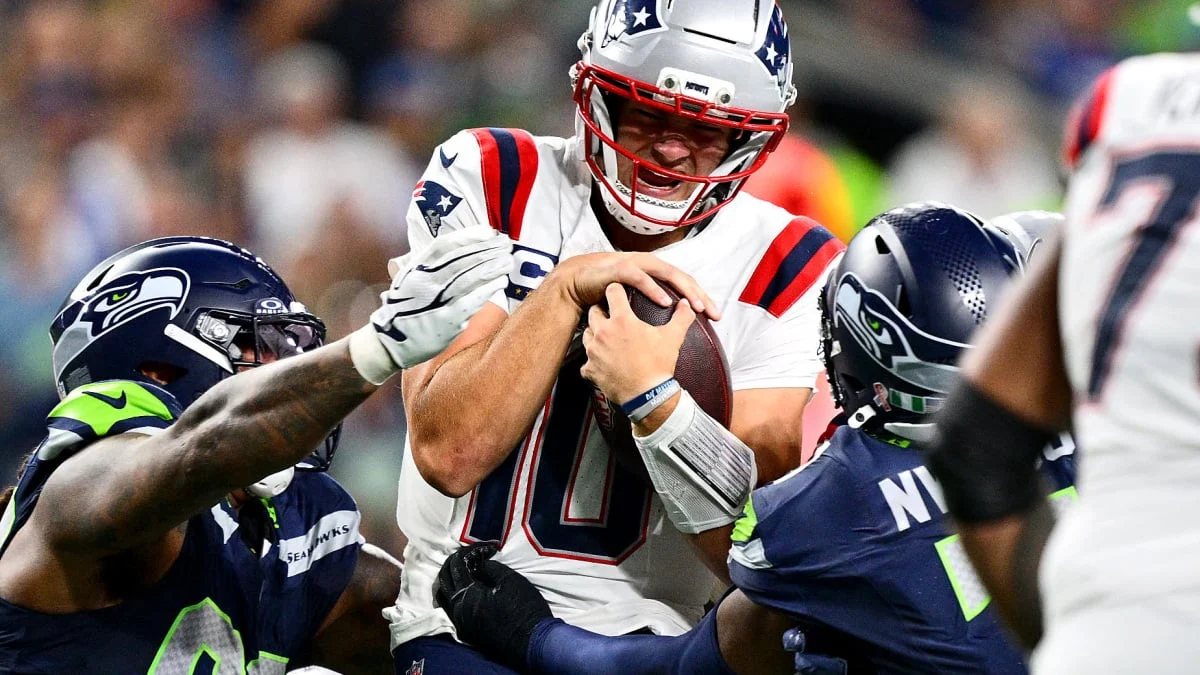
Football is back, and with it, the relentless, creative, and often cruel machinery of social media sports discourse. While analysts dissect coverages and defensive schemes, a new linguistic trend has taken over the digital landscape of American football: the "sandwich" slander. In this strange new lexicon, an interception is no longer just a turnover; it is a "meatball sub," a "pastrami on pumpernickel," or a "fully loaded shrimp po’boy."
As the NFL season kicks into high gear, the intersection of high-stakes athletics and gourmet disparagement has become the defining trend for fans on X (formerly Twitter) and beyond. Uber Eats once famously claimed that "football is for food," but in 2024, the fans are turning that sentiment on its head, using culinary metaphors to serve up biting critiques of struggling quarterbacks.
The Evolution of the "Meatball" Metaphor
To understand why fans are suddenly calling interceptions "sandwiches," one must first look at the history of the "meatball." For decades, the term has been a staple of baseball vernacular. In the diamond, a "meatball" refers to a pitch thrown directly over the heart of the plate—a mistake so egregious that it essentially invites the batter to hit a home run. It is an easy, juicy target.
Because the pigskin used in the NFL is oblong and decidedly non-meatball-shaped, the transition to the deli counter was a logical, if hilarious, step. If a baseball pitcher throws a "meatball," an NFL quarterback who throws a bad interception—often one that is lobbed directly into the hands of a waiting defender—is throwing a "meatball sub."
The trend relies on the absurdity of the combination. A standard "pick" is boring; a "pastrami on pumpernickel with a side of turnovers" is a narrative event. As one fantasy football participant noted during a tense Week 1 matchup between the Cleveland Browns and the Jacksonville Jaguars, watching Deshaun Watson struggle on the field was akin to witnessing an "early pastrami on pumpernickel" delivery. The more elaborate and specific the sandwich, the higher the "slander value" assigned to the quarterback’s blunder.
Chronology of a Viral Phenomenon
While the trend feels like a sudden explosion, its roots can be traced back to the previous season. The earliest notable instance of this linguistic evolution appears to be a November 2023 tweet referencing New Orleans Saints quarterback Derek Carr. The post, which captured a particularly disastrous throw, quipped: "They got Carr in 4K throwing a fully loaded shrimp po’boy."
The cleverness of the insult was twofold: it invoked a regional culinary staple of New Orleans while perfectly capturing the messy, unforced nature of the turnover. From that point on, the floodgates were opened.
However, the trend reached its zenith during the opening week of the current NFL season. The catalyst for this acceleration was, somewhat ironically, a combination of on-field failure and off-field branding. New England Patriots quarterback Drake Maye found himself at the center of the storm. Maye, who had previously partnered with the sandwich chain Jersey Mike’s for local charity work in the Boston area, became the primary target for these memes after a dismal performance against the Seattle Seahawks. Following a three-interception game, the internet did not hesitate to link his charitable sandwich promotions to his poor on-field decision-making. The overlap was too rich for social media to ignore, cementing the "sandwich" as the official currency of quarterback criticism.
Supporting Data: Why "Slander" Matters in Modern Sports
The rise of the sandwich meme is not an isolated incident; it is part of a broader, well-documented evolution in how fans consume and discuss sports. In the era of the "hate-watch," the quality of the content—the memes, the edits, and the viral reactions—often competes with the actual game on the field.
In the NBA, this behavior is already well-established. When a player performs poorly, the discourse shifts from "he had a bad night" to "he needs to learn Chinese." Memes about players being traded to the Shanghai Sharks or taking up jobs in the G-League have become a standard, albeit brutal, rite of passage for underperforming stars.
The "sandwich" trend in the NFL serves a similar function. It acts as a release valve for fan frustration. When a high-priced quarterback fails to deliver, the fans’ ability to turn that failure into a humorous, shareable "sandwich" meme allows them to maintain engagement even when the product on the field is objectively painful to watch. It is a psychological defense mechanism; by laughing at the "meatball sub," the fan feels less invested in the tragedy of the loss.
Official Responses and The Corporate Perspective
Interestingly, the brands involved in these culinary associations have remained largely silent, or in some cases, have leaned into the absurdity. While no official statements have been issued by the NFL or major food chains regarding the appropriation of their menus for athlete slander, the trend has certainly not gone unnoticed by marketing departments.
The link between Drake Maye and Jersey Mike’s serves as a case study for modern athlete-brand partnerships. While the partnership was intended to promote community support, the viral nature of the sandwich slander created a "brand collision" that the company could neither predict nor control. Marketing experts note that while this type of association might seem negative, it creates a massive amount of "social velocity"—the speed and frequency with which a topic is shared across platforms. For brands, being part of the cultural conversation, even in a mocking context, is often viewed as a net positive in terms of visibility.
Implications for the Future of Sports Discourse
As we look toward the remainder of the season, several questions arise regarding the longevity of this trend. Is it merely a flash-in-the-pan meme, or has it permanently altered the language of football criticism?
The "Shelf-Life" of Internet Trends
The nature of social media is cyclical. Users are already reporting "sandwich fatigue," with many noting that the joke is becoming overused. Like all internet trends, the "meatball sub" slander is subject to the law of diminishing returns. Once the novelty wears off, the "slander" will likely evolve into something new, perhaps even more absurd, as fans strive to maintain the "edginess" of their critiques.
The Impact on Athlete Branding
For quarterbacks, the implications are more tangible. The rise of these memes forces athletes to be more cognizant of their public presence, both on and off the field. A bad game is no longer just a bad game; it is a viral moment that could be tied to an endorsement, a quote, or a past social media post. The pressure to perform is no longer just about winning games; it is about avoiding the "cringe" of becoming a viral meme.
The "Generational" Comp Video
The final legacy of this trend will likely be found in the end-of-season highlight reels—or rather, the "lowlight" reels. As the season concludes, fans are already preparing to aggregate these moments into "generational" compilation videos. These videos, set to trending audio and edited with fast-paced cuts, will serve as a permanent record of the 2024 season’s most embarrassing turnovers.
Conclusion
The "sandwich" slander is a perfect microcosm of the modern sports fan experience: hyper-fast, highly creative, and deeply cynical. It reflects a shift in how we process disappointment in professional athletics, moving away from earnest analysis and toward a more performative, meme-driven form of expression.
Whether it is a "meatball sub" or a "pastrami on pumpernickel," the message from the stands is clear: if you are going to lose, you might as well provide the internet with something delicious to talk about. As the season progresses, one thing is certain—the deli counter of the NFL is open, and there are plenty of interceptions left to serve.

 Ammar Sabilarrohman
 Rifan Muazin