
 Nila Kartika Wati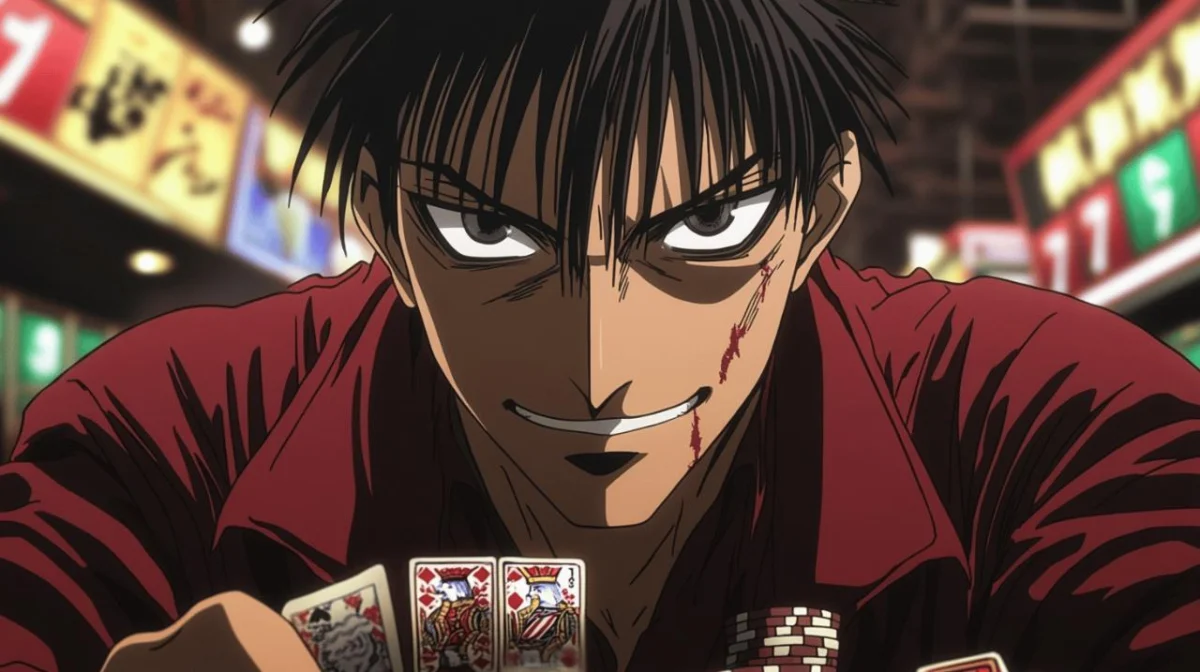
In the landscape of Japanese seinen manga, few works have managed to capture the visceral, suffocating reality of financial ruin as effectively as Nobuyuki Fukumoto’s Kaiji: Ultimate Survivor. Since its inception in 1996 within the pages of Weekly Young Magazine, the series has transcended the boundaries of a simple gambling thriller to become a profound, often harrowing, sociological critique of modern capitalism, debt-slavery, and the fragility of the human psyche under extreme pressure.
With over 21.5 million copies in circulation as of 2019, Kaiji is more than just a story about games of chance; it is a dark mirror held up to a society where the gap between the desperate and the predatory is bridged only by the roll of the dice.
Main Facts: The Anatomy of a Modern Tragedy
At its core, Kaiji follows the life of Kaiji Itou, a quintessential "everyman" who finds himself trapped in the gears of the Japanese credit system. After a series of misfortunes and a naive decision to co-sign a loan for a friend, Kaiji inherits a staggering debt of 3,850,000 yen (approximately $28,705 USD). In the unforgiving ecosystem of the series, this debt is not merely a financial burden; it is a life sentence.
The narrative hook is deceptively simple: to escape his mounting liabilities, Kaiji is invited aboard the Espoir, a cruise ship where the indebted gamble their lives against each other in games of logic and manipulation. The "Restricted Rock-Paper-Scissors" game serves as the audience’s introduction to this world, setting the tone for the series: high stakes, psychological warfare, and the brutal realization that in a system rigged against the poor, survival requires the sacrifice of one’s moral compass.
Chronology: From Magazine Pages to Global Icon
The journey of Kaiji spans over two decades, cementing its status as a pillar of Japanese pop culture:
- 1996: Nobuyuki Fukumoto begins serialization of Kaiji in Weekly Young Magazine. The stark, angular art style immediately separates it from the mainstream, signaling a mature, gritty tone.
- 1998: The series achieves significant critical acclaim, winning the Kodansha Manga Award in the General category, acknowledging its unique narrative prowess.
- 2007–2008: The first season of the anime adaptation, Kaiji: Ultimate Survivor, airs, introducing the visceral tension of the "Human Derby" and "E-Card" games to a wider audience.
- 2011: The second season, Kaiji: Against All Rules, expands the scope of the gambling, introducing the iconic "Pachinko SWAMP" arc, a masterclass in tension-building.
- 2009–2020: The franchise spawns a trilogy of live-action films, Kaiji: Jinsei Gyakuten Gēmu (2009), its 2011 sequel, and Kaiji: Final Game (2020), demonstrating the story’s enduring adaptability.
Supporting Data: The Economics of Despair
To understand the weight of Kaiji, one must look at the mathematical precision Fukumoto applies to his world. The games are not randomized chaos; they are rigid systems designed to exploit human cognitive biases.
The Pachinko SWAMP: A Case Study in Manipulation
The "SWAMP" represents the pinnacle of the series’ technical writing. The machine is designed with a 700-million-yen jackpot, but the house ensures that the odds are mathematically insurmountable through physical modifications and rigged mechanics. When Kaiji faces this machine, the stakes—4,000 yen per ball—are not just financial; they represent the collective hopes and failures of the downtrodden. This arc serves as a microcosm of the "house always wins" mentality prevalent in the predatory loan industry.
Demographic Resonance
The series resonates because it reflects the economic anxiety of the Japanese "Lost Decades." Kaiji Itou is not a hero; he is a cautionary tale of a young man without a stable career, struggling against a system that offers no safety net. The sheer volume of sales—21.5 million copies—indicates that the struggle of the individual against institutional greed is a universal, if painful, truth.
Official Responses and Critical Reception
Critics have long lauded Kaiji for its "psychological horror" elements. Unlike typical shonen anime where the protagonist triumphs through physical prowess, Kaiji’s victories are often pyrrhic. He survives by out-thinking his opponents, yet he is frequently left physically and emotionally scarred.
The artistic choices of Nobuyuki Fukumoto are often cited as a turning point for the series. His decision to use jagged, distorted faces to represent extreme agony or malice was initially met with skepticism but is now recognized as a brilliant narrative device. The faces in Kaiji do not lie; they are the externalized manifestations of the characters’ internal collapse. This "ugly" aesthetic forces the reader to confront the reality of the characters’ misery, preventing the "gamification" of their suffering from becoming purely voyeuristic.
Implications: The Legacy and the "Squid Game" Connection
The shadow cast by Kaiji is immense. The recent global phenomenon of Squid Game has drawn direct comparisons to Fukumoto’s work. Both narratives share a fundamental premise: a debt-ridden protagonist is lured into a high-stakes competition where the alternative is a slow, miserable death in the real world.
A Mirror to Modern Society
Kaiji forces us to ask uncomfortable questions about the nature of debt. When a person is worth more to a corporation or a loan shark dead or in a labor camp than as a free individual, at what point does society cease to be "civilized"? The yakuza, acting as the agents of this financial hellscape, are not portrayed as cartoonish villains but as the cold, logical enforcers of a system that values numbers over humanity.
The Universal Nature of Financial Vulnerability
The success of Kaiji globally—spanning translations, anime streaming, and international discussions—proves that the "debt trap" is a global anxiety. Whether it is the predatory lending practices in Japan or the systemic poverty seen in various global economies, Kaiji speaks to the fear that, under the right (or wrong) circumstances, anyone could be one bad roll of the dice away from losing their autonomy.
Conclusion: Why Kaiji Remains Essential
Kaiji: Ultimate Survivor is a masterclass in tension. By focusing on the psychology of the gambler rather than just the game, Fukumoto created a narrative that is as much about philosophy as it is about drama. It challenges the audience to consider the value of a human life when stripped of its status and comfort.
As we look at the legacy of the series, it is clear that Kaiji did more than tell a story—it codified the "death game" genre as a tool for social commentary. It reminds us that behind every debt, there is a person; behind every game, there is a risk; and that in the world of high-stakes finance, the only way to truly win is to recognize the game for what it is and, whenever possible, refuse to play.
Through its unique artistic vision, relentless pacing, and profound grasp of human desperation, Kaiji remains a cornerstone of manga literature—a chilling, necessary, and deeply human work that will continue to challenge readers for generations to come.


 Siti Muinah
 Azzam Bilal Chamdy





