

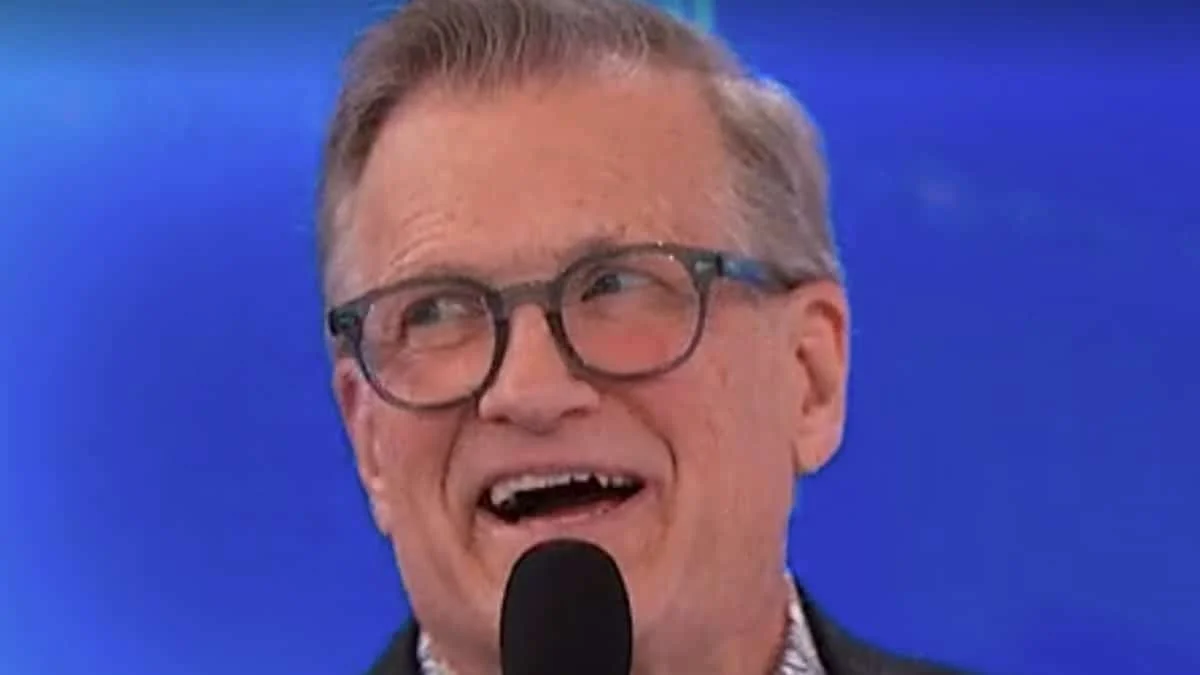
The long-running CBS game show The Price Is Right (TPIR) has found itself at the center of a social media firestorm. Traditionally a bastion of daytime positivity, the show’s recent digital strategy has drawn the ire of its dedicated fanbase. The controversy stems from a decision by the show’s social media team to highlight a particularly stinging loss on its official YouTube channel, coupled with host Drew Carey’s improvisational—and some say insensitive—humor during the segment.
As legacy television programs struggle to maintain relevance in an era dominated by short-form digital content, the line between "engaging entertainment" and "exploitative content" has become increasingly blurred. For The Price Is Right, a show built on the "come on down" spirit of optimism, the decision to spotlight a contestant’s failure has triggered a wider debate about the show’s direction under Drew Carey’s nearly two-decade-long tenure.
Main Facts: A $9.25 Consolidation Prize and a Viral Backlash
The incident occurred during a standard episode featuring the classic pricing game "Any Number." A contestant, who had successfully navigated "Contestants’ Row" by winning a shuffleboard table, earned his way onto the main stage for a chance at a life-changing prize package.
The stakes were high: the contestant was playing for a brand-new car, a high-end smart television, and the contents of the "piggy bank." In "Any Number," the board displays the price of the car (five digits), the TV (three digits), and the piggy bank (three digits representing dollars and cents). The first prize to have all its digits revealed is the prize the contestant wins.
In a heartbreaking sequence of events, the contestant successfully identified several digits for the car and the television, leaving him just one number away from winning either. However, his final choice revealed the last digit of the piggy bank. The total "win" amounted to a mere $9.25.
While losses are a mathematical reality of game shows, the backlash was ignited when the show’s official YouTube channel uploaded the clip with a title that many felt mocked the contestant’s misfortune. This was compounded by host Drew Carey’s reaction, which included jokes about the contestant being able to afford a "double burger" with his winnings.
Chronology: From the Stage to the Comment Section
To understand the depth of the fan frustration, one must look at the sequence of events that led to this digital PR crisis:
1. The On-Stage Performance
During the filming, the contestant appeared enthusiastic. He successfully placed the first digit of the car’s price (a "2"). As the game progressed, the board became tense. The smart TV was one digit away, and the car—the ultimate prize—was also one digit away. When the contestant called out his final number, the dreaded "losing horn" (a staple of the show since the 1970s) sounded. The piggy bank was filled.
2. The Host’s Commentary
As the contestant stood dejected, Drew Carey attempted to lighten the mood with his trademark improvisational style. He noted that $9.25 was actually the highest possible amount one could win in the piggy bank. He then joked, "Enjoy your double burger," while gesturing toward the exit.
3. The Digital Upload
Days later, the segment was uploaded to The Price Is Right’s official YouTube channel. Historically, the channel has focused on "Big Wins," "Perfect Bids," and "Showcase Showdown" triumphs. By choosing to spotlight a "Any Number" loss where the contestant walked away with less than ten dollars, the social media team pivoted toward "fail" content, which often generates high engagement through negative sentiment.
4. The Fan Revolt
Within hours of the upload, the comment section became a battleground. Fans of the show, many of whom have watched since the Bob Barker era, expressed disgust. They accused the show of being "nasty" and "mean-spirited," arguing that the digital team was prioritizing clicks over the dignity of the contestants.
Supporting Data: The Mechanics of ‘Any Number’ and the Rarity of the ‘Piggy Bank Win’
"Any Number" was the very first pricing game played on the modern version of The Price Is Right when it premiered on September 4, 1972. Its longevity is due to its simple yet cruel mathematical probability.
- The Car: Requires 4 correct digits (after the first is given).
- The TV: Requires 3 correct digits.
- The Piggy Bank: Requires 3 correct digits (usually representing an amount under $10.00).
Statistically, the piggy bank is the "consolation prize" designed to ensure the contestant doesn’t leave the stage entirely empty-handed. However, in the context of a high-energy television show where people travel across the country for a chance at a vehicle, winning $9.25 is often perceived as a public embarrassment.

According to fan-run databases that track game show statistics, "Any Number" has a win rate of approximately 35-40% for the car. The "Piggy Bank" outcome occurs in roughly 15-20% of games. By highlighting this specific 20% outcome, the show’s digital producers intentionally chose a narrative of failure over the 80% of segments that result in more substantial prizes.
Furthermore, the episode in question was noted by viewers as being particularly "unlucky." Aside from a game of "Side by Side," almost every other pricing game in that hour resulted in a loss. This cumulative frustration among the audience likely amplified the reaction to the YouTube clip.
Official Responses: Silence from CBS and the Production Team
As of this writing, neither CBS nor Fremantle (the production company behind the show) has issued a formal statement regarding the backlash. This is typical for long-running daytime programs, which often weather social media storms by simply moving on to the next day’s content.
However, the "official response" can be seen in the show’s content strategy. Despite the negative comments, the video remains live on YouTube. In the world of digital metrics, "negative engagement" (dislikes and angry comments) is often treated with the same value as "positive engagement" because both signal to the YouTube algorithm that the content is "highly discussed," thereby pushing it to more viewers’ feeds.
Drew Carey, known for his laid-back approach and occasional reprimanding of contestants who don’t follow instructions, has also remained silent on the matter. Carey has often stated in interviews that he views himself as a "friend" to the contestants rather than a formal master of ceremonies, a style that contrasts sharply with the legendary Bob Barker’s more disciplined and formal hosting persona.
Implications: The Evolution of the Game Show Host and the "Negativity Bias"
This incident highlights two significant shifts in the landscape of American game shows: the evolution of hosting styles and the influence of the "negativity bias" in social media marketing.
The Hosting Divide: Barker vs. Carey
The backlash against Carey’s "double burger" joke points to a lingering divide in the TPIR fanbase. For 35 years, Bob Barker maintained a persona of "the gentleman host." While Barker could be biting, his critiques were usually aimed at the "rules of the game" rather than the contestant’s personal misfortune.
Carey, a stand-up comedian by trade, brings a more cynical, "everyman" humor to the stage. To some, this makes the show feel more modern and relatable. To others, it feels dismissive of the contestants’ genuine emotional and financial stakes. When Carey jokes about a $9.00 prize, he is looking at it through the lens of a wealthy entertainer; the contestant, however, may have spent hundreds of dollars on travel and lodging just to be there, making the joke land with a thud.
Social Media and the "Race to the Bottom"
The decision to post a loss highlight is a symptom of the modern "attention economy." On platforms like YouTube and TikTok, "fails" and "cringe" content often outperform "success" content. By showcasing a loss, The Price Is Right is essentially "rage-baiting"—posting content that they know will elicit a strong emotional reaction.
While this might increase short-term views, it risks damaging the long-term brand equity of the show. The Price Is Right has survived for over 50 years because it represents the "American Dream" in miniature: the idea that anyone, regardless of background, can "come on down" and change their life through a bit of luck and knowledge. If the show begins to be perceived as a place where people are mocked for their failures, it loses the aspirational quality that has made it a multi-generational staple.
The Future of TPIR Digital Strategy
Moving forward, the producers of The Price Is Right face a choice. They can continue to lean into the "viral fail" culture of the internet to chase younger demographics, or they can return to the show’s roots as a celebration of winning. The intense reaction to the "Any Number" clip suggests that the audience still views the show as a "safe space" for positivity—and they are willing to vocalize their displeasure when that boundary is crossed.
As one commenter aptly put it: "We watch to see people’s lives get better, not to see them insulted over the price of a sandwich." Whether the show’s producers take this feedback to heart will be evident in the "highlights" they choose to share in the coming months.











No comments yet. Be the first to join the conversation!