

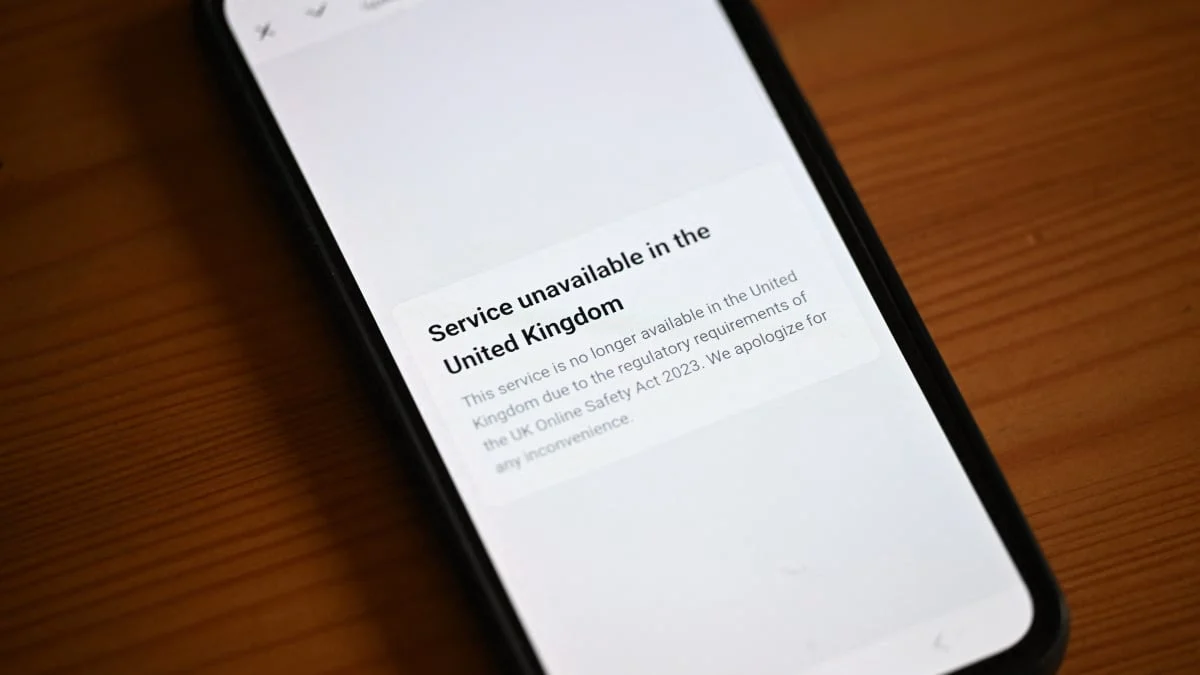
Nearly a year after the UK’s landmark Online Safety Act moved from legislative debate to active enforcement, the nation’s communications regulator, Ofcom, has unveiled a comprehensive progress report. The findings paint a complex portrait of a digital landscape in flux, where the push for robust age assurance—ranging from pornographic platforms to social media and niche forums—is colliding with the technical realities of the modern internet.
As the UK government prepares to tighten the digital net further, including potential social media bans for those under 16 and new nighttime curfews for older teens, the Ofcom report serves as both a scorecard and a cautionary tale regarding the feasibility of policing the web at scale.
The Legislative Mandate: A New Digital Border
The Online Safety Act represents one of the most aggressive legislative efforts globally to impose "duty of care" requirements on online service providers. The law mandates that sites hosting content "restricted to adults"—a broad definition that covers everything from explicit adult entertainment to community hubs like the r/stopsmoking subreddit—must implement rigorous age verification mechanisms.
The objective is clear: to prevent children from accessing harmful or age-inappropriate content by ensuring that digital gateways are no longer open to minors by default. However, the implementation has been far from seamless, revealing deep disparities in how effectively different sectors of the internet are complying with the new regulatory burden.
Chronology of Enforcement: From Policy to Practice
The transition from statutory text to technological enforcement has been rapid, if uneven.
- July 2025: The core provisions of the Online Safety Act go into effect, marking the start of a new era of digital oversight in the UK.
- July 2025 – December 2025: The primary "ramp-up" phase. During these six months, Ofcom observed a staggering 23-fold increase in the volume of age checks compared to the preceding half-year. A total of 69 million age verification events were recorded across a sample of 32 key services.
- January 2026: The current reporting window. Ofcom’s analysis indicates that while adoption of verification tech is at an "unprecedented scale," significant gaps remain in the accessibility of prohibited content.
- October 2026 (Upcoming): Ofcom is scheduled to deliver a formal assessment to Parliament regarding the definition and standard of "highly effective age checks" specifically for the under-16 age threshold.
- January 2027 (Upcoming): The regulator is set to publish a strategic report on the feasibility and implementation of age verification at the "app-store level," shifting the burden of compliance further up the supply chain.
Supporting Data: The Efficacy Gap
Ofcom’s Children’s Passive Online Monitoring study offers sobering insights into the effectiveness of current measures. The data suggests that while the sheer number of checks is rising, the "leakage" of children into adult-restricted spaces persists.
The Pornography Paradox
The report highlights that 100% of the UK’s top 10 pornographic websites have now implemented some form of age assurance, and 64 out of the top 100 have followed suit. Furthermore, 10 sites have opted for complete geo-blocking of UK traffic.
Despite these high-profile compliance figures, the reality for minors remains problematic. Ofcom’s study found that 8% of children aged 8 to 14 surveyed had visited pornographic providers. While half of those children were stopped by age-gate mechanisms, the other half bypassed these barriers or accessed sites without them. Interestingly, the data suggests that these visits are often fleeting—87% of these visits lasted less than 30 seconds, and 65% lasted less than 10 seconds—suggesting that many children are stumbling upon this content via search results rather than purposeful navigation.
The Search Engine Problem
Perhaps the most significant loophole identified is the role of major search engines. Ofcom discovered that 33% of the first page of Google search results for relevant terms led to sites without age checks. The situation was more pronounced on Bing, where 54% of first-page results lacked any form of age verification. While search providers are currently collaborating with Ofcom to improve "discoverability" filters, the law does not currently mandate that search engines themselves perform age verification, creating a persistent, high-traffic funnel for minors.
Official Responses and Regulatory Pressure
Ofcom has taken a firm, uncompromising stance with industry stakeholders. Recognizing that the "wild west" era of the internet is being forcibly curtailed, the regulator has opened 23 formal investigations into providers of 88 different adult services that remain non-compliant.
Regarding the technical methods used to verify age, Ofcom is signaling an end to the era of "age inference." Many social media platforms currently rely on behavioral patterns to estimate a user’s age. Ofcom’s message to these companies is unequivocal: Switch to more rigorous methods, or face the consequences.
"Our message to social media companies is clear," the regulator stated in a recent press release. "Those which use age inference models to comply with their child protection duties should switch to other methods listed in our guidance as highly effective without delay."
Implications: The Future of Digital Identity
The implications of this report extend far beyond the current scope of the Online Safety Act. As the UK government moves toward a broader social media ban for children under 16, the technical standard for what constitutes a "highly effective" age check will become the new baseline for internet access in Britain.
The Failure of Inference
The skepticism toward age inference—which attempts to guess a user’s age based on their interests, connections, and posting habits—is bolstered by international experience. Recent studies on Australia’s social media ban have shown that such bans are often ineffective precisely because they rely on estimations rather than hard, identity-based verification. If the UK is to avoid the same pitfalls, it must move toward systems that verify age at the point of entry, which brings with it a host of privacy and data security concerns that have yet to be fully addressed.
The Curfew and the Classroom
The announcement of a "social media curfew" for teens aged 16 and 17 adds another layer of complexity. If the state is to enforce time-based restrictions, the technological requirements for age verification will need to be near-instantaneous and globally consistent. This places immense pressure on app developers and platform owners to create a unified digital identity standard—a move that privacy advocates fear could lead to the end of anonymous browsing in the UK.
Conclusion: A Work in Progress
One year into the Online Safety Act, the UK stands at a digital crossroads. The progress is measurable: 43% of children now encounter effective age checks, up from 25% just six months prior. Yet, the persistent availability of adult content through search engines and the ongoing reliance on flawed inference models demonstrate that the "digital border" remains porous.
As Ofcom prepares its recommendations for Parliament, the challenge will be to balance the imperative of child protection with the technical realities of a decentralized, global internet. Whether the UK can successfully mandate a "safer" internet without fundamentally breaking the user experience remains the central question of the next decade of digital policy. For now, the message to industry is clear: the period of grace is over, and the era of rigorous, verifiable age assurance has begun.











