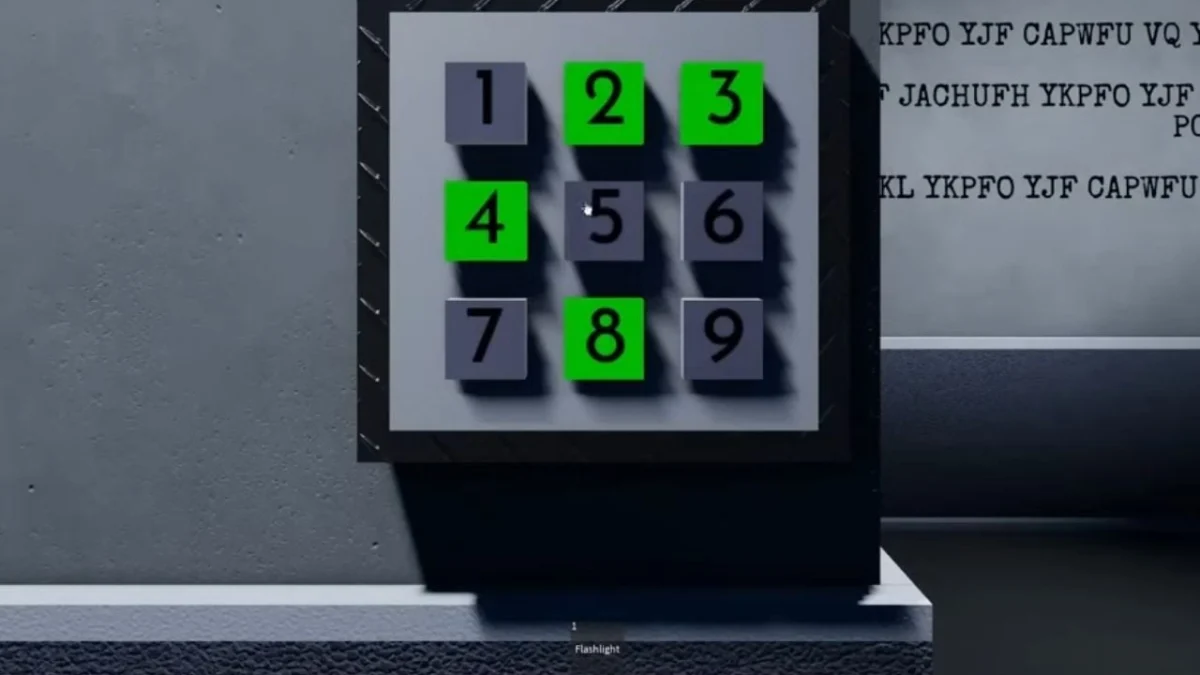
The landscape of digital entertainment has undergone a seismic shift over the last decade, transitioning from passive consumption to highly interactive, user-generated experiences. At the forefront of this evolution is Project Escape Room, a standout title within the Roblox ecosystem that has recently captured the attention of millions with its "Prison" map. This intricate simulation challenges players to utilize logic, observation, and cooperative strategy to navigate a high-security virtual environment.
As the genre of digital escape rooms continues to flourish, "Project Escape Room: Prison" serves as a benchmark for how developers can leverage simple mechanics to create complex psychological and cognitive challenges.
1. Main Facts: The Rise of the Virtual Architect
Project Escape Room is not merely a game but a modular puzzle platform hosted on Roblox. Developed to satisfy the growing appetite for "logic-based survival," the Prison update represents the most sophisticated iteration of the series to date.
Key Elements of the Experience:
- Platform: Roblox (accessible via Windows, macOS, iOS, Android, and Xbox).
- Genre: Puzzle / Escape Room / Simulation.
- Core Objective: Players are confined to a high-security prison cell and must navigate a series of interconnected puzzles to reach the "Extraction Point" before a hidden timer expires.
- Mechanics: The game utilizes a first-person or third-person perspective, requiring players to interact with environmental objects, decode cipher-based locks, and manage inventory items such as keys and wire cutters.
Unlike traditional "Prison Break" games on Roblox—which often focus on high-octane combat or roleplay—Project Escape Room focuses almost exclusively on intellectual rigor. It demands a level of patience and attention to detail that mirrors the difficulty of physical escape rooms found in major metropolitan cities.
2. Chronology: A Step-by-Step Walkthrough of the Great Escape
To understand the complexity of the Prison map, one must examine the chronological progression required to achieve freedom. Based on expert analysis, the following steps represent the definitive path through the facility’s security layers.
Phase 1: The Initial Breach (Escaping the Cell)
The journey begins in total confinement. The first challenge is an exercise in environmental awareness. Players must meticulously search their immediate surroundings—often checking under pillows, behind toilets, or within the cracks of the stone walls—to find the "Improvised Tool." This initial step sets the tone: nothing in the environment is purely decorative.
Phase 2: Numerical Logic (Counting the Tally Marks)
Once outside the immediate cell, players encounter a secondary barrier requiring a numerical code. The clue is hidden in plain sight: tally marks etched into the hallway walls. This phase requires players to differentiate between "decorative" marks and "functional" clues. Summing these marks correctly provides the sequence for the electronic keypad, a classic trope of the genre that rewards observation over speed.
Phase 3: The Circuitry Challenge (Cutting the Wires)
Moving into the maintenance corridors, players face a junction box. This is a high-stakes puzzle where a single mistake can reset progress. Players must locate a pair of wire cutters (usually hidden in a nearby utility closet) and follow a color-coded schematic found on a discarded clipboard. The sequence—often involving Red, Blue, and Yellow wires—must be executed in a specific order to disable the alarm system.
Phase 4: Spatial Reasoning (The Shower Pattern)
Perhaps the most abstract puzzle in the map involves the prison showers. Steam and tiles hide a visual pattern that corresponds to a grid-based lock. Players must observe the orientation of the showerheads and the specific tiles that appear "discolored" to replicate the pattern on a remote console. This requires a transition from numerical logic to spatial awareness.
Phase 5: Physics and Weight (Examining the Dumbbells)
In the prison gym, the "Dumbbell Puzzle" introduces a weight-based mechanic. Players must interact with various gym equipment to find a hidden keycard. The weights of the dumbbells serve as a cipher; by arranging them from lightest to heaviest on a pressure plate, the player triggers a mechanical release in the ceiling joists.
Phase 6: The Final Dash (The Gate Padlock Key)
The final obstacle is a heavy-duty gate leading to the exterior. The "Gate Padlock" key is notoriously difficult to find, often hidden within a randomized "security locker" that requires a final search of the warden’s office. Once obtained, the player must navigate a final corridor patrolled by automated security cameras to reach the exit.
3. Supporting Data: The Popularity of Digital Puzzles
The success of Project Escape Room is backed by significant metrics within the Roblox platform. As of 2024, Roblox boasts over 70 million daily active users (DAUs), with the "Puzzle and Obby" (obstacle course) categories seeing a 25% year-over-year increase in engagement.
Player Engagement Statistics:
- Retention Rates: Puzzle-based games like Project Escape Room show a 15% higher retention rate compared to standard "clicker" games, as players are driven by the psychological "Zeigarnik Effect"—the tendency to remember uncompleted tasks.
- Social Collaboration: Approximately 60% of successful escapes in the Prison map are completed by players working in groups of two or more, highlighting the game’s role as a social catalyst.
- Global Reach: While a majority of players originate from North America and Europe, there has been a significant surge in Southeast Asian players, leading to the implementation of multi-language support for clues and riddles.
4. Official Responses and Developer Insights
While the developers of Project Escape Room (independent creators within the Roblox ecosystem) maintain a degree of anonymity, their updates and community interactions provide insight into the game’s philosophy.
In a recent community "DevLog," the creators noted:
"The goal with the Prison map was to move away from ‘scare tactics’ and focus on ‘cognitive friction.’ We wanted players to feel the claustrophobia of a prison through the difficulty of the puzzles, rather than just the visual aesthetic."
Roblox Corporation, the parent platform, has also commented on the trend of high-fidelity puzzle games. In their most recent quarterly report, the company emphasized its commitment to "empowering creators to build deeper, more immersive simulations that challenge the traditional boundaries of what a ‘game’ can be." This includes the rollout of improved lighting and physics engines, which have directly contributed to the atmospheric tension found in Project Escape Room.
5. Implications: The Future of Virtual Problem Solving
The popularity of Project Escape Room: Prison carries broader implications for education, professional training, and the future of the Metaverse.
Educational Value
Educators are increasingly looking at digital escape rooms as tools for teaching STEM (Science, Technology, Engineering, and Mathematics). The puzzles in Project Escape Room require logical deduction, basic arithmetic, and pattern recognition—skills that are foundational to computer science and engineering.
The Shift from Physical to Digital
The physical escape room industry saw a massive boom in the mid-2010s, but high overhead costs and geographic limitations often make them inaccessible. Digital counterparts offer a "democratized" version of the experience. For a fraction of the cost (often free-to-play), a student in a rural area can experience the same level of intellectual challenge as someone visiting a premium escape room in London or New York.
Cognitive Development and Team Building
The "Prison" map serves as a microcosm for modern workplace dynamics. It requires:
- Information Sharing: One player finds a code, another inputs it.
- Specialization: One player handles the spatial puzzles while another focuses on the numerical ones.
- Pressure Management: Solving puzzles while a timer counts down simulates high-stress decision-making environments.
Conclusion
Project Escape Room: Prison is more than a digital distraction; it is a sophisticated exercise in logic and cooperation. By blending the classic "prison break" narrative with complex, multi-layered puzzles, it has secured its place as a cornerstone of the Roblox platform. As technology continues to improve, we can expect these virtual environments to become even more indistinguishable from reality, further blurring the line between play and profound cognitive exercise.
For those still stuck behind the bars of the digital cell: remember that the key is rarely in the lock—it is in the details you have yet to observe. Congratulations on your escape.