Asro
Asro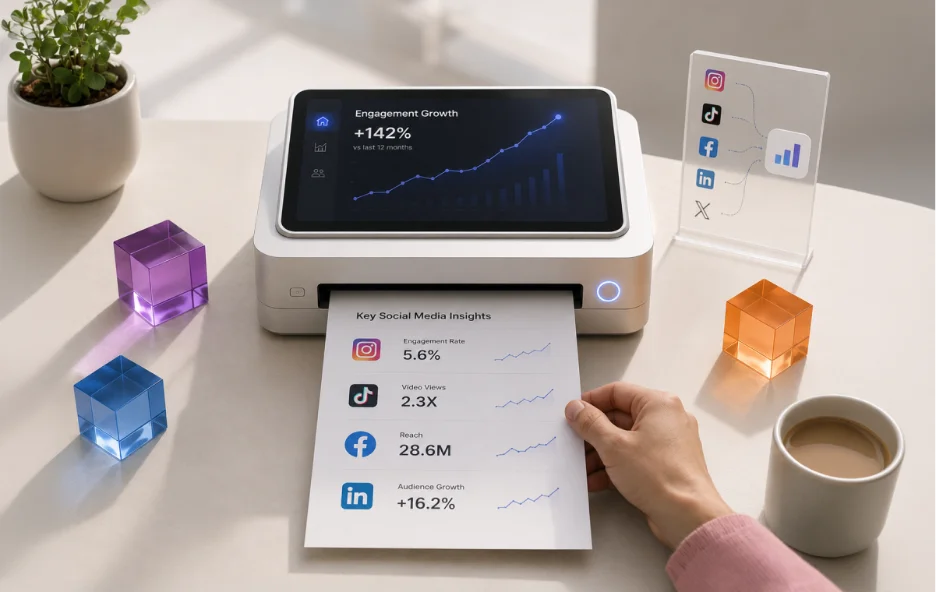
Over the past two decades, social media has undergone a metamorphosis—evolving from a series of niche, text-based online forums into a sprawling, interconnected global ecosystem of over 5.8 billion users. What began as a primitive method for staying in touch with friends has matured into the primary engine of modern communication, commerce, and cultural exchange.
As we navigate through 2026, the digital realm is no longer an "add-on" to the human experience; it is the infrastructure upon which daily life is built. To put this into perspective, consider this: the average social media user scrolls through approximately 300 feet of content on their smartphone every single day. That is roughly equivalent to the height of the Statue of Liberty. This sheer volume of interaction underscores how deeply social platforms are woven into the fabric of our existence, dictating how we learn, how we connect, and, most importantly, how we shop.
The State of Global Connectivity: A Statistical Overview
Social media is now a global constant. As of late 2025 and heading into 2026, there are 5.66 billion active social media users, representing 68.7% of the total world population. Perhaps more telling is the penetration among the digitally connected: 94.2% of all internet users are now active on at least one social platform.
A Chronology of Growth (2015–2025)
The trajectory of this growth has been nothing short of exponential. Looking back at the last decade, we see a shift from early adoption to near-total saturation.
| Year | Users (Billion) | YoY Growth (%) |
|---|---|---|
| 2025 | 5.31 | +5.4% |
| 2024 | 5.04 | +5.9% |
| 2023 | 4.76 | +3.0% |
| 2022 | 4.62 | +10.0% |
| 2021 | 4.20 | +13.2% |
| 2020 | 3.71 | +7.2% |
| 2019 | 3.46 | +8.1% |
| 2018 | 3.20 | +14.7% |
| 2017 | 2.79 | +20.8% |
| 2016 | 2.31 | +11.1% |
| 2015 | 2.08 | — |
Source: Statista
Regional Penetration and Digital Hotspots
The geographic distribution of this digital footprint is uneven but dense. In nations like Saudi Arabia (111.2%) and the UAE (109.7%), social media penetration exceeds 100%, indicating that the average user maintains multiple accounts across different platforms. Other high-density regions include South Korea (95%), Singapore (90.6%), and China (90.3%). For marketers, these regions serve as the ultimate testing grounds for new features and social commerce integration.
Which Platforms Are Winning Consumer Attention in 2026?
The "platform wars" have shifted from simple user acquisition to the battle for "share of wallet." In 2026, discovery is the new search. Consumers are increasingly bypassing traditional search engines, turning instead to the algorithmic feeds of TikTok, Instagram, and Facebook to research products, read reviews, and finalize purchases.
The dominance of these platforms is driven by their ability to reduce friction in the buying journey. When a user can watch a product demonstration, click a "Shop Now" button, and checkout without ever leaving the app, the conversion funnel collapses into a single moment of impulse.
The Human Element: Demographics and Behavioral Shifts
Understanding who is behind the screen is as vital as knowing where they are. While global adoption is high, usage patterns remain split along gender and generational lines. Visual discovery platforms like Pinterest and Instagram continue to attract a higher share of female users, while networks like X (formerly Twitter), LinkedIn, and newer decentralized platforms like Bluesky exhibit a more male-dominant user base.
However, the most significant behavioral trend is the sheer time investment. Globally, humanity spends over 15 billion hours every single day on social platforms. This represents an unprecedented commodification of human attention. Users are no longer just "socializing"; they are consuming news, seeking entertainment, performing customer service, and managing professional networks, all within the same digital interface.
The Content Imperative: What Drives Engagement?
In 2026, the mantra for content creators remains unchanged: Video is King.
Short-form, high-intensity video content—TikTok clips, Instagram Reels, and YouTube Shorts—continues to command the highest engagement rates. The "snackable" nature of this content mirrors the short attention spans of the modern consumer.
Key Drivers of Engagement:
- Authenticity over Production: Users are increasingly wary of highly polished, corporate-looking advertisements. "Lo-fi" content that feels organic and creator-led generates significantly higher trust metrics.
- Interactive Elements: Polls, quizzes, and "Ask Me Anything" features turn passive viewers into active participants.
- Personalization: Algorithms that curate content based on individual interests keep users locked into "filter bubbles," which, while controversial, drive extremely high retention rates.
Business Implications: Social Media as a Profit Center
The transition of social media from a branding tool to a core business engine is complete. Over 87% of businesses report that their social media presence has had a measurable, positive impact on their bottom line.
For the modern enterprise, social media is no longer just a department—it is a revenue channel. This is reflected in the shift toward "Social CRM," where platforms are used not just for broadcasting messages, but for managing customer relationships, troubleshooting issues in real-time, and generating leads through social selling tools.
The Advertising Landscape
YouTube leads the pack in terms of potential ad reach, boasting 2.54 billion users, followed closely by Facebook at 2.28 billion. These platforms offer a level of targeting granularity—based on location, behavior, and interest—that traditional media simply cannot replicate.
Future Horizons: What Comes Next?
As we look toward the remainder of 2026 and beyond, five key trends are set to define the next phase of the digital landscape:
1. The Rise of AI-Generated and Creator-Led Content
AI is no longer just a tool for automation; it is becoming a creative partner. Marketers are leveraging AI to scale personalized video content, while simultaneously leaning into "human-verified" creator partnerships to maintain brand trust.
2. Social Commerce Integration
The "In-App" checkout experience is becoming the industry standard. Expect to see platforms further integrate banking and payment gateways to minimize cart abandonment.
3. Fragmentation and Niche Communities
As the "global town square" model of social media faces fatigue, users are migrating to smaller, interest-based communities. Brands that can find ways to authentically insert themselves into these niche spaces will find higher loyalty than those chasing broad-reach vanity metrics.
4. Messaging as the New Marketing Channel
Dark social—or private messaging apps like WhatsApp, Telegram, and Discord—is where the real conversation is happening. Brands are pivoting their strategies to move conversations from public feeds into private, one-on-one messaging channels where conversion rates are significantly higher.
5. ROI, Attribution, and Ad Spend Efficiency
With budgets tightening, the "spray and pray" approach to social advertising is dead. Marketers are demanding better attribution models that track the full customer journey from the first "scroll" to the final "purchase." Efficiency, not reach, is the new KPI.
Conclusion
The statistics presented here are not merely data points; they are the signals of a shifting cultural tide. They provide a roadmap for where your audience is, what they value, and how they interact with brands. In 2026, the challenge is not access—it is relevance.
Managing these complexities requires more than just intuition; it requires the right infrastructure. Tools like SocialPilot serve as the backbone for this strategy, consolidating scheduling, deep-dive analytics, and team collaboration into a single dashboard. By turning raw data into actionable intelligence, businesses can move beyond simply "posting" and start driving real, measurable growth.
As the digital landscape continues to evolve, the winners will be those who balance the speed of AI with the human touch, ensuring that even in a world of billions, every interaction feels personal.

 Laily UPN
 Nana Wu