In the high-stakes world of public information campaigns, clarity is the primary currency. When that currency is devalued by poor design choices or ambiguous messaging, the results can be catastrophic. Transport for London (TfL), an organization typically known for its robust and clear signage, recently found itself at the epicenter of a digital firestorm. A public safety advertisement, featuring a minimalist aesthetic and a highly charged, open-ended question, has left commuters and social media observers deeply unsettled, raising serious questions about the role of visual design in public messaging and the potential for "Corporate Memphis" art styles to inadvertently fuel societal division.
The Incident: A Misread Visual
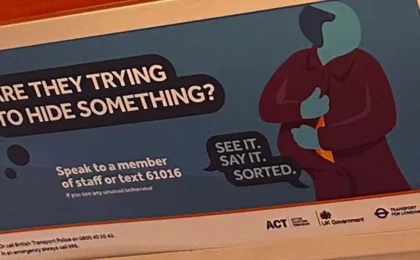
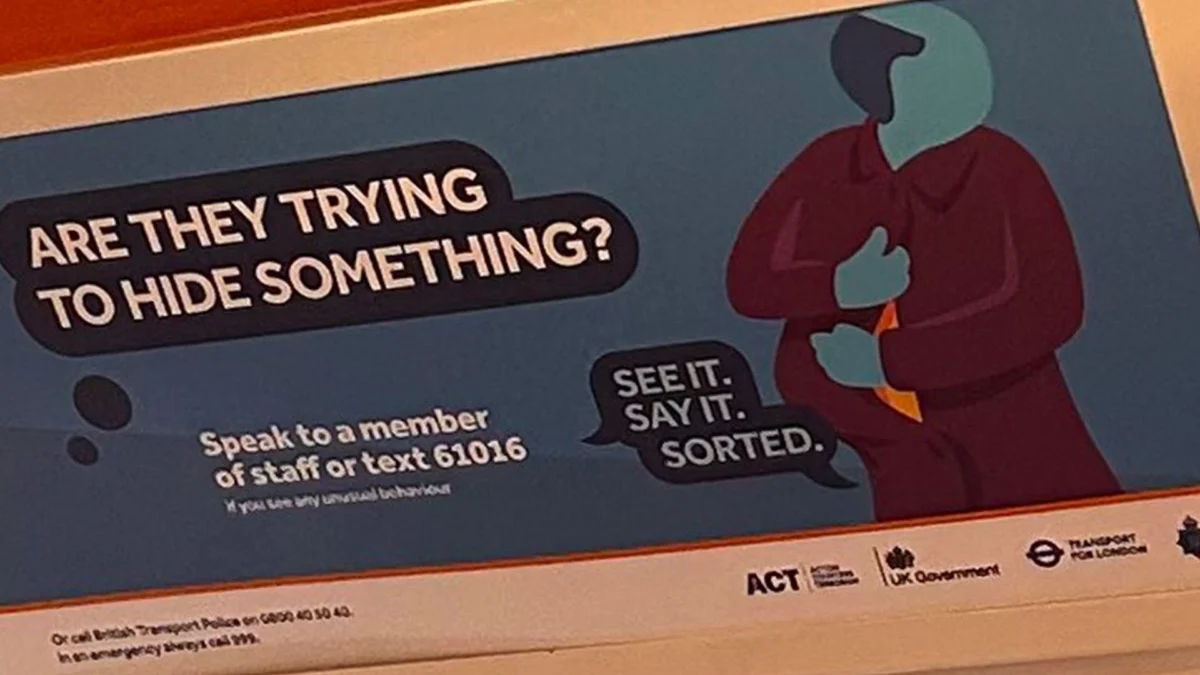
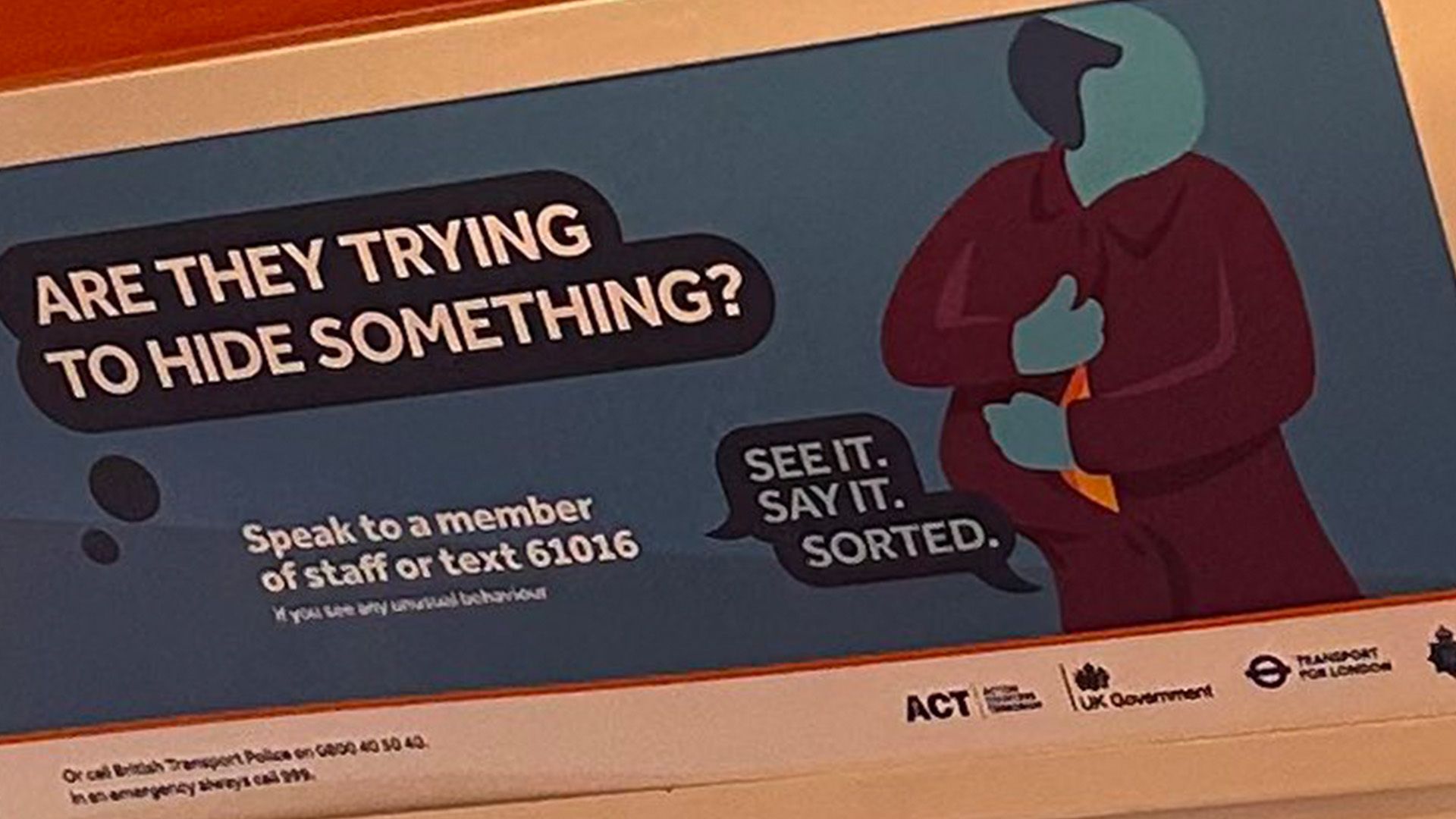
The controversy erupted in late October 2026, when eagle-eyed commuters began sharing images of a poster spotted across the London Underground network. At first glance, the ad appeared to feature a stylized illustration of a person wearing a hijab, paired with the provocative, unsettling tagline: "Are they trying to hide something?"
The image utilized a flat, featureless art style often referred to as "Corporate Memphis"—a design trend characterized by disproportionate limbs, generic facial features, and a lack of specific detail. While this style is intended to be inclusive and neutral, in this specific instance, it backfired spectacularly. Due to the lack of clear anatomical markers, the silhouette was widely interpreted as a woman in a headscarf. Given the xenophobic undertones often associated with such rhetoric, the combination of the visual and the text triggered an immediate backlash.
Social media platforms, particularly X (formerly Twitter), became a hotbed for criticism. Commuters were quick to label the ad as "appalling" and "disgusting," with many accusing TfL of promoting Islamophobia or, at the very least, employing tone-deaf imagery that encourages paranoia in an already anxious public space.
A Chronology of the Outrage
The timeline of this incident highlights the speed at which a local design failure can transform into a national PR crisis.
- October 24-25, 2026: Commuters begin noticing the posters on various Underground lines. Images are uploaded to social media, gaining traction among London-based accounts. The immediate sentiment is one of confusion followed by sharp indignation.
- October 25, 2026: Public pressure mounts as users tag the Mayor of London and TfL in posts. The discourse shifts from confusion over the artwork to accusations of institutional bias.
- October 26, 2026: TfL issues an initial response, distancing itself from the campaign. They claim the posters were "unauthorized" and the result of "flyposting"—the illegal act of pasting advertisements without permission.
- Late October 2026: Investigative scrutiny begins. Users point out that the posters appear to be part of a coordinated campaign, and some note that official news outlets had previously reported on the rollout of similar designs, casting doubt on TfL’s claim that they were unaware of the campaign’s origin.
- Ongoing: The debate continues as digital sleuths demand transparency regarding who authorized the installation of the posters if they were, as TfL claims, "illegal."
The Design Critique: The "Corporate Memphis" Problem
At the heart of this controversy is a broader design debate. The "Corporate Memphis" style—the ubiquitous, rubber-limbed, flat-color aesthetic popularized by Big Tech companies—is meant to be "safe." It is designed to be universally applicable, avoiding specific racial or cultural markers to appeal to the widest possible audience.
However, as this incident proves, the lack of definition can be dangerous. When you strip away the details of human expression and anatomy, you leave a vacuum that the viewer is forced to fill. In a public safety context, where the stakes are higher than a marketing campaign for a SaaS platform, this ambiguity is a liability.
"Suspicion, paranoia, and ethnically ambiguous abstract art—1984 is here in full force," remarked one user. The irony of using an art style designed to be "neutral" to convey a message of suspicion is not lost on design critics. By opting for a style that lacks nuance, the designers failed to account for the semiotics of their own work. The ad became a "Rorschach test," where commuters saw their own anxieties reflected back at them, rather than the intended message of public safety.
Official Responses and the "Flyposting" Defense
TfL’s response to the crisis was swift, but it has been met with skepticism. By classifying the posters as "flyposting," TfL effectively attempted to shift the narrative from a failed internal campaign to a security breach.
"Our media partner, our teams and contractors have been instructed to inspect trains and remove any unauthorised posters that are found on our network," a TfL spokesperson stated in a now-deleted social media post. "The incident has been reported to the British Transport Police as flyposting is an illegal activity."
However, this defense has holes. Critics have pointed out that the professional quality and the strategic placement of these posters across the network suggest a level of access that a typical flyposter would not possess. Furthermore, if the campaign was indeed sanctioned by some wing of the government or a partner agency, TfL’s attempt to wash its hands of the situation by blaming "unauthorized" actors may be an attempt to deflect accountability for a campaign that was clearly intended to run but was poorly received by the public.
Implications for Public Safety Messaging
The incident raises fundamental questions about the intersection of public policy and visual communication. When government agencies or transport authorities run safety campaigns, they have a duty of care to ensure that their messaging is not only effective but also socially responsible.
The Dangers of Ambiguity
In public spaces, communication must be explicit. The "Are they hiding something?" tagline is inherently accusatory. When paired with a visual that can be interpreted as targeting a specific religious or ethnic group, the ad ceases to be a public safety tool and becomes an instrument of social friction.
The Erosion of Trust
Trust in public institutions is fragile. When a major transit authority is seen to be behind—or even associated with—a campaign that appears to target minority groups, it erodes the sense of safety and belonging that is essential for a functioning urban environment. For the London Underground, a space that prides itself on being a melting pot of cultures, this is particularly damaging.
The Accountability Gap
The "flyposting" excuse highlights a significant gap in accountability. If an organization cannot track what is being placed on its own property, it suggests a systemic failure in operations. If they can track it and are simply lying about it, it suggests a failure in integrity. Either way, the public is left with a sense of unease.
The Broader Context: 2026 as the Year of the Cancelled Ad
This incident is not an isolated event. 2026 has become a year defined by "cancelled" advertisements—campaigns that were pulled, apologized for, or publicly shamed due to their lack of cultural awareness. From racy ads sparking Gen Z culture wars to corporate campaigns that fail to read the room, the landscape of advertising is becoming increasingly fraught.
The TfL incident serves as a masterclass in what not to do. It highlights the necessity of:
- Diverse Focus Groups: Ensuring that creative assets are vetted by individuals from diverse backgrounds to identify potential misinterpretations before they hit the streets.
- Contextual Awareness: Recognizing that the medium is the message. A digital ad on a smartphone is viewed differently than a physical poster in a subway car, where passengers are a captive, often stressed audience.
- Radical Transparency: When a mistake occurs, owning the failure is often more effective than issuing a defensive, potentially inaccurate statement.
Conclusion: A Lesson in Responsibility
As the investigation into the origins of the posters continues, the legacy of this campaign will likely be one of caution. It is a stark reminder that in the age of social media, where every citizen is a critic, there is no such thing as a "neutral" design.
The Corporate Memphis style, once the darling of the design world for its supposed simplicity, may have finally hit a wall. When public safety is at stake, the abstraction of human identity—while intended to be inclusive—can become a catalyst for the very division it seeks to avoid. For TfL and other public bodies, the path forward must involve a return to clarity, empathy, and an unwavering commitment to representing the diverse public they serve.
Whether this was an act of corporate negligence or a genuine security breach remains to be fully uncovered, but the damage to the brand’s reputation and the unnecessary distress caused to Londoners is already a historical fact. In the future, the authorities would do well to remember that if your ad requires a post-hoc investigation to determine its intent, it has already failed.