

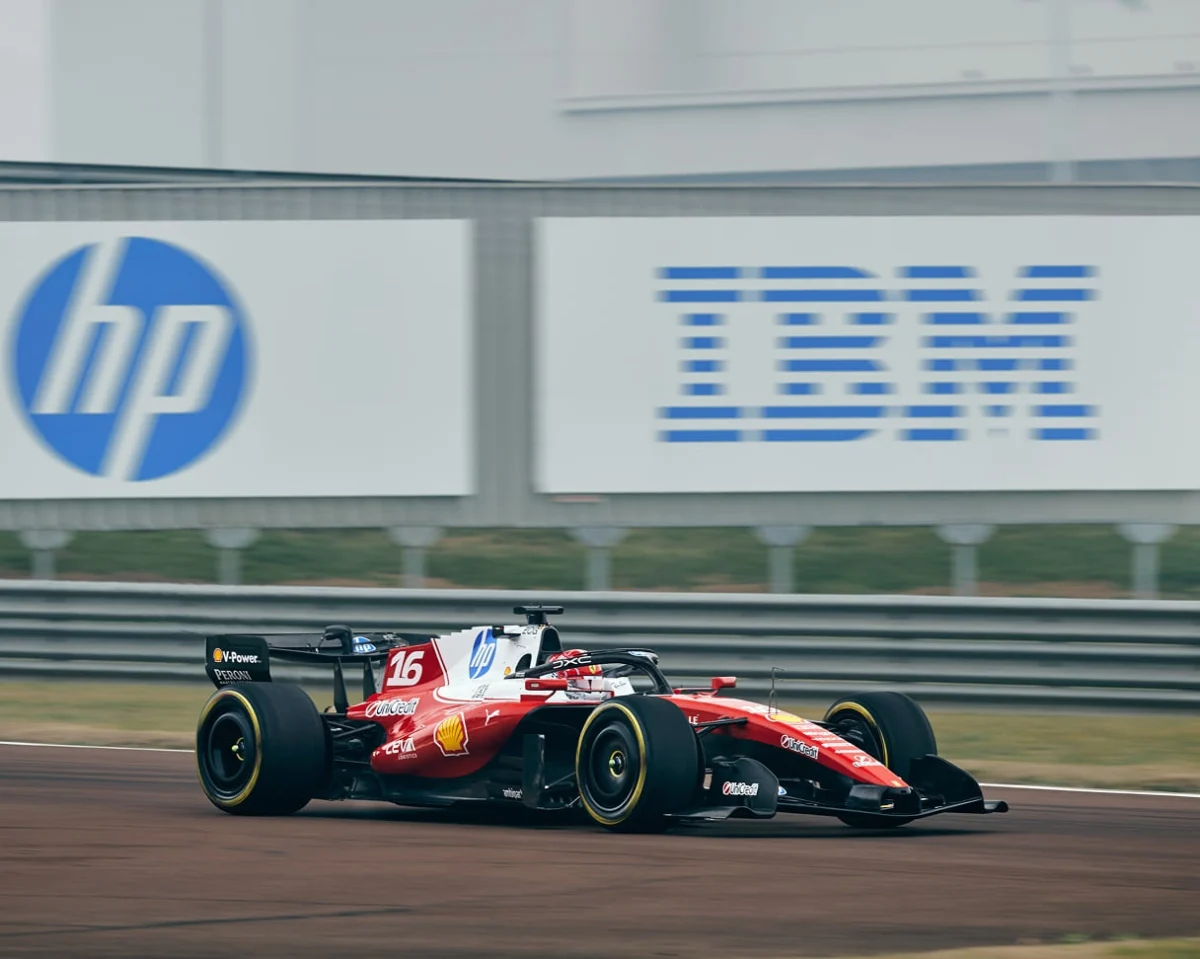
In the high-octane world of Formula One, victory is often measured in milliseconds. While the focus remains on the asphalt, a silent, high-stakes battle is unfolding in the cloud. As Formula One cements its status as a global media powerhouse, tech giants are rushing to the grid, transforming the sport into a living laboratory for artificial intelligence. Among the most significant of these strategic maneuvers is the recent partnership between IBM and Scuderia Ferrari HP, a collaboration that aims to transition the team from a legacy racing powerhouse into a data-driven, fan-centric digital media giant.
The Convergence of High-Speed Racing and High-End Tech
Two years ago, IBM identified a critical gap in its expansive sports sponsorship portfolio: Formula One. While the tech titan had long-standing ties to major events like the Masters and the U.S. Open, the rapid global ascent of F1—fueled in no small part by the “Netflix Effect” and the fly-on-the-wall docuseries Drive to Survive—made the sport an irresistible target.
F1 has evolved into a technological arms race. As teams like Ferrari battle for supremacy on the track, their partners—AWS, Oracle, and Anthropic—provide the computational muscle required to process massive datasets. For IBM, the partnership with Ferrari wasn’t just about brand visibility; it was about demonstrating the tangible utility of enterprise AI to a massive, global audience.
“They’re the winningest team in history,” Kameryn Stanhouse, IBM’s Vice President of Sports and Entertainment Partnerships, told TechCrunch. By aligning with the iconic prancing horse, IBM is not merely sponsoring a car; it is powering a digital transformation.
A Chronology of the Transformation
The journey toward this partnership began with a fundamental question: How does a team with a multi-generational legacy modernize its relationship with a rapidly diversifying fanbase?
- The Recognition of the Digital Gap: Ferrari realized that while their brand equity was untouchable, their digital infrastructure was stagnant. The team’s official fan app was, by many accounts, a static repository for basic race data—a destination users visited once and promptly abandoned.
- The Strategic Pivot: Recognizing the need for a "head of fan development," Ferrari brought in Stefano Pallard. His mandate was clear: transform the app from a utility into an immersive ecosystem.
- The IBM Integration: With IBM onboard as a technology partner, the overhaul began. The first phase focused on accessibility, including the somewhat surprising addition of an Italian language interface—a basic requirement that had been overlooked for years despite Ferrari’s deep Italian roots.
- The AI Deployment: IBM began integrating its watsonx AI platform to process the millions of data points generated during race weekends. This data is now being funneled into real-time storytelling, AI-generated race summaries, and personalized fan interactions.
- The Engagement Surge: Since the integration of IBM’s tech stack, the team has reported a 62% increase in engagement metrics over race weekends, signaling a successful shift in how fans consume content.
Decoding the Data: Supporting Metrics and Strategy
Formula One is essentially a data-processing business that happens to involve cars. During a single race, teams capture millions of data points per second—from tire pressure and fuel consumption to driver heart rate and steering angle.
The challenge, as Stefano Pallard explains, is "taking the data we get from the track and turning it into content that is easy to follow and engaging." While most teams rely on social media platforms to disseminate this information, Ferrari has taken the path less traveled by maintaining a robust, standalone fan app. This allows them to own the relationship with the user, rather than renting audience space from third-party social media conglomerates.
The data supports this strategy. Modern F1 fans—a demographic now heavily skewed toward Gen Z and women, according to recent F1 global surveys—demand more than just a highlight reel. They want the "why" and the "how." They want to know why it takes 24 people exactly two seconds to perform a pit stop. By using AI to distill complex telemetry into narrative-driven insights, Ferrari is successfully converting casual viewers into "Tifosi"—the fiercely loyal, deeply informed core of the Ferrari fanbase.
Official Perspectives: The Vision for 2030
The leadership at both IBM and Ferrari view this as a multi-year roadmap rather than a short-term marketing stunt.

"They actually see how it serves them," Stanhouse noted, referring to how AI-driven storytelling bridges the gap between technical data and human interest. For IBM, this is a showroom for the capabilities of enterprise AI. If they can make the complex, high-velocity data of F1 digestible, they can do the same for any global enterprise.
Pallard emphasizes that the goal is radical personalization. "The challenge is making each of them feel like we know them," he stated. By analyzing engagement signals—what articles a fan reads, how they interact with the AI chatbot, and their sentiment during race predictions—the app is evolving to offer a bespoke experience.
"The vision for the next five years is to make every fan feel like the experience was built for them," Pallard added. "Whether they have been with us for 30 years or 30 days, that is how you build loyalty that lasts."
The Implications for Global Sports Marketing
The IBM-Ferrari partnership is a harbinger of a broader trend in sports marketing: the death of the "one-size-fits-all" fan experience.
The Rise of the "Super-Fan" Ecosystem
For years, sports teams treated fans as a monolith. Today, the ability to segment fans using AI allows organizations to deliver different content to a casual American viewer and a die-hard Italian follower. This level of granularity, powered by IBM’s AI tools, is becoming the gold standard for global sports organizations.
AI as the Great Connector
Perhaps the most significant implication is the shift in how the public perceives AI. By embedding AI into the fabric of a beloved sport, companies like IBM are demystifying the technology. When a fan uses an AI companion in the Ferrari app to ask, "Why did Leclerc take that pit stop?" they are participating in an AI interaction that feels natural, helpful, and essential. This "stealth integration" of AI is arguably more effective for public adoption than any traditional marketing campaign.
The Sustainability of Digital Engagement
Ferrari’s focus on year-round engagement—moving away from the "tournament-only" model—reflects the changing landscape of professional sports. Fans no longer want to wait two weeks between races; they want behind-the-scenes content, technical insights, and interactive games during the downtime. By using AI to automate the production of this content, Ferrari is ensuring that the brand remains at the top of the fan’s mind, regardless of the race calendar.
Conclusion: The Race to Personalization
The partnership between IBM and Scuderia Ferrari HP is more than a commercial agreement; it is a blueprint for the future of fan engagement. As the lines between technology and sport continue to blur, the winners will not just be the teams with the fastest cars, but the teams with the best data architectures.
By leveraging IBM’s prowess in AI to turn cold, hard data into human-centric storytelling, Ferrari is ensuring its place at the front of the pack—not just on the circuit, but in the hearts and minds of a new, global generation of fans. As the sport continues to grow, one thing is certain: the most important race is the one happening in the digital cloud, and for the Tifosi, the finish line is just the beginning.












No comments yet. Be the first to join the conversation!