
 Asep Darmawan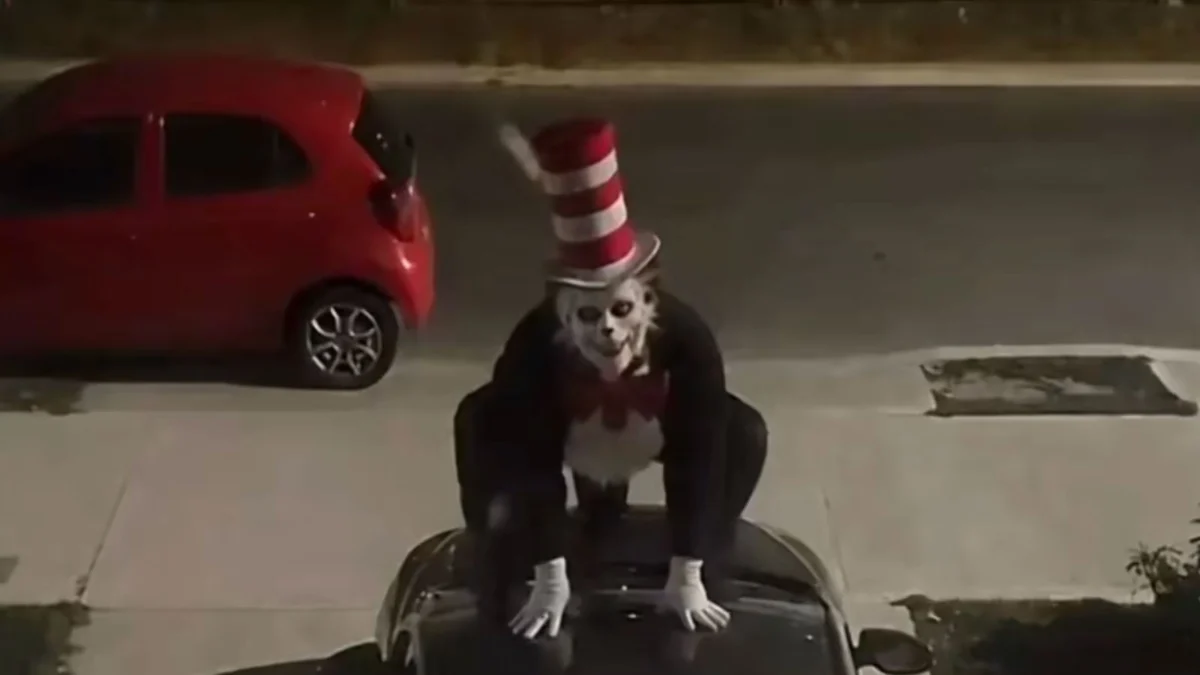
In an era where the lines between digital art and reality are increasingly blurred, a new breed of sophisticated online misinformation has emerged. Over the past several weeks, residents across the United Kingdom and Ireland found themselves gripped by an unsettling, bizarre phenomenon: reports of a sinister, towering version of Dr. Seuss’s iconic Cat in the Hat lurking on suburban doorsteps in the dead of night.
What began as a niche trend on TikTok quickly metastasized into a genuine public safety concern. The images, characterized by their grainy, low-light aesthetic, were expertly crafted to mimic the distinct visual signature of Ring doorbell security footage. These AI-generated fakes, depicting the tall, striped-hat character peering into windows or standing menacingly on driveways, spread with viral velocity, leaving thousands of homeowners convinced that a coordinated group of pranksters—or something far more inexplicable—was targeting their neighborhoods.
A Chronology of the Digital Infiltration
The surge in hysteria did not happen overnight; it followed a familiar, algorithmic trajectory common to modern viral trends.
Phase One: The Seed of Doubt
The trend reportedly began on TikTok in mid-2024, utilizing emerging generative AI tools that allow users to “inpainting” or overlay characters onto existing video footage. The early videos were labeled as satire, but as they were re-uploaded and stripped of their original context, the humor was lost. By the time the images reached community Facebook groups in cities like Sheffield, Glasgow, and Dublin, they were being presented as genuine security warnings.
Phase Two: The Viral Catalyst
As the images spread, they triggered the “confirmation bias” effect. Homeowners, already conditioned to be wary of doorbell camera footage due to the prevalence of package theft and real-world intrusions, began scrutinizing their own grainy, low-light footage for “shadows” that resembled the Cat. Panic began to mount in suburban WhatsApp groups, where neighbors shared the AI-generated images with captions warning others to lock their doors.
Phase Three: The Breaking Point
By the time the “sightings” hit the mainstream, the narrative had solidified. Parents reported keeping children home from school, and some residents even claimed to have heard “rustling” in their gardens. The sheer volume of non-emergency calls to local police departments reached a critical mass, forcing authorities to move from passive observation to active intervention.
The Official Response: Law Enforcement Steps In
As the hysteria reached fever pitch, police forces across the UK and Ireland were compelled to issue rare, formal statements to address a threat that existed only in pixels.
In a notably candid address, a spokesperson for the Wexford Garda in Ireland sought to puncture the balloon of fear. “In an unusual turn of events, we are hearing a lot about an elusive Dr. Seuss character doing the rounds online, apparently causing havoc in neighborhoods and towns across the country,” the statement read. “Fortunately, we can rule out the issue, which is essentially an AI prompt that places the character into images and videos of familiar places. To be clear, the Cat in the Hat was not in your driveway while you were out.”
Similar messages were disseminated by police in Glasgow and Limerick. These statements were not merely attempts to calm the public; they were necessary measures to restore the integrity of emergency reporting systems. In the digital age, a “viral prank” can quickly lead to a diversion of critical resources, potentially delaying responses to genuine emergencies.
Implications: The New Frontier of Misinformation
The Cat in the Hat incident is not an isolated curiosity; it is a symptom of a broader, systemic vulnerability in how the public consumes and validates visual information.
The Erosion of Visual Evidence
For decades, “seeing is believing” was the cornerstone of human perception. Today, that axiom is effectively dead. Generative AI allows for the creation of photorealistic imagery that can be tailored to specific local environments. By using the aesthetic of doorbell cameras—which are notoriously low-quality, high-contrast, and blurry—bad actors are finding it easier than ever to bypass the human brain’s skepticism filters.
The Ghost of 2016: Comparing the "Killer Clown" Craze
Security experts have drawn immediate parallels between this incident and the infamous 2016 “Killer Clown” panic. However, there is a fundamental difference in the mechanics of the threat. The 2016 phenomenon relied on physical actors, real costumes, and the tangible risk of encounter. While it caused mass hysteria, it was rooted in a physical reality.
The current AI-driven trend is more insidious. Because the “threat” is digital, it cannot be confronted, arrested, or caught. It is a phantom that exists in the cloud, yet its psychological impact remains entirely grounded in the real world. This “ghost in the machine” creates a sense of helplessness among the public, as there is no physical perpetrator to hold accountable.
Resource Depletion and Emergency Services
The implications for public services are severe. Authorities have pointed to the real-world consequences of these hoaxes, noting that every minute a dispatcher spends explaining that a cartoon character is not in a backyard is a minute taken away from a person in actual distress.
Last year, a similar “AI homeless man” prank resulted in a surge of 999 calls, including a traumatic incident where a parent, misled by an AI-generated image, became convinced an intruder was inside their home while their child was alone. Such instances illustrate how AI hoaxes are no longer just “pranks”—they are becoming a public health hazard.
The Broader Context: A History of AI Confusion
The Cat in the Hat hoax is merely the latest chapter in a growing list of AI-related societal disruptions. In January 2026, a high-profile case emerged involving one of TikTok’s most “wholesome” cat accounts. The account, which amassed hundreds of thousands of followers through heartwarming, high-definition videos of a kitten navigating daily life, was eventually revealed to be entirely AI-generated.
The revelation sent shockwaves through the platform, as thousands of followers expressed a sense of betrayal. If the public cannot trust the existence of a pet on their screen, how can they trust the existence of a prowler on their doorstep?
This erosion of trust has a compounding effect. When the public realizes they have been fooled by something as benign as a “wholesome cat,” they often swing toward hyper-vigilance, making them more susceptible to the next, more malicious hoax.
Strategies for Resilience in an AI-Saturated World
As we navigate this new reality, experts suggest that a “digital literacy” shift is required. The public must be trained to treat doorbell footage and social media alerts with the same skepticism they apply to political rumors or chain emails.
- Verify the Source: Before sharing, consider the origin. Is this a verified news outlet or an anonymous account?
- Contextualize the Footage: Does the footage show identifiable landmarks, or is it a generic nighttime shot that could have been filmed anywhere?
- Check Official Channels: If a neighborhood threat is perceived, check the official social media feeds of local police or community watch groups before inciting panic in local chat groups.
- Recognize the “AI Aesthetic”: While AI is getting better, look for unnatural lighting, inconsistent shadows, or characters that appear to “glide” rather than walk.
Conclusion: The Path Forward
The “Cat in the Hat” panic serves as a stark warning for a future where generative technology is ubiquitous. While the prank itself was largely harmless in terms of physical damage, the cost in terms of public anxiety and wasted police resources is significant.
We are living through a transition period. Just as the invention of the printing press required a new set of rules for the public to discern truth from fiction, the generative AI era requires a fundamental update to our collective skepticism. Until then, the digital phantoms—whether they are sinister cats or other manufactured threats—will continue to haunt our screens, and more importantly, our peace of mind.
The challenge for society is to learn how to appreciate the creative potential of AI without allowing it to become a weaponized tool for mass hysteria. Until that balance is struck, the best defense against a digital monster is, perhaps, to simply turn off the phone, look out the window, and trust the evidence of one’s own eyes over the viral feed.


 Suro Senen
 Pevita Pearce




