

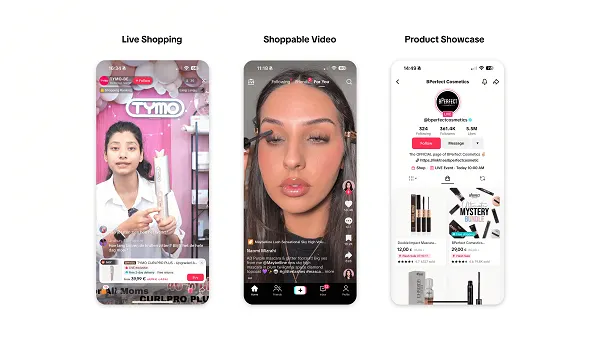
In a decisive move to solidify its status as a global retail powerhouse, TikTok has officially announced the expansion of its "TikTok Shop" feature into four new European markets: Austria, Belgium, the Netherlands, and Poland. Beginning June 15, millions of users and thousands of retailers across these nations will gain the ability to buy and sell products directly within the TikTok interface. This expansion marks a significant milestone in the company’s long-term strategy to transform its platform from a destination for short-form entertainment into a robust, integrated e-commerce ecosystem.
The Strategic Shift: From Entertainment to E-Commerce
For years, TikTok has functioned primarily as a discovery engine—a place where trends are born and viral content thrives. However, the company’s leadership has long eyed the lucrative potential of "in-stream commerce," a model pioneered by its sister app, Douyin, in China. By embedding the point-of-purchase directly into the viewing experience, TikTok aims to eliminate the friction associated with traditional, search-first e-commerce models.
The premise is simple yet revolutionary: rather than a consumer actively searching for a product on a static website, the product finds the consumer through algorithmically curated, shoppable videos and interactive livestreams. This "entertainment-first" approach is designed to capture impulsive, discovery-based shopping habits, turning passive viewers into active buyers without them ever needing to leave the app.
Chronology: A Path of Trial, Error, and Rapid Growth
TikTok’s journey into European e-commerce has not been without its turbulence. The company’s initial foray into the United Kingdom in 2022 was met with significant headwinds. Early efforts to push livestream commerce were hampered by operational bottlenecks, reports of intense workplace pressure, and a lukewarm reception from consumers accustomed to traditional digital retail. Internal reports from that period pointed toward overly aggressive sales targets and logistical hurdles that threatened to derail the project.
However, the company’s willingness to pivot has proven vital. Following the initial struggles, TikTok reassessed its strategy, focusing on sustainable growth and category-specific wins. The strategy paid off significantly: by last year, the U.K. market saw a 60% year-over-year growth in the beauty category alone, with TikTok establishing itself as the fourth-largest beauty retailer in the country.
Bolstered by this success, the company launched its broader EU expansion in late 2024 and early 2025, targeting major economies including France, Germany, Italy, Spain, and Ireland. The rapid onboarding of over 100,000 European businesses in just a few months signaled that the platform had finally cracked the code for Western market penetration.
Supporting Data: The Scale of the Opportunity
The sheer scale of the opportunity is best illustrated by the disparity between the platform’s current global performance and the performance of its Chinese counterpart. In 2025, Douyin, the Chinese version of the app, generated an staggering $500 billion in Gross Merchandise Volume (GMV). In comparison, TikTok recorded approximately $26.2 billion in GMV for the first half of 2025.
While the numbers show that TikTok has a long way to go to reach Douyin-level saturation, the trajectory is undeniably upward. Between August 2025 and February 2026, the European markets of France, Germany, Italy, Spain, and Ireland reported triple-digit growth in daily GMV. These metrics underscore that once the infrastructure is in place, the "TikTok Shop" model is capable of generating massive, rapid revenue streams.
Official Responses and the "Sell Across Europe" Initiative
The company is not merely opening doors; it is building a comprehensive logistics network to ensure these new markets remain viable. Central to this is the "Sell Across Europe" initiative. This program is designed to lower the barrier to entry for small-to-medium enterprises (SMEs) by providing a unified service for cross-border trade.
According to a company spokesperson: "Shortly after the initial market launch, businesses will be able to scale their growth across other EU markets where TikTok Shop is available via the ‘Sell Across Europe’ feature. This intra-EU service allows sellers to easily localize product descriptions and ship directly to other markets using TikTok Shop-partnered logistics providers or approved carriers."
Furthermore, the expansion includes a robust creator affiliate network. This allows approved creators across the EU to act as digital storefronts, promoting products to their followers and earning commissions on every sale. This creates a symbiotic relationship between the platform, the creator, and the merchant, ensuring that the shopping experience remains native to the platform’s social roots.
Implications: A New Retail Paradigm
The implications of this expansion are far-reaching for both the digital advertising landscape and the traditional retail sector.
1. The Death of the "Search-First" Model?
Traditional e-commerce is largely intent-based; the user knows what they want and searches for it. TikTok is flipping this dynamic on its head by focusing on "discovery-based" shopping. By leveraging its powerful recommendation engine, TikTok can put products in front of users before they even realize they want them. This could pose a significant threat to established search giants and traditional online marketplaces that rely on a user’s prior intent.
2. The Rise of the "Creator-Merchant"
The creator economy is shifting from a model based purely on brand sponsorships to one based on direct sales. By empowering creators to act as affiliates, TikTok is turning its most influential users into a distributed sales force. This is particularly effective in niches like beauty, fashion, and home goods, where the personal endorsement of a creator carries more weight than a standard display advertisement.
3. Logistical Challenges and Regulatory Hurdles
While the business model is sound, TikTok faces significant hurdles in scaling. As seen in the U.K. in 2022, scaling an e-commerce operation requires sophisticated logistics and customer service infrastructure. Expanding into four new markets simultaneously—each with unique tax, labor, and consumer protection laws—will test the company’s operational resilience. Furthermore, European regulators are notoriously vigilant regarding data privacy and the influence of non-European tech platforms, which could lead to increased scrutiny as the platform’s commercial footprint grows.
4. The Competitive Landscape
Amazon, the undisputed king of e-commerce, has largely relied on convenience and speed. TikTok’s strategy is different; it relies on engagement and FOMO (fear of missing out). By keeping the user within the app, TikTok maintains a level of "stickiness" that few other platforms can match. If the company continues its current growth trajectory, it will force traditional retailers to re-evaluate their digital strategies, likely pushing them to invest more heavily in social commerce and influencer partnerships to keep pace.
Conclusion: The Road Ahead
The expansion into Austria, Belgium, the Netherlands, and Poland is more than just a geographic milestone—it is a proof-of-concept for TikTok’s global e-commerce ambitions. The company has successfully navigated its early failures to build a model that resonates with both European consumers and business owners.
With 200 million monthly active users in Europe, the potential for growth is immense. If TikTok can maintain the momentum it has built in the U.K. and its other recent EU markets, it is well-positioned to become a dominant player in the retail space. As the lines between content creation and commercial consumption continue to blur, TikTok is no longer just an app for entertainment—it is becoming a fundamental pillar of the modern retail experience.
The question remains: can TikTok maintain the quality of service and the trust of its users as it scales its commercial operations? Given the success of its "Sell Across Europe" framework and its recent triple-digit GMV growth, the answer seems to lean toward "yes." For now, the platform is doubling down on its commitment to make every video a potential storefront, a vision that, if fully realized, will permanently alter how the world shops.












No comments yet. Be the first to join the conversation!