

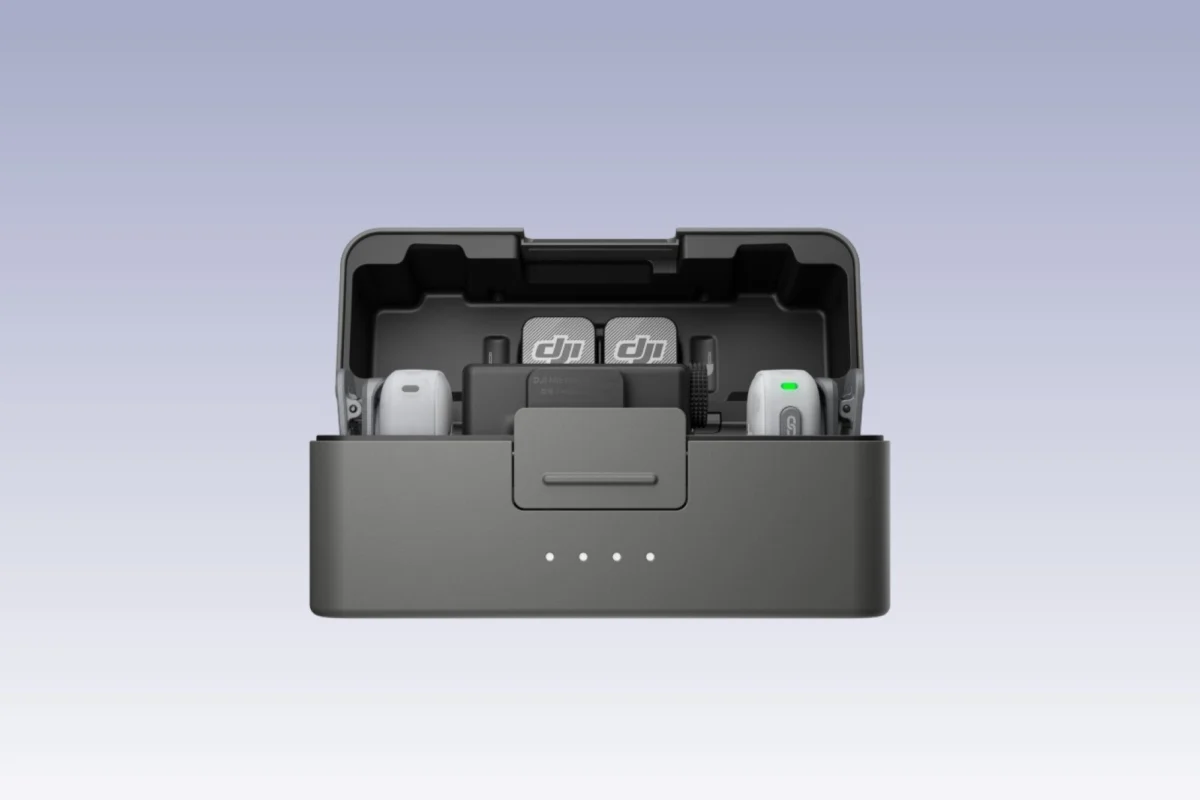
Last year, the original DJI Mic Mini made waves in the creator economy, positioning itself as the gold standard for portable, high-fidelity audio capture on a budget. It combined the convenience of a featherweight form factor with the kind of acoustic reliability usually reserved for high-end studio equipment. Now, DJI has unveiled its successor: the DJI Mic Mini 2. While the product is currently rolling out to global markets with significant fanfare, it comes with a glaring caveat—at least for those living in the United States.
Main Facts: What’s New in the Mic Mini 2?
The DJI Mic Mini 2 retains the core philosophy of its predecessor while introducing a few aesthetic and functional refinements aimed at modern content creators. First spotted by The Verge, the hardware is now available in most international territories.
The Hardware Breakdown
The entry-level bundle, priced at approximately €59, includes a dedicated charging case, a wireless receiver, and the mic transmitter itself. For power users, DJI is also offering a more robust €99 configuration. This premium bundle upgrades the experience by providing a larger receiver, two transmitter units, and an expanded charging case, making it an ideal choice for dual-host interviews or collaborative vlogging.
Key Upgrades
While the core audio technology remains largely consistent with the high standards set by the first-generation model, the "2" series introduces two notable features:
- Magnetic Swappable Covers: Perhaps the most visually distinct update is the introduction of a series of magnetic, swappable mic covers. These allow creators to customize the look of their microphones, either to blend them into clothing for a discreet look or to use them as a bold fashion statement.
- Integrated Voice Presets: DJI has baked new voice presets into the system. These presets are designed to help creators achieve a "broadcast-ready" sound profile with minimal post-production, catering to the rapid-turnaround demands of platforms like TikTok, Instagram Reels, and YouTube Shorts.
Chronology: The Evolution of DJI’s Audio Lineup
To understand the current release, one must look at the trajectory of DJI’s expansion beyond the skies.
2022–2023: The Audio Pivot
DJI, historically known as the undisputed king of consumer drones, began a strategic shift to diversify its product ecosystem. The original DJI Mic and the subsequent Mic Mini were the results of this transition, aimed at capturing the lucrative creator market. The Mic Mini was widely lauded for its compact size, which allowed creators to attach it to lapels without the heavy, sagging weight associated with older wireless systems.
Early 2024: Mounting Regulatory Pressure
As the year progressed, the relationship between DJI and the U.S. government entered a period of heightened scrutiny. This tension, fueled by ongoing geopolitical trade debates and data security concerns, began to manifest as logistical delays for new product launches.

Late 2024/Early 2025: The Mic Mini 2 Launch
The international release of the Mic Mini 2 represents the latest casualty of these broader regulatory headwinds. While consumers in Europe, Asia, and other regions are currently enjoying the hardware, U.S. customers remain effectively locked out of the official distribution channel.
Supporting Data: Why the U.S. Market is Facing a Blackout
The absence of the dollar sign in the official pricing guide for the Mic Mini 2 is not a clerical error; it is a symptom of a systemic issue. DJI products are currently facing unprecedented delays in entering the U.S. market, a situation that has impacted everything from their newest drone releases—such as the rumored Osmo Pocket 4—to, now, their entry-level audio gear.
The Regulatory Landscape
The U.S. Department of Commerce and various legislative bodies have been reviewing the operations of several Chinese technology firms. For DJI, this has meant that every new release undergoes a rigorous, often lengthy, compliance review process. While the company maintains that its products are safe and that it adheres to all international standards, the current political climate in Washington has created a "wait-and-see" approach for new hardware imports.
The Consumer Impact
For the average American creator, this creates a frustrating reality. The Mic Mini 2 offers legitimate improvements in workflow efficiency, particularly with its new voice presets. Without an official U.S. launch, American creators are forced to either import the devices through third-party grey markets—often at a markup and without the benefit of local warranty support—or stick with aging hardware.
Official Responses and Corporate Strategy
DJI has remained relatively tight-lipped regarding specific timelines for a U.S. release. In previous statements regarding product delays, the company has emphasized its commitment to the global market while acknowledging the "complex regulatory environment" in North America.
Industry analysts suggest that DJI is currently prioritizing markets where the path to retail is unobstructed. By launching in Europe and Asia first, the company maintains cash flow and ensures that its R&D costs for the Mic Mini 2 are recouped while they navigate the bureaucratic red tape in the U.S.
When asked about the lack of a U.S. release, a spokesperson for the industry typically points toward "logistical optimization," but the reality remains clear: the delay is almost certainly tied to the ongoing geopolitical friction between Washington and Beijing regarding the handling of user data and potential ties to defense infrastructure.

Implications: What This Means for the Creator Economy
The situation surrounding the Mic Mini 2 has profound implications for both the audio equipment industry and the creators who rely on these tools.
1. The Fragmentation of the Creator Toolset
If this trend continues, we may see a bifurcation in the creator market. Creators in different parts of the world may eventually have access to entirely different ecosystems of hardware. This could lead to a scenario where software and app integrations—which are vital for devices like the Mic Mini 2—are optimized for specific regional versions of the hardware, further complicating the lives of global creators who collaborate across borders.
2. The Rise of the "Grey Market"
As demand for the latest tech outpaces official distribution, unauthorized resellers are stepping in to fill the void. While this gives eager early adopters a way to acquire the gear, it exposes them to significant risks. Without a manufacturer’s warranty, a faulty unit becomes an expensive paperweight. Furthermore, there is no guarantee that the software updates required for the Mic Mini 2 to interface with U.S.-based mobile operating systems will function as intended.
3. A Call for Transparency
The tech community is increasingly demanding more transparency regarding these "indefinite delays." Creators are not merely buying a microphone; they are investing in a brand’s ecosystem. When a brand like DJI becomes synonymous with "unavailability" in the world’s largest economy, it creates an opening for competitors like RØDE or Sennheiser to capture the loyalty of U.S.-based creators who are tired of waiting.
Conclusion: A High-Performing Tool Stuck in Limbo
The DJI Mic Mini 2 is, by all accounts, a compelling iteration of an already excellent product. The move toward magnetic, swappable covers is a clever design choice that addresses the "fashion" aspect of content creation, while the internal voice processing upgrades provide genuine utility for those on the move.
However, the product’s success is currently defined less by its technical specifications and more by its restricted availability. For the U.S. consumer, the Mic Mini 2 serves as a reminder of how quickly global trade politics can disrupt the creative process. Until the regulatory clouds clear, American creators are left in a difficult position: wait for an uncertain release date, or look toward alternatives that, while perhaps less innovative, are at least available on store shelves.
For now, the Mic Mini 2 remains a tantalizing piece of tech—one that perfectly captures the current state of the global hardware market: highly capable, globally desired, and unfortunately, held hostage by the realities of modern geopolitics. Whether this gap in the market will be closed by a breakthrough in trade negotiations or by the rise of a new, non-restricted competitor, remains the most pressing question for the industry in the coming months.











No comments yet. Be the first to join the conversation!