Lina Irawan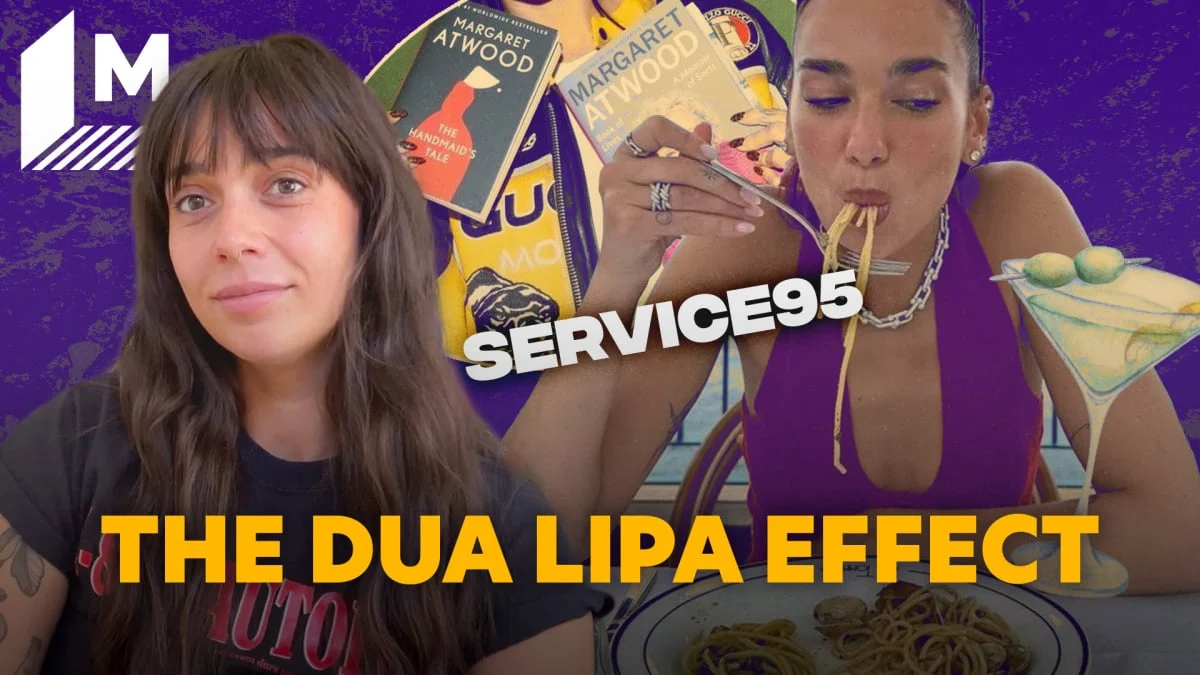
In the hyper-curated landscape of contemporary social media, where the line between personal identity and personal brand has all but vanished, Dua Lipa has emerged as an unlikely archetype. She is, by every traditional metric, a global pop superstar—possessing the requisite wealth, fame, and aesthetic refinement that usually distances a celebrity from their audience. Yet, unlike the polished, inaccessible glamour of her peers, Lipa’s digital footprint has become the definitive mood board for a specific, modern fantasy of adulthood.
For a generation defined by economic instability and the crushing weight of "hustle culture," Lipa represents a tantalizing alternative: the possibility of a life built around curiosity, leisure, and genuine enrichment rather than mere productivity.
The Anatomy of a Modern Icon
Dua Lipa’s Instagram feed is not merely a collection of selfies; it is a meticulously crafted narrative of a life well-lived. While many celebrities use their platforms to signal status through displays of hyper-consumption, Lipa’s curation leans into the experiential. Her posts feature a rhythmic cycle of travel, high-concept literature, art-house cinema, local gastronomy, and deep-rooted social connections.
It is a version of celebrity that feels remarkably human. She isn’t just selling a luxury handbag; she is selling the idea that pleasure is a valid, worthy end-goal. Through her editorial platform, Service95, Lipa has formalized this vision. Positioned as an "ultimate cultural concierge," the platform—which encompasses a newsletter, a podcast, and a robust book club—functions as a bridge between her curated aesthetic and the audience’s desire for intellectual and cultural expansion.

Chronology of a Lifestyle Movement
The rise of the "Dua Effect" did not happen in a vacuum; it occurred at the precise intersection of post-pandemic burnout and the exhaustion of the digital "grind."
- 2020-2021 (The Pivot): During the global lockdowns, the cultural focus shifted toward home-bound hobbies, reading lists, and "slow living." Lipa, already a global star, began emphasizing her personal interests—books, cooking, and niche travel—as core components of her brand.
- 2022 (The Launch of Service95): The introduction of Service95 marked a transition from passive influencer to active curator. By formalizing her recommendations, she moved her aesthetic from "glamorous singer" to "lifestyle authority."
- 2023-2024 (The "Euro Summer" Peak): As travel returned to the global stage, Lipa’s documentation of her European summers became the gold standard for "It Girl" travel. Her ability to frame international travel as a quest for cultural immersion—rather than a display of wealth—resonated deeply with a travel-starved Gen Z.
- 2025-2026 (Mainstream Consolidation): By mid-2026, the "Dua Effect" has become a shorthand for a life that balances high-intensity work with high-intensity living. The trend has now been codified in the cultural lexicon as a rebellion against the "always-on" nature of the modern digital economy.
Supporting Data: The Decline of the Grind
The obsession with Lipa’s lifestyle is supported by a growing body of sociological evidence suggesting that Gen Z is fundamentally rejecting the work-centric ethos that dominated the 2010s.
Recent reports indicate that young professionals are increasingly prioritizing work-life boundaries, with a marked decline in the popularity of "side-hustle" culture. According to labor market trends from early 2026, there is a measurable shift in job-seeking priorities, where "flexibility" and "personal enrichment" now outrank salary alone as top motivators for young talent.
Furthermore, the "creator economy" has paradoxically fueled this desire for a "Dua-esque" existence. Creators are increasingly expected to make their lives their work, leading to a profound sense of "burnout-as-content." Lipa provides a counter-narrative: she demonstrates that it is possible to maintain a high-profile, professional career while simultaneously cultivating a private, deeply enriched life that exists outside the lens of the camera.

The Paradox of Representation: Is It Attainable?
The core tension of the Dua Effect lies in its inherent inaccessibility. While the vibe is relatable, the means of production are not.
Most people cannot casually traverse the globe, dining at the restaurants Lipa recommends or accessing the cultural institutions she frequents. Even her partnerships—such as her collaborations with tech giants like Google for curated city guides—highlight the commercial machinery behind what appears to be organic "discovery."
Critics argue that by framing an extremely wealthy lifestyle as "leisure," Lipa risks aestheticizing privilege. When a multi-millionaire pop star suggests that the secret to a good life is reading more books and visiting more museums, the advice can ring hollow to those whose time and energy are entirely consumed by the struggle for housing and financial stability.
However, proponents of the "Dua Effect" argue that the material reality is secondary to the mentality. The appeal isn’t necessarily the beach in Albania or the hotel in Tokyo; it is the deliberate choice to value one’s own curiosity. It is an aspirational framework that encourages individuals to carve out space for themselves, regardless of their economic standing.

Implications for Future Cultural Consumption
The "Dua Effect" signifies a broader shift in how society views celebrity. We are moving away from the era of the "relatable" influencer—who tries to make their mundane life look like a reality show—and toward the era of the "curator."
This shift has several implications:
- The Rise of Intellectualized Influencing: Audiences are increasingly demanding substance alongside style. Book clubs, newsletters, and long-form podcasts are becoming essential components of the modern celebrity brand.
- The Death of the "Grind" Aesthetic: Performative exhaustion is falling out of favor. In 2026, the new flex is not how little you sleep or how much you work, but how effectively you can balance your output with meaningful, high-quality input (travel, art, social bonds).
- The Commercialization of "Slow Living": As brands scramble to capitalize on this trend, we are seeing a proliferation of "curated lifestyle" marketing. From travel apps to book subscriptions, the "Dua Effect" is being packaged into services designed to help the average consumer mimic the aesthetic of a life well-lived.
Conclusion: The Fleeting Nature of the Trend
Like all digital phenomena, the obsession with the Dua Lipa lifestyle will eventually peak and dissipate. The "Dua Effect" is a mirror of our current societal desires—a reflection of the collective hope that, even in a world defined by volatility and intense labor, there is still space for the human spirit to expand through art, exploration, and connection.
Dua Lipa’s success lies in her ability to perform this balance with effortless conviction. Whether or not it is sustainable for the average person to live this way is almost beside the point. For now, the internet is happy to treat her life as the blueprint for a version of adulthood that is finally, mercifully, not defined by the grind. As we look toward the latter half of the 2020s, the question remains: will we learn to live for ourselves, or will we remain content to simply watch someone else do it for us?

 Nana
Nana
 Jia Lissa