
 Lina Irawan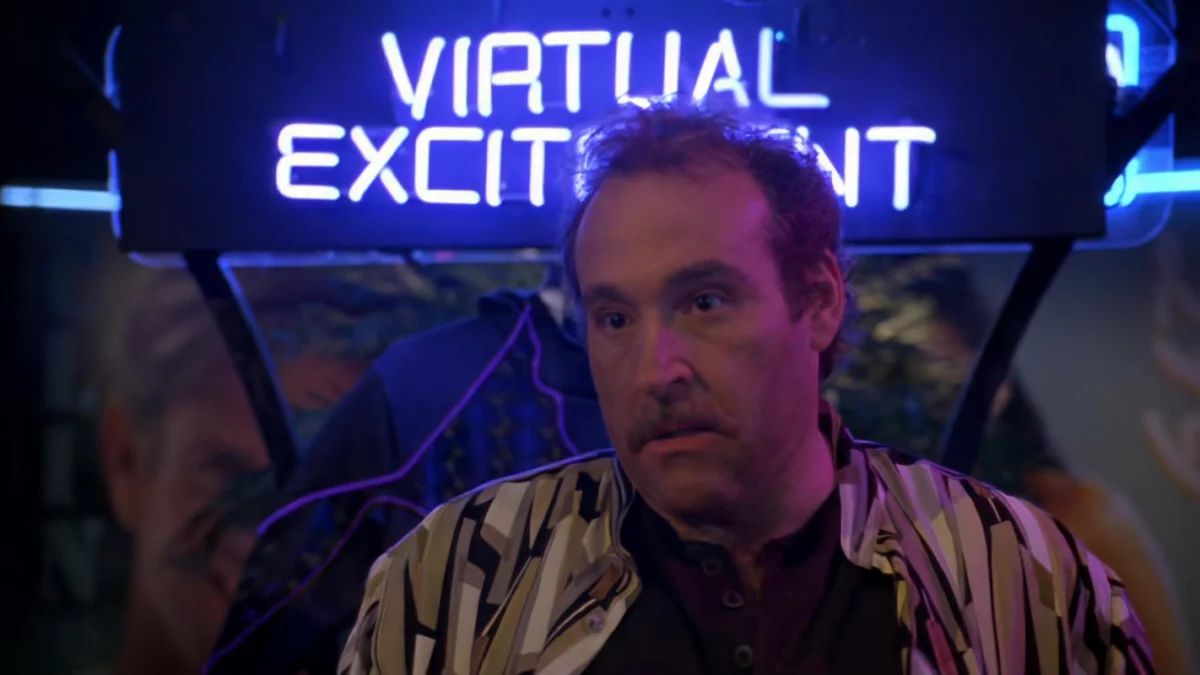
Date: November 8, 1998
Subject: Station Security, Diplomatic Relations, and Metaphysical Anomalies
Case File: TNTCF3
The history of Babylon 5 has always been defined by its precarious position at the intersection of galactic politics, human ambition, and the inexplicable nature of the universe. Few incidents encapsulate this volatile mixture as effectively as the events surrounding the arrival of the Soul Hunter known as "Sarsaparilla" and the recovery of the Ralgan soul globe. As the station navigates the transition following the departures of Commander John Sheridan, Susan Ivanova, and Michael Garibaldi, the arrival of a mysterious, ancient, and highly dangerous artifact serves as a poignant reminder that even in a post-war era, the galaxy remains a place of profound, often tragic, mystery.
I. The Discovery and the Descent into Chaos
The genesis of this crisis occurred on a desolate, archaeologically significant alien world. Dr. Robert Bryson, a man whose professional reputation for uncovering lost history was matched only by his reckless pursuit of it, led an expedition into terrain that defied traditional excavation. His team sought remnants of a long-lost civilization, but they found something far more volatile: a subterranean vault containing millions of glowing, sentient spheres—the encapsulated souls of an entire species.

When Dr. Bryson’s crew perished due to an ancient, automated defense mechanism, he alone survived, escaping with a single, potent globe. His arrival on Babylon 5 was not merely an academic visit; it was the catalyst for a series of events that would see the station’s infrastructure compromised and its leadership pushed to the brink.
II. Chronology of Events
The escalation of the crisis can be tracked through the following timeline:
- Initial Arrival: Dr. Robert Bryson docks at Babylon 5, ostensibly to review Edgars Industries’ black-ops projects, but in reality, to harness the power of the soul globe he retrieved.
- The Holobrothel Controversy: Simultaneously, the station is plagued by a new, controversial business—a "holobrothel" operated by Jacob Mayhew. This facility, which uses haptic suits to simulate physical intimacy through light projections, inadvertently provides a physical medium for the disembodied souls from Bryson’s globe.
- The Soul Hunter Emerges: A Soul Hunter ship exits the jumpgate, signaling a desperate hunt for the stolen Ralgan souls. The arrival of "Sarsaparilla," portrayed by Martin Sheen, introduces a complex moral dichotomy. Unlike the more aggressive Soul Hunters encountered years prior, this entity operates with a calm, analytical, and surprisingly diplomatic demeanor.
- The Infiltration: The Ralgan souls, driven to madness by ten millennia of confinement, begin to manifest within the station’s systems. They use the holobrothel’s projection technology to gain physical form, leading to a direct confrontation with Captain Elizabeth Lochley.
- Resolution and Sacrifice: The crisis culminates on Grey 4, where the souls are finally confronted. Sarsaparilla offers his own life to be absorbed into the globe, providing the necessary guidance for the Ralgans to reach their ultimate, long-delayed evolution.
III. Supporting Data: The "Soul Hunter" Phenomenon
The Soul Hunters are a nomadic, quasi-religious order dedicated to the collection of sentient souls moments before death. Their self-appointed role as "preservers" has historically been met with intense skepticism by the Interstellar Alliance. However, the revelation regarding the Ralgans adds a harrowing layer to their history.

The Ralgan souls, it was discovered, were not "dying" ten thousand years ago as the Soul Hunters claimed. They were in the process of ascension—a transition into a non-corporeal state of higher existence. The Soul Hunters, blinded by their own dogma of preservation, intervened and effectively trapped a billion beings in a state of stagnant misery. This systemic error highlights the dangers of absolute belief systems that refuse to account for the evolving nature of sentient life.
IV. Administrative and Diplomatic Implications
The administrative burden of this event fell heavily on Captain Elizabeth Lochley. Managing a station that is simultaneously hosting a potentially hostile Soul Hunter, a rogue scientist, and a litigious entrepreneur like Jacob Mayhew required a delicate balance of military precision and diplomatic tact.
The Legal Landscape
The conflict regarding the holobrothel—a business that operated in a legal gray area—serves as a case study in the difficulties of maintaining order on a neutral station. When the business was destroyed during the tactical response to the soul-possession crisis, the station faced significant legal threats. However, Captain Lochley’s swift invocation of military necessity, combined with a countersuit regarding the unauthorized replication of her likeness for illicit entertainment, effectively neutralized the threat of litigation.

The Edgars Industries Factor
Michael Garibaldi’s presence on the station, ostensibly to audit the black-ops projects inherited from Edgars Industries, added a layer of complexity. Garibaldi, currently operating as a private citizen, demonstrated that his influence and his instinct for security remain as sharp as ever. His ability to navigate the undocumented, shadow-funded projects left behind by William Edgars provides a necessary, if difficult, service to the stability of the Alliance.
V. Philosophical Implications: Evolution vs. Preservation
The core conflict of the incident—the forced stagnation of the Ralgan people—raises existential questions about the nature of the soul and the right to transition. Throughout the history of the station, we have witnessed beings move beyond the physical form—from the mysterious Ironheart to the Vorlons and the Shadows. These transitions are generally viewed as the natural progression of sentient life.
By preventing this, the Soul Hunters did not preserve the Ralgans; they arrested them. This incident provides a vital lesson for the future of the Interstellar Alliance: that the preservation of the past must never come at the cost of the future. The sacrifice of Sarsaparilla, who ultimately recognized his order’s failure, provides a rare moment of redemption in a history otherwise marked by hubris.

VI. Critical Reflection
In the years since the Shadow War, the galaxy has been forced to confront the reality that the "Third Age" of humanity is not merely about building ships or trade routes, but about understanding the fundamental truths of existence. The River of Souls serves as a bridge between these two realities. It reminds us that even when the great wars are over, the struggle for agency—the right to die, to live, and to evolve—remains the most important battle of all.
The performance of Martin Sheen as the Soul Hunter offers a profound contrast to the traditional tropes of the "grim reaper" figure. His depiction of a being who finds grace in his own finality provides a sense of closure to the Ralgan narrative. Similarly, the performance of Ian McShane as the obsessed Dr. Bryson captures the tragic human cost of seeking immortality through the violation of others.
VII. Conclusion
As Babylon 5 looks toward the future, the lessons of the Ralgan globe will surely resonate in the halls of the Advisory Council. The station remains the last, best hope for peace, but peace is not merely the absence of war—it is the presence of respect for the autonomy of all species, living or dead. The resolution of the soul-trapping crisis confirms that while we may not fully understand the "River of Souls," we have a duty to ensure that those flowing within it are allowed to reach their destination on their own terms.

Report Prepared By: Station Archive Division, Babylon 5
Distribution: Interstellar Alliance Council, EarthForce Command, Security Division

 Nana Wu
 Ali Ikhwan





