

With the May 31 eligibility cutoff for the 78th Primetime and Creative Arts Emmy Awards rapidly approaching, the television industry is once again bracing for the annual debate regarding the "Best Animated Series" category. As voting opens on June 11, industry observers and critics are taking stock of a landscape that feels increasingly caught between the comfort of legacy giants and the desperate need for fresh, innovative storytelling.
The Emmy Awards have long been criticized for a certain degree of institutional inertia. In the world of television recognition, prestige often follows a predictable path: once a show captures the attention of the Television Academy, it tends to remain in the nomination pool for years, regardless of fluctuating creative quality or waning public discourse. This "incumbent bias" creates a formidable barrier to entry for new series, mirroring the struggles faced by critically acclaimed live-action dramas of the past, such as Halt and Catch Fire or The Leftovers, which failed to secure the recognition their later seasons arguably deserved.
A Stagnant Slate: The "Legacy" Problem
The stagnation is particularly visible in the animation category. While genres like Reality Competition have suffered from an even tighter bottleneck—with only five shows ever taking home the top prize in over two decades—the Animated Series category has shown flashes of brilliance. Recent wins for groundbreaking, visually ambitious projects like Blue Eye Samurai and Arcane proved that the Academy is capable of recognizing artistic evolution.
However, these remain exceptions to the rule. Fox’s Sunday night staples, The Simpsons and Bob’s Burgers, have been fixtures in the nomination list every year since 2015. While both shows maintain a dedicated audience and high production standards, their perennial presence inevitably consumes slots that might otherwise be awarded to emerging voices or experimental formats.
Bob’s Burgers remains a masterclass in consistent, character-driven comfort comedy, while The Simpsons has recently undergone a creative renaissance by leaning into meta-commentary and surrealist humor. Yet, the question remains: is the Academy prioritizing excellence, or simply muscle memory? When voters habitually check the same boxes, they stifle the growth of the medium, potentially discouraging platforms from investing in the next generation of risk-taking animation.

The "South Park" Phenomenon and the Political Tide
If the perennial nominees are the "locks," the conversation regarding this year’s winner inevitably centers on a familiar provocateur. South Park, which has been absent from the winner’s circle since 2021, returned last year with two high-profile, five-episode seasons.
The 27th season of Trey Parker and Matt Stone’s satire has arguably been the most discussed iteration of the series in over a decade. By tackling the current political climate—specifically through a biting, albeit polarizing, portrayal of the Trump administration—the show managed to secure its highest ratings in 25 years. More importantly, it successfully re-entered the cultural zeitgeist, drawing direct criticism from political figures and generating massive online engagement.
While some critics argue that these latest episodes lack the surgical precision of the show’s mid-2000s peak, the Academy often rewards "relevance." If Comedy Central launches a robust "For Your Consideration" campaign, South Park is widely expected to secure the nomination and potentially sweep the category as a statement on the state of contemporary political satire.
The Case for Innovation: "Long Story Short" and "King of the Hill"
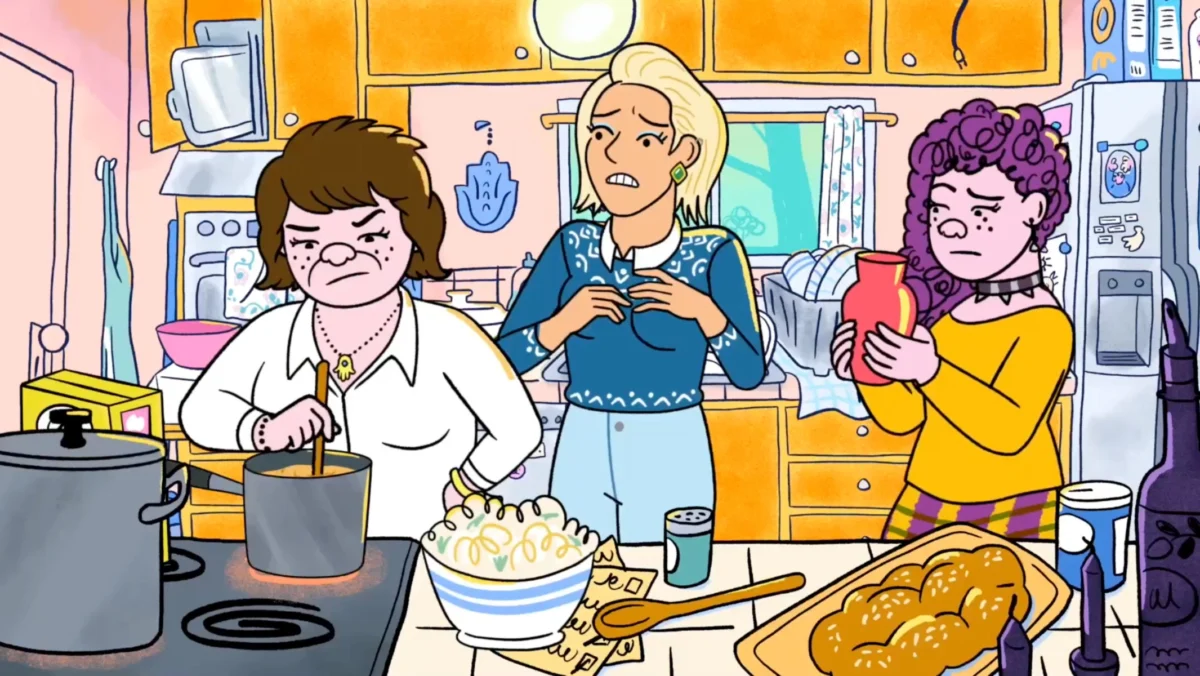
Beyond the legacy titans, the race for the remaining spots is heating up. Among the most compelling contenders is Long Story Short, the new animated dramedy from BoJack Horseman creator Raphael Bob-Waksberg. The series, which tracks a Jewish family across multiple decades through a non-linear narrative, is arguably the most sophisticated writing in the medium this year.
Despite the critical reverence for BoJack Horseman, Bob-Waksberg’s previous masterpiece was consistently snubbed by the Emmys, receiving only two nominations and zero wins. Long Story Short is more accessible, grounding its high-concept storytelling in relatable, down-to-earth family dynamics. However, the show suffers from a lack of "watercooler" buzz, making it a vulnerable candidate for voters who may have missed its initial release.

Similarly, the Hulu revival of King of the Hill has emerged as a rare success story in the often-maligned world of television reboots. Rather than merely recycling old tropes, the new King of the Hill manages to honor the heart of the original while thoughtfully evolving its characters to reflect the realities of the 2020s. It is a masterclass in adaptation, and if Hulu positions it correctly, it could serve as a bridge between the old guard of animation and the modern era.
The Supporting Contenders: Adult Swim’s Offbeat Slate
The mid-tier of the competition is crowded with eclectic choices. Genndy Tartakovsky’s Primal remains a critical darling, and its third season—released this past January—has lost none of the silent, visceral intensity that earned it past nominations. It remains a near-lock for a nomination.
Conversely, Adult Swim’s other offerings, such as the charming Haha, You Clowns and the final run of Smiling Friends, occupy a more precarious position. While Smiling Friends captured significant fan adoration, its offbeat, frantic energy is often deemed "too niche" for the more traditional sensibilities of the Television Academy. Rick and Morty, meanwhile, seems to have lost its Emmy momentum following the internal controversies of the last few years; the eighth season failed to generate the sustained critical discourse required to keep it in the conversation.
Implications for the Future of Animation
The upcoming July 8 nomination announcement will serve as a bellwether for the future of the category. Will the Academy continue to rely on the safety of long-running, familiar brands, or will it embrace the structural and narrative risks taken by shows like Long Story Short?
The implications of these awards extend far beyond a trophy. A nomination or win provides a stamp of institutional legitimacy that can influence greenlighting decisions for years to come. If the Academy ignores the nuanced, experimental, and diverse storytelling currently thriving in the animation space, they risk relegating the medium to a "children’s genre" or a "legacy comedy" ghetto, rather than treating it as the vital, sophisticated storytelling platform it has become.

A Conversation on Craft: Insights from "Long Story Short"
To understand the labor behind this year’s top contender for critical favor, we spoke with creator Raphael Bob-Waksberg and voice actor Lisa Edelstein regarding the thematic depth of Long Story Short.
The Role of Memory and Food
When asked about the recurring motif of food in the series, Bob-Waksberg emphasized that the culinary elements serve as a proxy for cultural and personal memory. "I think everyone has a very complicated relationship with food," he explained. "It’s about your family, your culture, and your history. We wanted to explore how people remember things, and food felt like a specific, visceral way to map that out."
The show’s non-linear structure allows for a unique layering of narrative, which Edelstein compared to baking. "That’s the fun of the format," she noted. "It jumps back and forth in time, and all of this ephemera—these memories—just build up like a pastry."
Character Complexity: The Naomi Factor
Edelstein, who portrays the complex matriarch Naomi, addressed the difficulty of playing a character who is often abrasive yet deeply well-intentioned. "I love Naomi," Edelstein said. "She really means her best. I don’t think she’s very self-aware, but that doesn’t mean she’s lacking in love."
One of the most nuanced elements of the show is the linguistic detail—specifically Naomi’s refusal to call her son’s girlfriend "Jen," insisting on the full "Jennifer." According to Edelstein, this was a deliberate choice to highlight the character’s inability to adapt to the casual, modern world. "It has to have a space before it and a space after it," she laughed, "because the existence of a name that short is so profound to her."

Looking Ahead to Season 2
As production for the second season kicks into gear, Bob-Waksberg remains tight-lipped about specific plot points but expresses enthusiasm for the deepening of the ensemble. "I’m just excited to go deeper," he said. "We’re uncovering different parts of their past and exploring how these dynamics shift as they age."
As the Emmy deadline approaches, the tension between the "old guard" and the "new wave" remains the central narrative. Whether the Academy chooses to honor the comforting familiarity of The Simpsons or the groundbreaking, intimate family saga of Long Story Short will reveal much about the current state of television—and what the industry values most in the years to come.











No comments yet. Be the first to join the conversation!