Raul Delapena Setiawan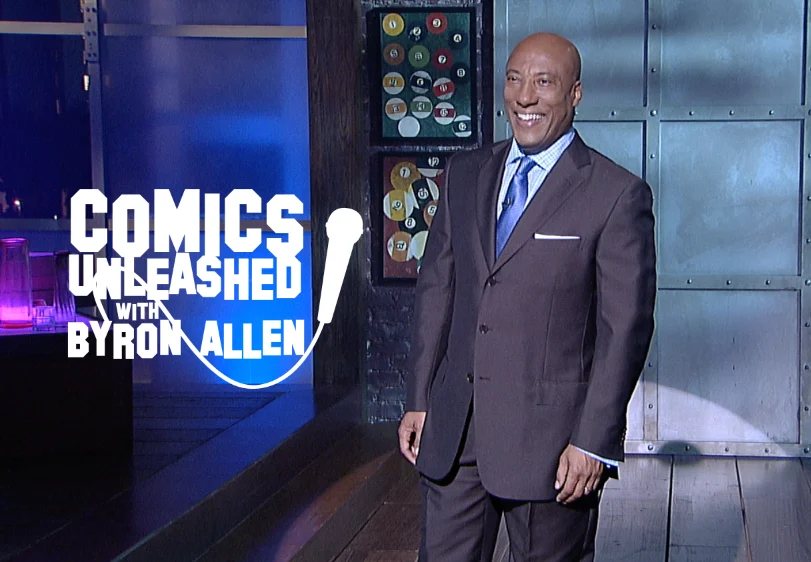
The landscape of American television underwent a tectonic shift this spring as CBS, the network long synonymous with the prestige of late-night broadcasting, officially pulled the plug on Stephen Colbert’s The Late Show. In a move that has sparked intense debate regarding the intersection of corporate bottom lines, political influence, and the dwindling relevance of traditional broadcast comedy, CBS has pivoted to a "time-buy" model, leasing its most valuable midnight real estate to media entrepreneur Byron Allen.
For the network, the transition is framed as a triumph of fiscal responsibility. For critics, the move marks the surrender of a cultural institution—and perhaps a capitulation to political pressures that have hovered over the industry for years.
The Financial Pivot: From Deficit to Dividend
In a statement released on Thursday, the Paramount-owned network defended its decision to terminate the long-running Late Show by highlighting the sheer economic gravity of the late-night daypart. For years, the costs associated with producing high-budget, talent-driven late-night programming have spiraled, while advertising revenues have plummeted.
"We’re proud to partner with Byron Allen on a new business and programming model for late night that proactively addresses a network daypart that was cost-prohibitive to continue," the statement read. According to CBS, the transition represents a $55 million swing in the network’s annual balance sheet. By shifting from an internal production model to a leasing arrangement—where the producer covers all costs and pays the network a flat fee for the airtime—CBS claims to have transformed a $40 million annual loss into a $15 million annual profit.
Under this new arrangement, Byron Allen’s production entity assumes 100% of the production risk and retains the rights to sell advertising inventory within the broadcast. For CBS, the arrangement guarantees revenue regardless of viewership fluctuations or the shifting tides of the advertising market.
A Chronology of the Exit
The demise of The Late Show was neither sudden nor quiet. It was a prolonged, often bitter process that played out in the public eye.
- Early 2026: Rumors of unrest within the Paramount-Skydance corporate structure began to surface, suggesting that executives were looking to "de-risk" the late-night hour.
- The Final Weeks: As the cancellation became common knowledge, the Late Show studio became a staging ground for defiance. Colbert, known for his acerbic political commentary, used his final weeks to invite guests who openly scrutinized the network’s leadership.
- The Letterman Intervention: In one of the most high-profile moments of the transition, former host David Letterman appeared on the program to lambast the decision-makers, famously labeling them "lying weasels."
- The Finale: Colbert’s final broadcast drew an impressive 6.7 million viewers, a testament to the enduring, albeit nostalgic, power of the format.
- The Transition: The following day, Byron Allen’s Comics Unleashed took over the slot, drawing a modest 878,000 viewers across two half-hour segments, according to Nielsen data.
The Political Undercurrents
While CBS maintains that the decision was purely a matter of arithmetic, few in the industry are convinced that economics was the sole driver. The tension between late-night hosts and the political establishment—particularly regarding Donald Trump—reached a fever pitch during Colbert’s tenure.
Colbert’s brand of humor was inherently political, a strategy that arguably saved CBS’s late-night dominance in the ratings, frequently outperforming NBC’s The Tonight Show Starring Jimmy Fallon and ABC’s Jimmy Kimmel Live. However, that same success made the show a lightning rod for criticism. Many industry analysts suggest that Paramount executives, seeking to align the network with a more favorable political narrative or simply to avoid the headaches associated with sharp-edged satire, found in Colbert a liability rather than an asset.
The suspicion is that the network prioritized "safe" programming—the roundtable-style comedy of Comics Unleashed—over the high-risk, high-reward political commentary that had defined the late-night hour for decades.
The Data: A Declining Daypart
The financial data supports the notion that the late-night model was in crisis. According to Guideline, advertising spending on late-night television shows cratered from $519.7 million in 2017 to just $209 million by 2025—a decline of nearly 60%.
Despite these macro-economic trends, The Late Show remained a significant, if diminishing, pillar of the industry. In 2025, it accounted for 27% of all late-night advertising spend, and in the months leading up to its cancellation in 2026, it held 29% of that market share. The exit of such a dominant player raises a fundamental question: if the most popular show in the daypart cannot turn a profit, is the format of the late-night talk show fundamentally broken?
The Implications: Where Do the Viewers Go?
The transition to a time-buy model, while financially prudent for CBS, carries significant risks. By effectively turning the midnight hour into an infomercial-style block, the network is signaling its retreat from the "cultural conversation."
1. The Migration to Digital
As traditional broadcast late-night loses its institutional prestige, both the audience and the advertising dollars are expected to migrate to digital platforms. Younger demographics have already abandoned the linear clock for the on-demand clips that made Colbert, Fallon, and Kimmel viral sensations. With the removal of the anchor program, the "late-night" ecosystem may permanently fragment.
2. The Loss of the "Watercooler"
Late-night comedy has long served as a shared experience for American viewers. When Johnny Carson or David Letterman spoke, the nation listened. That communal experience is now being replaced by niche, low-budget, or syndicated content. Whether Byron Allen’s Comics Unleashed can maintain the cultural gravity required to hold a network’s midnight audience remains to be seen. The initial Nielsen numbers—under one million viewers—suggest a significant drop-off from the Colbert era.
3. The Precedent for Other Networks
If CBS successfully sustains its $55 million profitability swing through this time-buy model, it is likely that NBC and ABC will face immense pressure from shareholders to follow suit. The industry is watching closely. If the "CBS model" becomes the industry standard, the era of the late-night host as a cultural gatekeeper may be over.
Conclusion: A New, Cold Reality
The exit of Stephen Colbert is more than just a personnel change; it is the final chapter in the story of the 20th-century broadcast monolith. By choosing to trade the prestige and controversy of The Late Show for the guaranteed, low-risk income of a time-buy, CBS has prioritized the balance sheet over the boardroom’s cultural influence.
Whether this transition marks a brilliant survival strategy or the beginning of a terminal decline for network late-night television will be determined in the coming seasons. However, one thing is clear: the era where late-night comedy could challenge power, shape public opinion, and command millions of viewers every night has officially come to an end. In its place sits a new, leaner, and significantly quieter business model—one that is decidedly less interested in the noise of the political arena and far more concerned with the math of the bottom line.


 Asep Darmawan
 Nana Wu