Pevita Pearce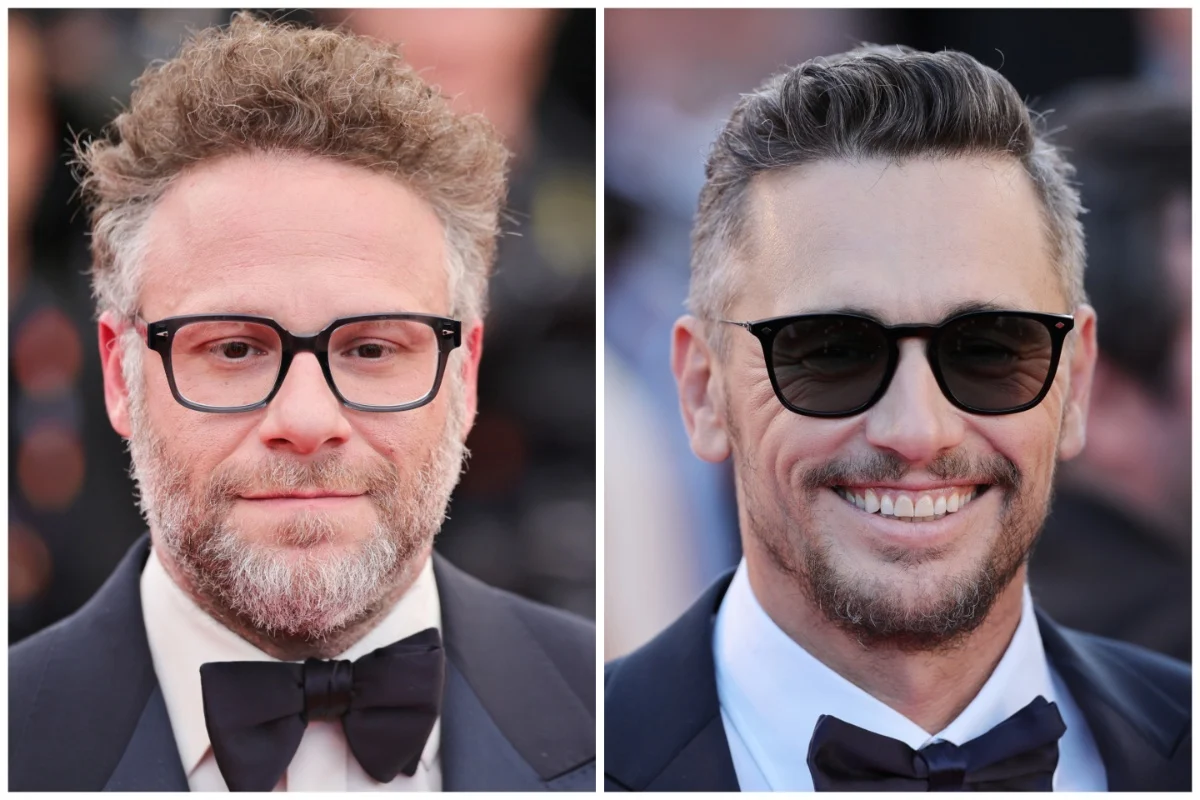
The long-standing creative partnership between Seth Rogen and James Franco, once considered one of the most bankable and culturally resonant duos in modern Hollywood, appears to be permanently dissolved. In a candid and reflective interview with The New York Times, Seth Rogen confirmed that he has not spoken to his former collaborator in a “long time” and maintains “no plans” to work with him in the future.
The statement serves as the final punctuation mark on a professional relationship that spanned two decades, defined by a distinct brand of stoner-comedy chemistry and improvisational brilliance. For many industry observers, Rogen’s latest comments represent the inevitable conclusion of a public distancing process that began in the wake of the #MeToo movement and the subsequent legal firestorm that engulfed Franco’s career.
The Weight of Nuance: Rogen’s Stance on the Controversy
When pressed by The New York Times regarding the personal toll of his estrangement from Franco, Rogen navigated a delicate path between professional detachment and personal history. He acknowledged the complexity of the situation, noting that the "nuance" of their fractured friendship is far too private for public dissection.
"I honestly think the nuance of it is too personal for me to get into right now," Rogen stated. "There’s the public-facing side of it, which I’ve spoken about, and I have the same stance publicly that I’ve had, and I think the proof is in the pudding—I have not worked with him in years."
Rogen further emphasized that he finds no utility in revisiting the details of the allegations or the fallout. "The personal side of it is just so nuanced, and it involves people that I don’t know if I should be dragging into this. I don’t know what I would benefit from getting deeply into it. Nothing has changed since the last time I talked about all this, and I haven’t worked with him in a really long time and I have no plans to."
When interviewer Lulu Garcia-Navarro asked for direct confirmation on whether the two still maintain contact, Rogen was unequivocal: "I haven’t talked to him in a long time, no."
A Chronology of a Hollywood Partnership
To understand the magnitude of this professional divorce, one must look back at the origins of a duo that effectively helped shape the cinematic landscape of the 2000s and 2010s.
The "Freaks and Geeks" Genesis (1999)
The partnership began on the set of Paul Feig and Judd Apatow’s short-lived but legendary NBC cult series, Freaks and Geeks. Rogen, then 16, and Franco, 21, were part of a ensemble cast that would go on to define a generation of comedy. While the show lasted only one season, the camaraderie established between the actors—and with the Apatow creative circle—laid the groundwork for a prolific series of box-office successes.
The Golden Age of Collaboration (2007–2014)
Following their debut, the duo became synonymous with a specific "bromantic" comedy style. Their shared filmography includes:
- Knocked Up (2007): A seminal hit that cemented the Apatow brand.
- Pineapple Express (2008): Perhaps the definitive Rogen-Franco project, it solidified their status as a leading comedic duo.
- This Is the End (2013): A meta-comedy where the two played exaggerated versions of themselves, highlighting their real-life friendship as a selling point.
- The Interview (2014): A global headline-maker that demonstrated their willingness to push boundaries, even at the risk of international diplomatic tension.
The 2018 Pivot: Allegations and Accountability
The trajectory of their partnership changed irrevocably in early 2018. Following the Golden Globe Awards, where Franco wore a “Time’s Up” pin, allegations of sexual misconduct surfaced against him. Five women, including four of his former students from his acting school, Studio 4, accused the actor of sexually exploitative behavior.
The accusations suggested a pattern of abuse of power. According to the subsequent class-action lawsuit filed in 2019, Franco was accused of "widespread inappropriate and sexually charged behavior towards female students" by "sexualizing their power as a teacher and an employer by dangling the opportunity for roles in their projects."
The legal battle persisted for years, culminating in a 2021 settlement in which Franco agreed to pay $2.23 million to resolve the claims. While Franco has maintained that the claims were "not accurate," the legal outcome and the public outcry forced a massive re-evaluation of his status within the industry.
The Evolving Stance: Rogen’s Public Evolution
Rogen’s current position—a firm refusal to collaborate—is a marked departure from his immediate reaction to the 2018 allegations. In a 2018 interview, Rogen had initially suggested that he would continue to work with Franco, a statement that drew significant criticism at the time.
In a 2021 interview with The Sunday Times, Rogen expressed clear remorse for that initial reaction. “I also look back to that interview in 2018 where I comment that I would keep working with James, and the truth is that I have not and I do not plan to right now,” Rogen said, effectively putting the prospect of a reunion to rest.
The transition from "I will work with him" to "I have not and do not plan to" illustrates the broader shift in the entertainment industry regarding accountability. Rogen, who has cultivated a reputation as a progressive and thoughtful voice in Hollywood, found his own professional brand caught in the crossfire of his long-term associations.
The Other Side: Franco’s Perspective
For his part, James Franco has addressed the silence between the two in recent years. In a 2024 interview with Variety, Franco acknowledged the end of the road.
"No. I haven’t talked to Seth. I love Seth, we had 20 great years together, but I guess it’s over," Franco stated. He added a note of longing, saying, "And not for lack of trying. I’ve told him how much he’s meant to me."
This acknowledgment from Franco highlights a one-sided attempt at reconciliation that has been met with, at best, a polite but firm silence from Rogen. It underscores the difficulty of disentangling professional identity from personal friendship when faced with allegations of moral and ethical failure.
Implications: The Industry at a Crossroads
The public cooling of the Rogen-Franco relationship is emblematic of a broader shift in Hollywood. Where once "loyalty to friends" was the overriding currency, the current climate prioritizes institutional accountability and victim advocacy.
Professional Fallout
The loss of the Rogen-Franco partnership has had a tangible effect on the comedy genre. Their films were characterized by a high level of collaborative trust; without that "anchor" pairing, the Apatow-adjacent comedy world has seen a shift toward more solo projects and ensemble pieces that lack the specific "buddy" dynamic that drove their 2010s successes.
The Burden of Association
Rogen’s case serves as a template for other high-profile figures who have had to navigate the "guilt by association" narrative. By speaking openly about his regret for his 2018 comments and by drawing a clear line in the sand, Rogen has successfully separated his own creative future from the controversies of his past.
A Lesson in Boundaries
The situation serves as a stark reminder that in the modern era, the "personal" is increasingly "professional." For actors and creators, the choice to maintain a friendship with someone embroiled in a sexual misconduct scandal is no longer a private matter—it is a decision that shapes their public perception, their career viability, and their legacy.
As Seth Rogen moves forward with his career, focusing on new production ventures and diverse creative pursuits, the chapter on James Franco appears firmly closed. Whether this distance was a personal choice, a PR necessity, or a moral imperative remains, as Rogen noted, a matter of "nuance." Regardless, the end of this partnership marks the closing of a significant chapter in 21st-century cinema, signaling that in the current era of accountability, even the strongest Hollywood bonds are not immune to the consequences of systemic change.

 Jia Lissa
 Iffa Jayyana