

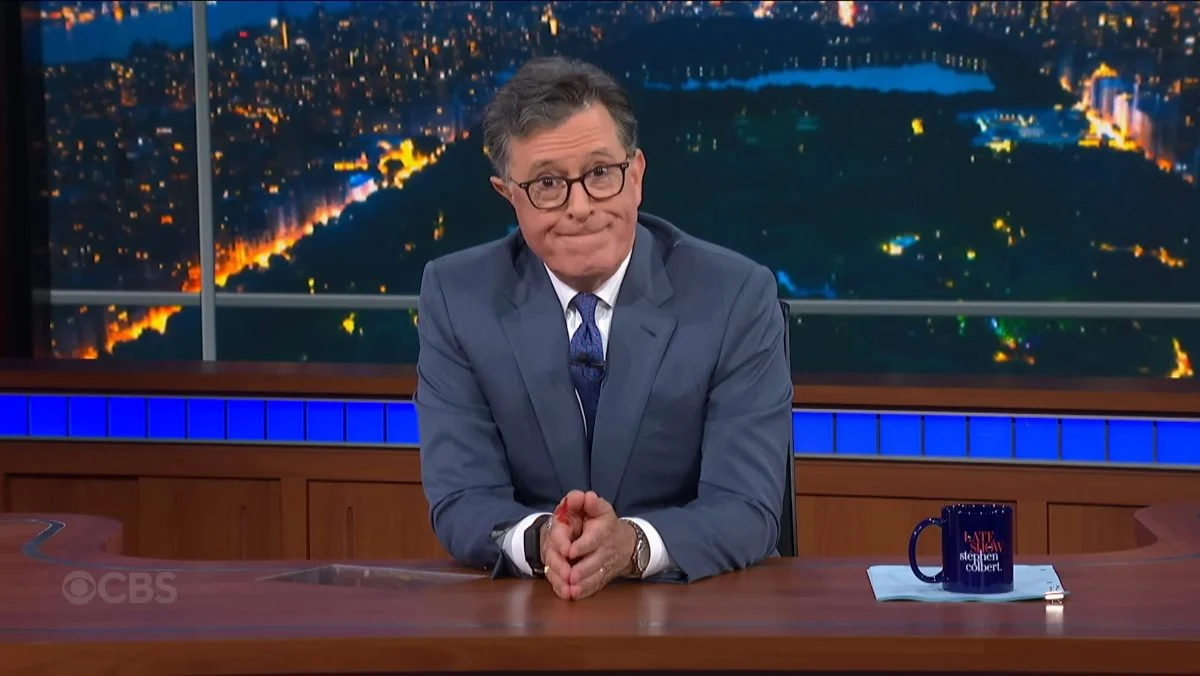
After a storied run spanning nearly eleven years, The Late Show with Stephen Colbert is preparing to sign off for the final time. The announcement of the show’s conclusion has sent a ripple of nostalgia and melancholy through the entertainment industry, marking the end of a pivotal chapter in late-night television. For over a decade, Colbert served as a nightly touchstone for millions, evolving from his satirical roots on The Colbert Report into a broadcast staple that defined the tone of CBS’s late-night programming.
While fans mourn the loss of his sharp wit and distinctive interview style, the host himself is taking the opportunity to look back with a sense of humor, pulling back the curtain on the segments that never quite made it to air. In a final, reflective gesture, Colbert has begun airing a “Worst of the Late Show” series, highlighting the sketches and gags that were scrapped due to poor timing, logistical mishaps, or simply missing the mark.
A Legacy Built on Satire and Synchronicity
Stephen Colbert’s tenure at The Late Show began in 2015, stepping into the formidable shoes of David Letterman. It was a transition that many critics watched with bated breath. Could the man who famously played a blustery, conservative pundit for years successfully inhabit the role of a traditional late-night host?
The answer was a resounding yes, though the show shifted significantly over its eleven-year lifespan. Colbert brought a heightened sense of political urgency to the desk, particularly during the turbulent election cycles of 2016 and 2020. His monologue, often framed by a mix of righteous indignation and absurdity, became the primary way many Americans processed the chaotic news cycles of the decade.
However, the nature of late-night television is such that for every viral monologue, there are dozens of ideas that remain on the cutting room floor. These “lost” segments offer a fascinating, humanizing look at the creative process. They remind us that behind the polished production of a network broadcast lies a team constantly iterating, failing, and pivoting in real-time.
The Chronology of Missed Marks: Anatomy of a Flop
Comedy is an exact science of timing, and nowhere is that more evident than in the "Worst of the Late Show" segments recently debuted by the production team. These clips serve as a time capsule for the show’s development, showcasing the risks that didn’t pay off.
The 2016 Election Night Miscalculation
Perhaps the most poignant example of “ill-timed” comedy occurred during the 2016 presidential election. In a segment planned for the high-stakes atmosphere of election night, the staff had conceptualized a bit involving men at a urinal with the slogan “I’m With Her” written across their exposed buttocks.
The intent, clearly, was to provide a punchy, irreverent take on the support for Hillary Clinton. However, as the election results began to shift in an unexpected direction, the premise suddenly became radioactive. In a matter of hours, a bit that might have been interpreted as a lighthearted rallying cry transformed into a potential PR nightmare. Colbert and his producers wisely scrapped the segment, opting to preserve the dignity of the broadcast during what was, for many, a somber political turning point.

The “Erotic Body Gravy” Incident
Another notable casualty of the editorial process was a fake commercial for a product dubbed “erotic body gravy.” The premise was simple: a Thanksgiving-themed spoof advertisement playing on the absurdity of holiday excess. However, upon reviewing the footage, the production team realized a critical flaw in their logic: the models hired for the sketch were simply too attractive.
In comedy, the juxtaposition between the mundane and the ridiculous is often where the humor lives. By casting models who were legitimately “hot,” the irony of the “gravy” concept was lost. Instead of a parody, the commercial inadvertently became a sincere-looking (albeit strange) advertisement. Colbert noted that the joke simply didn’t land because the actors were too compelling to look at, distracting the audience from the inherent absurdity of the product.
Supporting Data: Why Late-Night TV Remains a High-Wire Act
The difficulty of late-night television is often underestimated. Producing five hours of original, relevant content every week for over a decade is a feat of endurance that few in the industry can replicate. According to industry metrics, late-night viewership has faced significant headwinds in recent years due to the rise of streaming platforms and social media clips. Yet, The Late Show remained a consistent performer in the ratings, largely due to the strength of Colbert’s brand.
The “Worst of” segment isn’t just a fun retrospective; it is a testament to the high volume of content required to keep a show fresh. In the 2023-2024 television season alone, the average late-night show produced over 150 hours of content. Statistically, it is impossible for every sketch to achieve perfection. By admitting to these failures, Colbert is reinforcing his connection with the audience, proving that he values transparency and authenticity—traits that have been the hallmark of his career since his Comedy Central days.
Official Responses and Industry Sentiment
The industry reaction to the cancellation has been one of profound respect. CBS executives have praised Colbert’s “unwavering commitment to excellence,” while peers have taken to social media to celebrate his influence on the genre.
While the press has been quick to compare The Late Show to its competitors, it is worth noting that Colbert’s brand of humor occupies a unique space. It is more intellectual than the slapstick-heavy formats of his peers and more deeply rooted in social commentary than the celebrity-interview-driven shows of the early 2000s.
When asked about his regrets regarding the show, Colbert has maintained a philosophical stance. “Every night is a new opportunity to get it right,” he noted in a recent internal staff meeting. “If you aren’t failing occasionally, you aren’t pushing the envelope hard enough.” This sentiment echoes throughout his staff, many of whom have been with him since the Report days.
Implications: What Happens Next?
The conclusion of The Late Show leaves a significant void in the late-night landscape. For eleven years, Colbert has been a constant presence in the living rooms of millions. As the show prepares to air its final episode, questions naturally turn toward what the future holds for the host.

The Tolkien Pivot
Rumors have been swirling for months regarding Colbert’s next major creative endeavor. It is no secret that he is a fervent fan of J.R.R. Tolkien’s work. Reports suggest that he is currently collaborating with legendary filmmaker Peter Jackson on a new Lord of the Rings film project. This shift from the daily grind of political satire to the expansive, imaginative world of Middle-earth marks a significant professional pivot for the star.
The Future of the Format
The end of Colbert’s run also invites a broader discussion about the future of the “monologue-and-guest” format. With the rise of digital-first content, the traditional network late-night show is under pressure to evolve. Does the world still need a host to tell jokes about the day’s headlines, or is the audience already getting that information in real-time on their phones?
Colbert’s legacy will likely be defined by how he bridged this gap. He proved that even in a digital-first world, there is still a hunger for a curated, authoritative, and human voice to guide us through the noise.
Final Thoughts: An Unmatched Legacy
As we look back on the “Worst of the Late Show” clips, we aren’t just seeing failed jokes; we are seeing the raw, unfiltered creative effort of a team that refused to play it safe. Whether it was the ill-fated election night urinal gag or the overly attractive models of the “erotic body gravy” commercial, these moments reflect a show that was constantly testing boundaries.
Stephen Colbert has spent over a decade defining what it means to be a late-night host in the modern era. While he will soon be turning his attention to the sweeping landscapes of Tolkien, his presence will be missed in the studio at the Ed Sullivan Theater. He has set a standard for wit, intelligence, and genuine curiosity that few will be able to match.
While we wait to see if he eventually returns to the host’s chair, we can take solace in the fact that he leaves behind a body of work that is as profound as it is funny. He taught us that even when the jokes flop, the attempt to make sense of the world through laughter is always a noble pursuit. For that, and for eleven years of unparalleled television, we say thank you, Stephen.











No comments yet. Be the first to join the conversation!